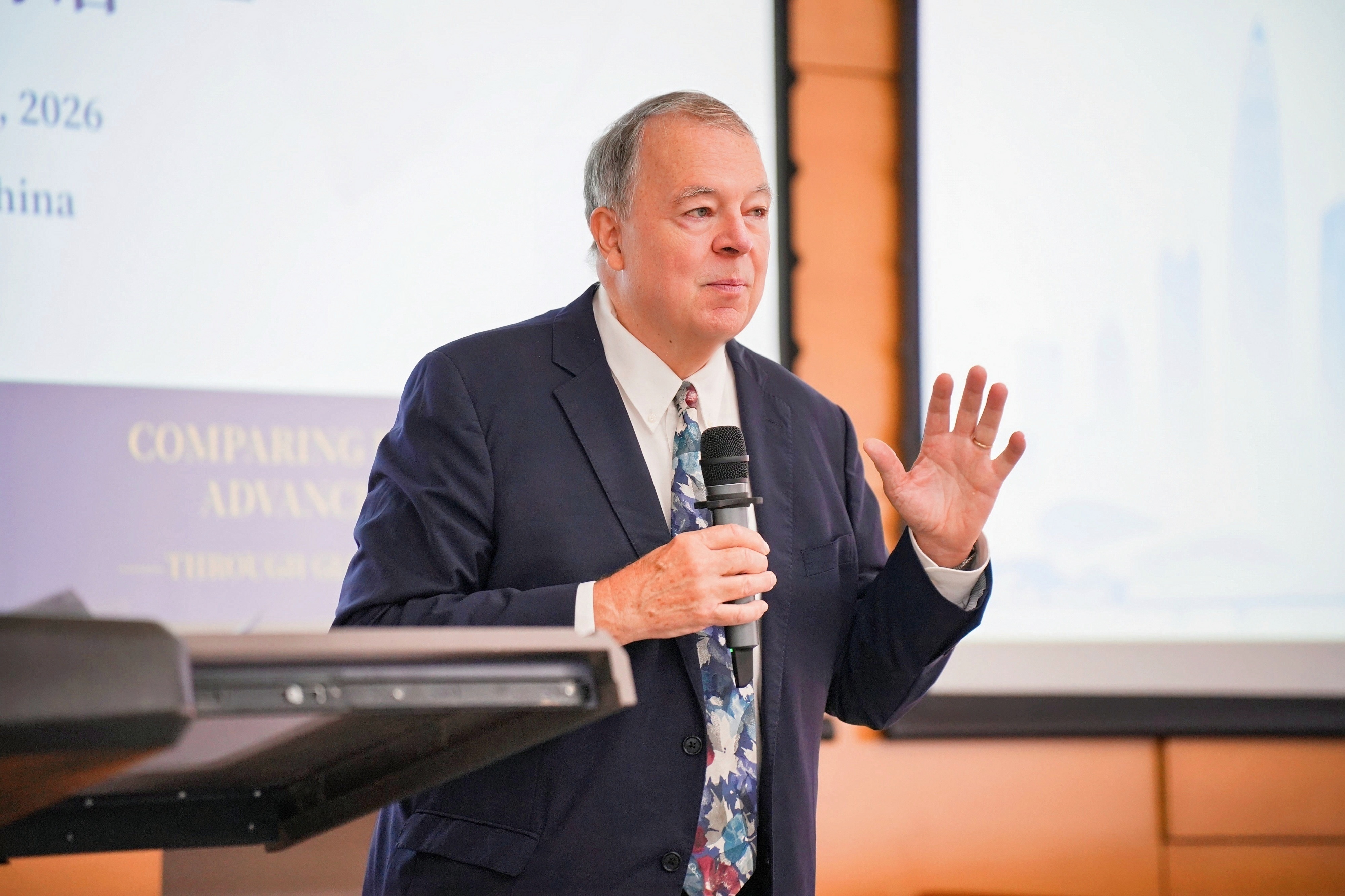
The international workshop Global Conversations on Criminal Law Theory, hosted by Peking University School of Transnational Law (STL) with the support of King & Wood Mallesons, was successfully held in Shenzhen on August 18–19, 2026. The two-day event brought together twelve scholars from leading universities and institutions in China and abroad for intensive discussions on contemporary questions in criminal law theory.
Participants came from Yale University, the Hebrew University of Jerusalem, the National University of Singapore, the University of Hong Kong, Universidad Torcuato Di Tella, Peking University Law School, and Peking University School of Transnational Law.
The event provided a forum for scholars from different legal systems and intellectual traditions to exchange perspectives and engage with fundamental questions concerning criminal responsibility, punishment, defenses, social sanctions, the use of force, and parole.
The conference’s title reflects its purpose and responds to the increasing need to bridge different legal perspectives and experiences across the world. Criminal law scholars often narrow their communities of dialogue to those who belong to a particular tradition or share similar regulations, yet this overlooks how fruitful the opposite exercise can be. While criminal codes differ around the world, the problems they intend to solve exist everywhere, such as how to structure the conditions criminal responsibility, what behavior can be turned into a criminal offense, or what means are states allowed to use to punish people and advance societal interests. Addressing fundamental problems of this sort is what the workshop's title refers to as "criminal law theory."
By gathering a diverse group of scholars from different places and legal traditions, the workshop invited all participants to grow in their own views by learning from others about problems every jurisdiction has to confront. Altogether, the event brought together fourteen scholars and practitioners from six countries and jurisdictions — Chinese Mainland, Hong Kong Special Administrative Region, the United States, Argentina, Israel, and Singapore — spanning civil-law, common-law, and mixed traditions. That range is not incidental; it is the point. And it is fitting that this conversation took place at a school built specifically to be a bridge for transnational legal education: this workshop was, in a sense, STL practicing what it was founded to do.
The workshop sustained this international dialogue in three formats: working sessions on scholarly work-in-progress, a roundtable on transnational legal practice, and two keynote lectures.
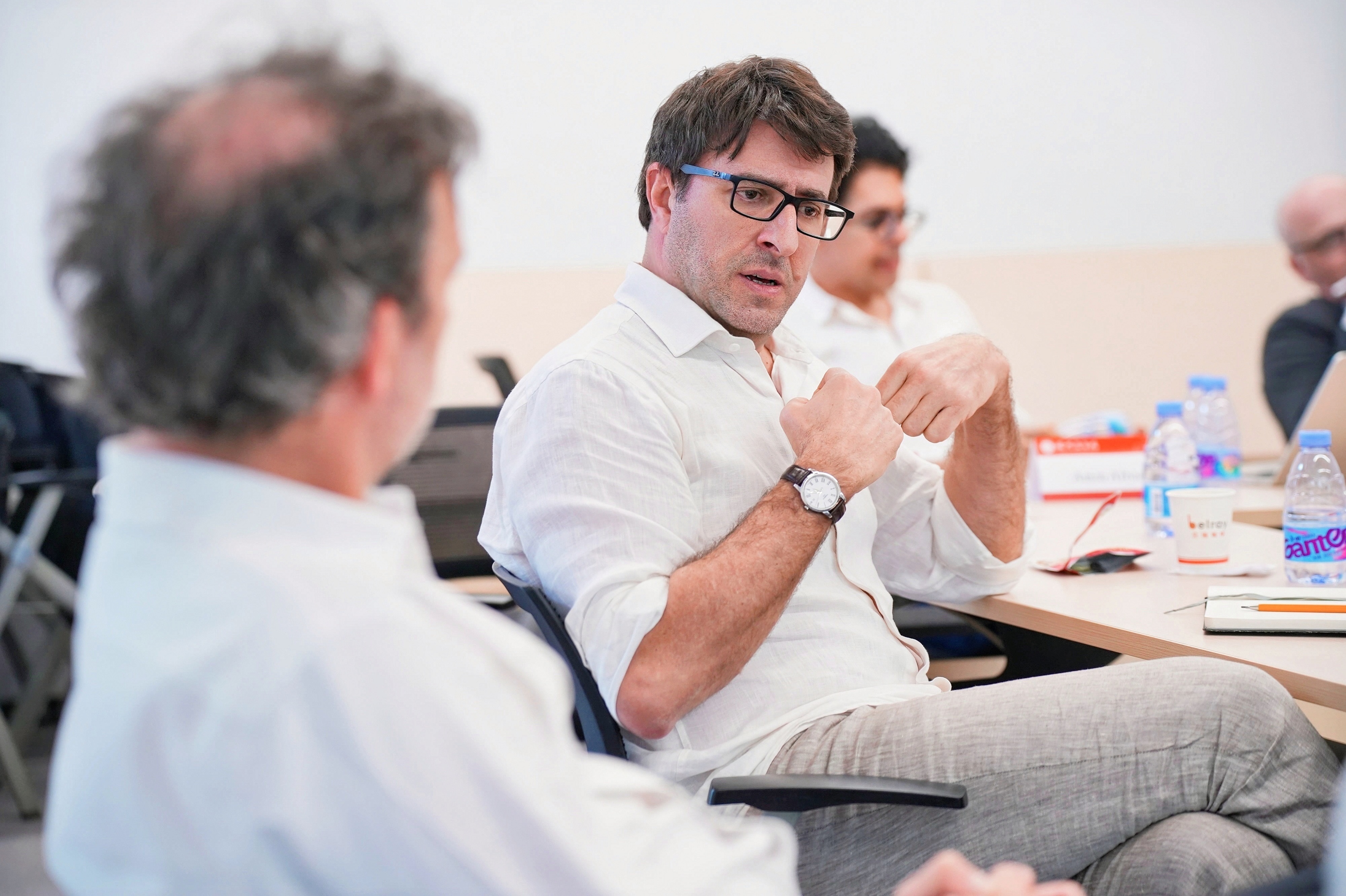
The academic program featured seven discussion sessions, each centered on a scholarly presentation followed by commentary and open discussion. These sessions also brought together senior scholars and STL's own junior faculty as presenters, commentators, and moderators — a dialogue spanning career stages, not just borders. The topics ranged from philosophical questions concerning excuses, blameworthiness, and fairness to emerging challenges posed by drones, non-lethal weapons, and cyber-attacks. Other sessions examined complicity, the governance of minor offenses in China, public shaming and social punishment, multiple-offender sentencing, and the relationship between parole and dissociation.
The first day opened with a discussion of "Excuse, Blameless and Fairness – Considering the Case of Impaired Moral Competence," presented by Leora Dahan Katz of the Hebrew University of Jerusalem, with commentary by James Edgar Lim of the National University of Singapore. This was followed by Alejandro Chehtman of Universidad Torcuato Di Tella, who presented "Asymmetrical Weapons Systems: Drones, Non-Lethal Weapons and Cyber-Attacks," with commentary by Gregory Gordon of Peking University School of Transnational Law.
The afternoon sessions continued with Gideon Yaffe of Yale University presenting "Crumbley Complicity," with commentary by Marcelo Ferrante of Universidad Torcuato Di Tella. Yuhao Wu then presented "Evidence-Based Governance of Minor Offenses in China: A Criminological Analysis and a Shift in Criminal Policy," with commentary by Florence Lee of the University of Hong Kong. The day concluded with James Edgar Lim's presentation on "Standards of Proof for Public Shaming and Social Punishments," with commentary by Peter Chau of the University of Hong Kong.
The public program on August 19 began with opening remarks by Professor Ray W. Campbell of Peking University School of Transnational Law. The morning featured two keynote addresses by two major scholars in criminal law and international criminal law.
The first keynote, "Guaranteed Mistakes," was delivered by Gideon Yaffe, Wesley Newcomb Hohfeld Professor of Jurisprudence at Yale Law School, and moderated by Fernando Bracaccini of Peking University School of Transnational Law. Professor Yaffe's scholarship spans legal philosophy and metaphysics, with particular interests in causation, free will, and criminal law theory. His work on attempts and culpability has contributed significantly to contemporary debates in criminal responsibility.
The second keynote, "Venezuela and the U.S. Hemispheric Project: Force, Coercion and Resistance in the Americas," was delivered by Alejandro Chehtman, Professor and Dean of the School of Law at Universidad Torcuato Di Tella, and moderated by Professor Gregory Gordon of Peking University School of Transnational Law. Professor Chehtman's research focuses on philosophical and empirical questions in public international law, international criminal law, and international humanitarian law.
The August 19 program also featured a roundtable on transnational legal practice in criminal law, organized by King & Wood Mallesons and led by STL alumni Feng Zhao and Yue Qiu, both Partners at King & Wood Mallesons, addressing the challenges of practicing criminal law across borders. The roundtable provided an opportunity to connect theoretical inquiry with practical perspectives on the cross-border dimensions of criminal law. STL is grateful to King & Wood Mallesons for co-sponsoring the workshop and for grounding its discussions in the realities of cross-border practice.
The workshop concluded with two further academic discussions. Peter Chau of the University of Hong Kong presented "Why Bulk Discount for Multiple Offenders? A Lexical Local Justification," with commentary by Marcelo Ferrante of Universidad Torcuato Di Tella. Fernando Bracaccini of Peking University School of Transnational Law presented "Parole and Dissociation," with commentary by Amin Afrouzi, also of Peking University School of Transnational Law.
Bringing together scholars working across criminal law theory, legal philosophy, criminology, and related fields, Global Conversations on Criminal Law Theory created a sustained intellectual exchange across jurisdictions and academic traditions. The workshop reflected STL's commitment to fostering international scholarly dialogue — to building bridges in a divided world — and to creating a space where different legal traditions can engage with shared questions concerning criminal law and justice.
Held in Shenzhen, the workshop also underscored the city's growing role as a hub for international academic exchange within the Guangdong–Hong Kong–Macao Greater Bay Area. Through two days of close scholarly discussion, the event advanced the workshop's central spirit of "Comparing Perspectives, Advancing Justice — Through Global Dialogue."