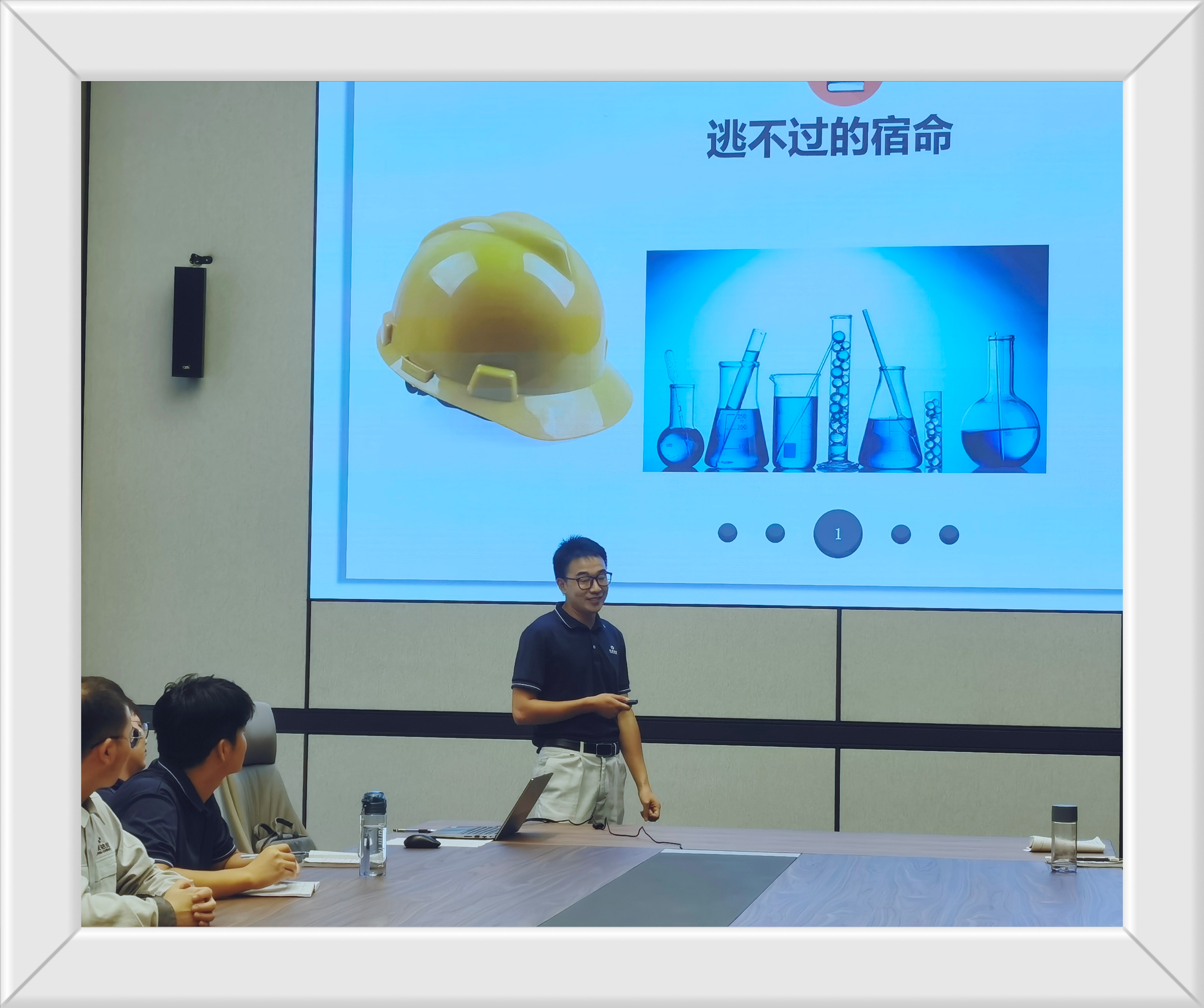
Jianjun Duan, Current student of the STL Class of 2025. Graduated from Sichuan University with a major in Teaching Chinese to Speakers of Other Languages. He worked in Chengdu as a Chinese language instructor for several years and was posted to Indonesia from 2022 to 2024 as a procurement officer.

Q: What motivated you to leave the workplace and return to school?
A: My life once followed a path centered on international Chinese education. From teaching Chinese in Chengdu during my junior year to pursuing a master’s degree in Teaching Chinese to Speakers of Other Languages at Sichuan University, I imagined myself spending the future sharing the beauty of Chinese in classrooms abroad. But the pandemic disrupted those plans.
My time in Indonesia in 2022 also gave me long stretches of solitude for reflection. In the autumn of 2023, while standing on a pier with a friend, she suddenly asked, “If life were a candle that will eventually burn out, where would you want its light to shine?” I didn’t have an answer then. Yet the question planted a seed that quietly grew with the ebb and flow of daily life.
One day, everything became clear: I want to shine my light on the pursuit of fairness. I want the law to be a beam that opens a window for those in difficult situations. Back in high school, a teacher once told us: “When a scholar encounters injustice, they should stand up.” This stayed with me for years. Each time I read about school bullying, each time I was reminded how small an individual’s power can be, I asked myself repeatedly: What can I do? The law, I realized, might be the path that both protects the vulnerable and drives meaningful change.
Q: Did you hesitate about giving up a stable job to return to school?
A: It was indeed an “adventure.” If I failed, I would lose a year. If I succeeded and entered STL, I would spend the next four years without an income. But then I thought: if I still have forty years of life to work hard, why not spend one-tenth of that time pursuing a better path? I also have a natural inclination to shake things up. In House of Cards, there’s a line: “Treading water is the same as drowning.” I long for a life that keeps moving forward. The law allows me to think and explore without end; through others’ stories, it lets me experience countless versions of life. It makes living about more than just surviving.
Q: Why did you ultimately choose STL?
A: Three factors shaped my decision: STL’s strong emphasis on professional skills training, its bilingual environment, and its location, which suits my lifestyle preferences.
What attracted me most is STL’s focus on cultivating practical legal skills. When I started my first master’s program, the professor said on day one that the primary goal in graduate school was to write academic papers. Unlike traditional programs that prioritize research output, STL emphasizes coursework and professional competencies. During our four years here, we are required to complete nearly 170 credits, comparable to, or even exceeding, the requirements for an undergraduate degree. This means that beyond earning a master’s degree, I can actually acquire solid knowledge and real skills. In today’s challenging economic environment, professional competence matters more than ever, and STL’s mission aligns perfectly with this reality. The fully English-taught U.S. law curriculum also appealed to me. I have worked in bilingual settings for years, so I am genuinely excited about STL’s English-language instruction. And I enjoy Shenzhen’s warm and sunny climate.
Q: How does your professional experience support your legal studies?
A: From what I’ve learned in the past month, and through prior self-study, my work experience helps make my thinking more grounded. It makes me focus more on the practical dimensions of law: rights protection, cost–benefit considerations, and social externalities.
For instance, a single successful labor arbitration case may raise public awareness of corporate misconduct, helping others avoid pitfalls and encouraging companies to comply with the law. In class, I often think about how legal theories can be applied in practice. How effective are legal rules when implemented? How useful are they? The law is not omnipotent, but it often functions as a bridge that brings parties to the negotiating table. In reality, many disputes are resolved not through arbitration or litigation, but through negotiation.
Q: After returning to school, have you felt anxious or stressed?
A: Limited thinking pattern may be the hardest to overcome. Some might say that returning to school for four years comes with material losses, but the gains are immeasurable and meaningful in ways that cannot be quantified. External expectations do exist. Growing up, we constantly met the expectations of parents and teachers. Later in the workplace, we were bound by professional norms. Now, at this stage of life, learning to set my own standards helps me embrace others’ opinions with honesty. As Jordan B. Peterson writes in Twelve Rules for Life: “Compare yourself to who you were yesterday, not to who someone else is today.” For me, placing ourselves under a single metric objectifies us; breaking free from that narrow metric is part of pursuing humanity and embracing the diversity of life.
Besides, when external interference is unavoidable, we must learn to adjust and reshape our surroundings. As Professor Norman P. Ho asked in class: “If your neighbor keeps throwing garbage at your doorstep, what should you do?” One classmate answered that buy the neighbor’s house, or move to a better community. In my work experience, I also realized that life operates under a personal responsibility system. We must bear the consequences of our own decisions. Once I internalized this, I became more at ease with the outcomes of my choices.

Q: How has your first month at STL been academically and in daily life?
A: By my own standards, things have been balanced so far. For study, I enjoy most of my time. I especially enjoy Professor Gregory S. Gordon’s U.S. Criminal Law class. He teaches with great passion and patience. During one discussion about the But-for Cause, he guided a student step by step using the Socratic method, and even playfully nicknamed him But-for man. What moves me most is Professor Gordon’s dedication to students. After I emailed him about applying the Good Samaritan Law in real life, he responded with detailed, thoughtful explanations to every paragraph and encouraged me to keep exploring. He values students’ thinking and guides us toward deeper understanding.
In daily life, I work out several times a week, either at the gym or by taking relaxing walks along the Dasha River. My roommates are cheerful and fun—we chat for half an hour to an hour every day. Overall, life feels fulfilling and joyful.
Q: What would you say to working professionals who are considering applying to STL but still hesitating?
A: Follow your heart while the momentum is still there. Looking back, I realized that if I didn’t take the leap then, I might regret it at 40; by then, I might no longer have the courage to start over. The desire to begin again and return to campus has real value. I resigned and prepared for the entrance exam because I could feel a strong sense of urgency and momentum within myself, a readiness to act immediately. My previous lifestyle revolved around working, traveling, and experiencing life.
Although I enjoyed it, something always felt missing. That feeling told me I had a spark inside me. As the saying goes: “Strike while the iron is hot.” When you still have the drive, step out of your comfort zone and honor what your inner world is telling you. No matter which path you choose, there will be both thorns and flowers. As adults, we must weigh the costs and benefits and accept the consequences. Life is a personal responsibility system. No path is perfect, and none is entirely bad. What matters is whether you can accept it, and take responsibility for your choice.