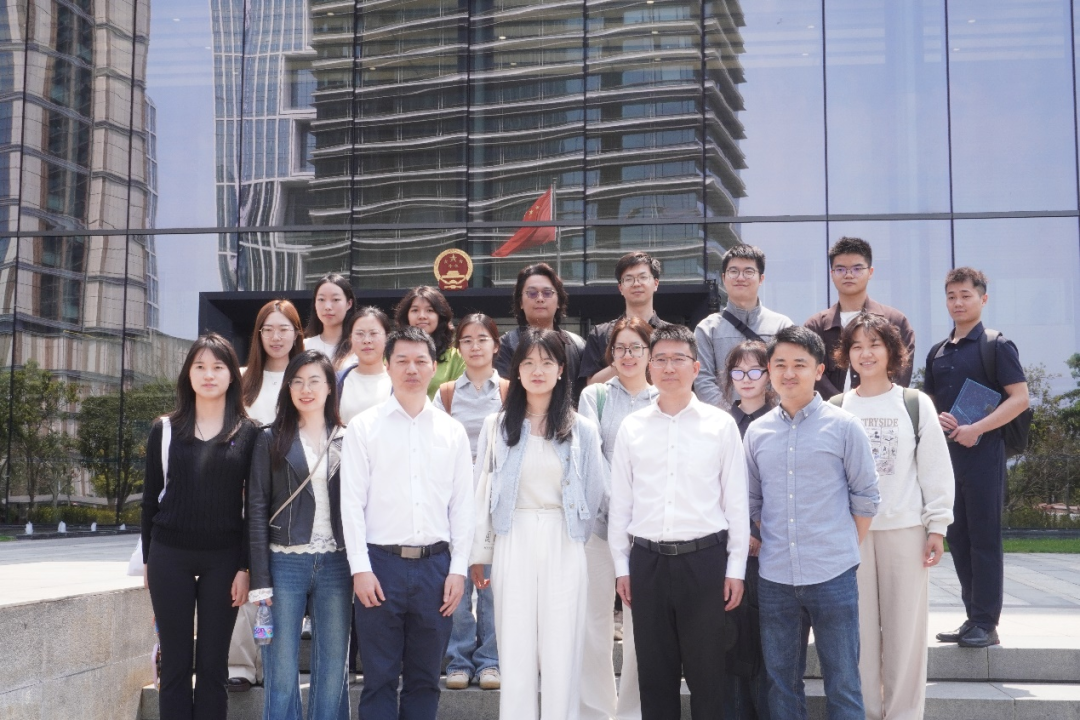
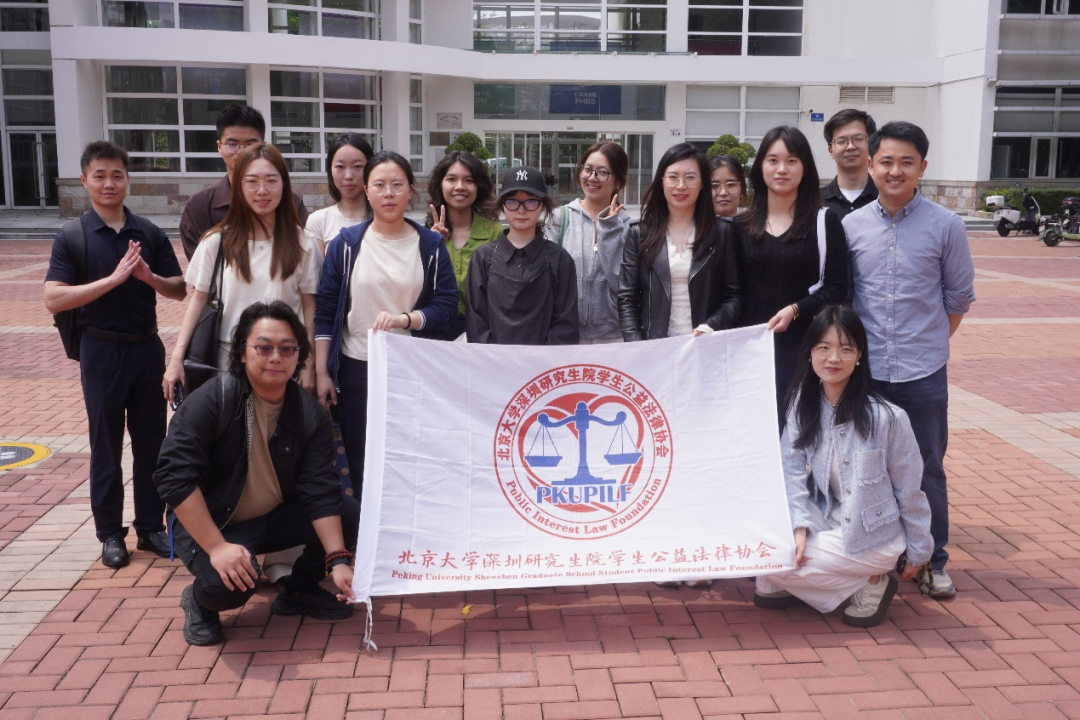
To deepen the integration of legal theory and judicial practice and cultivate high-quality professionals in foreign-related rule of law, faculty and students of Peking University School of Transnational Law (STL) visited the Qianhai Cooperation Zone People’s Court in Shenzhen for an exchange activity on March 20, 2026. The event was coordinated by the Public Interest Law Foundation (PILF). Led by Wang Qian, Associate Director of Career Service and Alumni Affairs, the visiting group included Sun Ning from the Office of Career Service, Alumni Affairs and Development, Zeng Kelu (Assistant Director of Student Affairs) and Xu Xiaoqi, together with 15 students. Through immersive visits, court observation and face-to-face exchanges, the participants experienced the international, professional and intelligent judicial practice of Qianhai Court at close range.
As a specialized court with centralized jurisdiction over first-instance foreign-related and Hong Kong, Macao, Taiwan-related commercial cases in Shenzhen, the Qianhai Cooperation Zone People’s Court has developed a number of nationally pioneering reform experiences in cross-border judicial rule alignment, ascertainment and application of foreign law, and multi-dispute resolution, making it an important platform for foreign-related rule of law development in the Guangdong-Hong Kong-Macao Greater Bay Area. During the visit, the teachers and students toured the court’s core facilities in sequence and gained a systematic understanding of the full process of foreign-related adjudication. In the courtroom, the group observed an entire foreign-related case hearing, experiencing firsthand rigorous and standardized judicial procedures, clear and fluent courtroom debates, and the judicial philosophy of impartiality and efficiency, deeply integrating knowledge learned in class with real courtroom settings.

Following the hearing, the teachers and students held a discussion session with the presiding judge. Drawing on their judicial experience, the judge elaborated on practical key points including jurisdiction, application of law, evidence rules, and cross-border service in foreign-related cases, and patiently answered students’ questions concerning career development, cross-border dispute resolution, and judicial reform, offering valuable practical insights and inspiration. Afterwards, the group visited the litigation service hall and the mediation hall, learning about one-stop litigation services, the development of smart courts, and the ADR international commercial dispute resolution mechanism, and gained a profound understanding of the “Qianhai Model” featuring justice for the people and diversified dispute resolution.

This visit is an important initiative for Peking University School of Transnational Law (STL) to advance practice-oriented education and strengthen university-local cooperation. The College continues to build bridges for students to communicate with judicial practice departments, guiding students to appreciate the spirit of the rule of law and refine their professional capabilities at the forefront of justice. Participating faculty and students expressed that the activity deepened their understanding of foreign-related judicial practice and strengthened their sense of mission to devote themselves to the cause of foreign-related rule of law.
As the initiator and coordinator of this visit, PILF is committed to building a high-quality practical exchange platform for STL students, encouraging them to step out of the classroom and engage closely with legal practice, sharpen their professional skills through hands-on experience, and broaden their international horizons through interaction. In the future, PILF will continue to focus on the development of foreign-related rule of law and public interest legal services, organizing more high-quality activities that integrate professionalism and practice. It will contribute to the cultivation of high-caliber professionals in foreign-related rule of law and support every STLer in moving steadily forward on their journey in the rule of law.