State of STL 2025 &
Alumni Annual Gathering
Shenzhen, China
Mark Feldman
December 20, 2025
Good evening. To the more than 300 students, alumni, faculty and staff who have registered for this event, welcome to State of STL 2025, or to be more precise, the State of STL 2025 and Alumni Annual Gathering.
This is our third State of STL event, and the first to be combined with our Alumni Annual Gathering. Bringing together the STL community at the end of the year, in a festive setting – to connect, reconnect, reflect, and look ahead – is a highlight for all of us.
At the outset I would like to thank Dean Zhang Chenli and Dean Zhong Xiaojin for recognizing how valuable a combined State of STL/Alumni Annual Gathering event could be, and, ultimately, for making it happen.
I also would like to thank the supporting organizations that have made this event possible: Oppo, China Merchants Securities Co. Ltd. (CMS), Zhi Heng Law Firm, Jingtian & Gongcheng Law Firm, Alumni Affairs Office, Peking University Shenzhen Graduate School, Alpha Career Development Fund, Peking University Shenzhen Graduate School Education Foundation, the Shenzhen Chapter of the Alumni Association, and the STL Student Union.
I also would like to recognize contributions made by many individuals: Zhang Kailei (STL 2008), Zhang Liang (STL 2009), Huang Jian (STL 2010), Gu Xiaoqing (STL 2011), Zhou Qing (STL 2012), Han Junfei (STL 2013), Xia Huijun (STL 2014),
Ge Yunsong, Mao Shaowei, and Susan Finder.
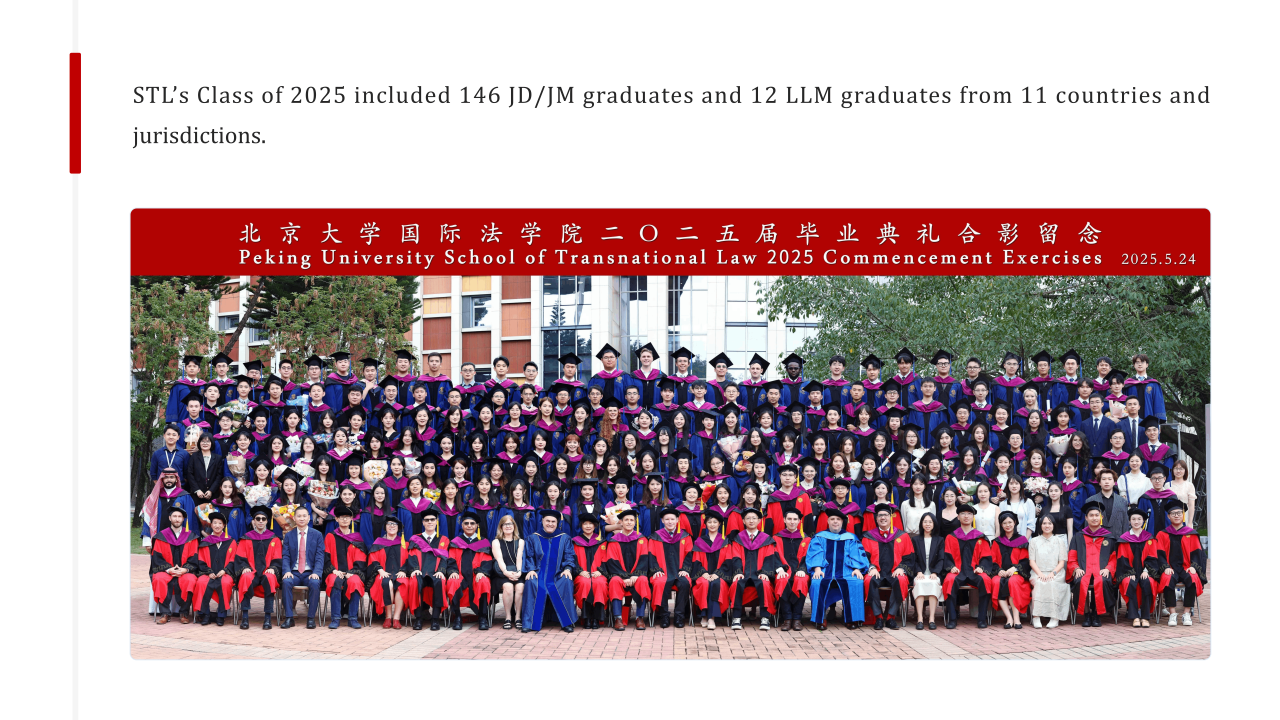
2025 has been quite a year. STL’s Class of 2025 included 146 JD/JM graduates and 12 LLM graduates from 11 countries and jurisdictions. Congratulations to our graduates.
Attracting such talented individuals, ensuring that they get the most out of their STL experience, and ensuring that they have terrific professional opportunities after graduation, is a team effort.
On that point, I would like to recognize our:
Admissions and Communications teams: Chen Keru, Zhong Xiaojin, Tan Peihua, and Liu Yili.
Academic Affairs team: Liu Yue, Wang Yangyang, and Ella Zheng.
Law Library team: Kara Phillips, Tessie Tian, and Lin Lin.
Career Services and Student Affairs teams: Zhang Chenli, Sophie Wang, Zeng Kelu and Jeff Xu.
In terms of professional opportunities, our Class of 2025 placement record is quite impressive, particularly in the current economic environment.
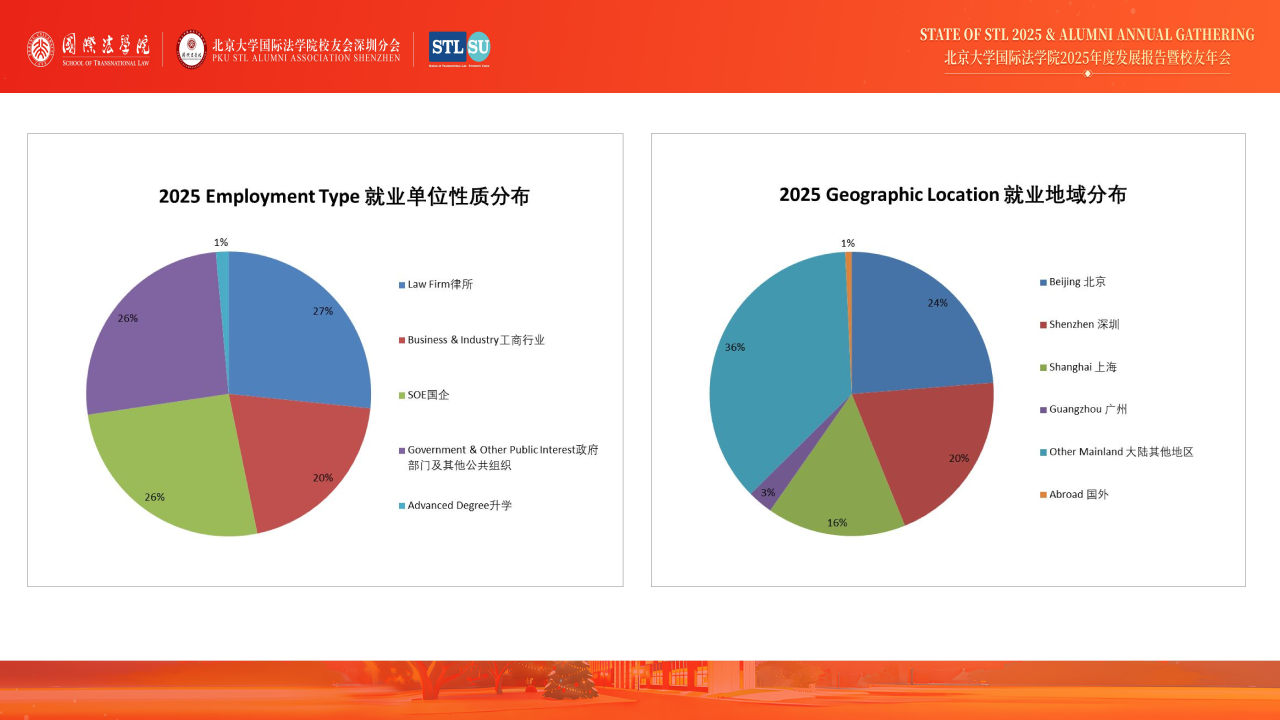
STL’s Class of 2025 placement record is exceptionally strong. As of September, our overall employment rate was 95.9%, with graduates working in a variety of settings, including law firms (27%), SOEs (26%), government and other public interest (26%), and business and industry (20%).
Further supporting such employment opportunities is the launch of the second term of STL’s Career Mentor Program. For this second term, STL expanded its recruitment beyond alumni to include a larger set of senior legal professionals. Following a rigorous selection process, 86 senior professionals from various legal fields joined as the second group of mentors.
Our alumni are extraordinary mentors for our students in significant part because their own contributions and accomplishments and are so extraordinary.
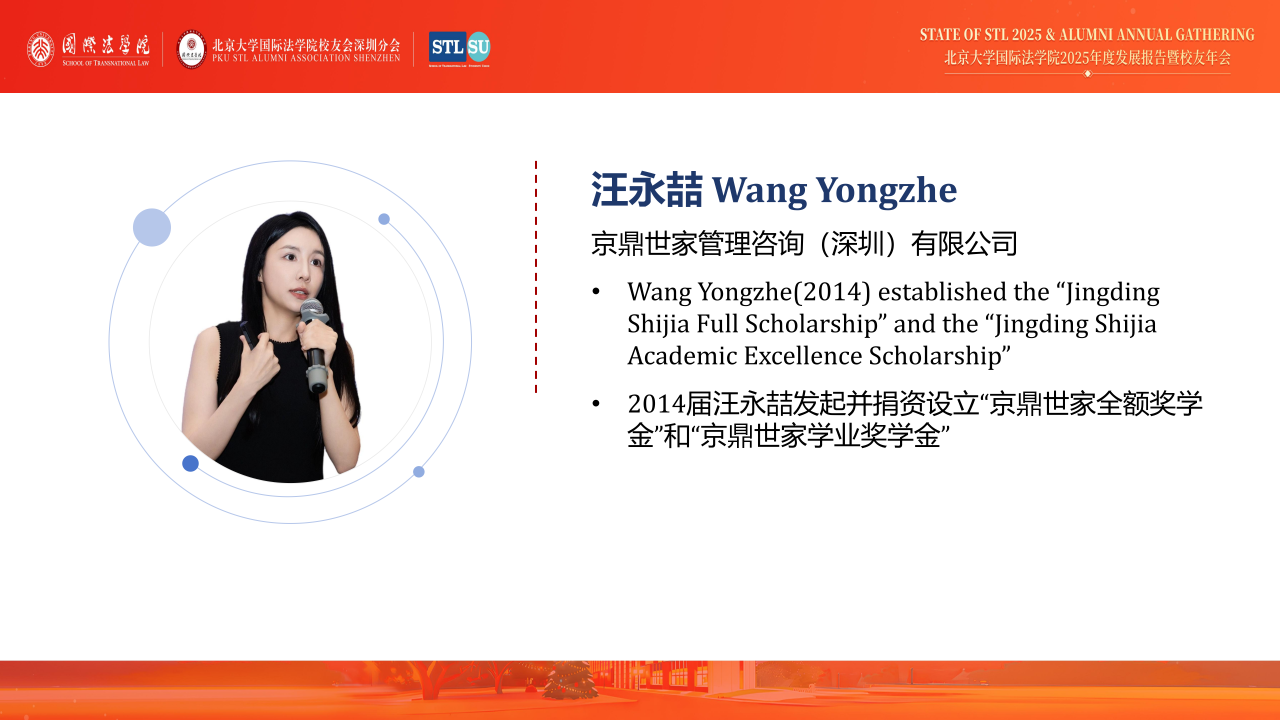
STL graduate Wang Yongzhe donated
1 million RMB to establish the “Capital One Family Scholarship”, which is STL’s first full scholarship program, aimed at supporting one incoming student annually, beginning in 2026.
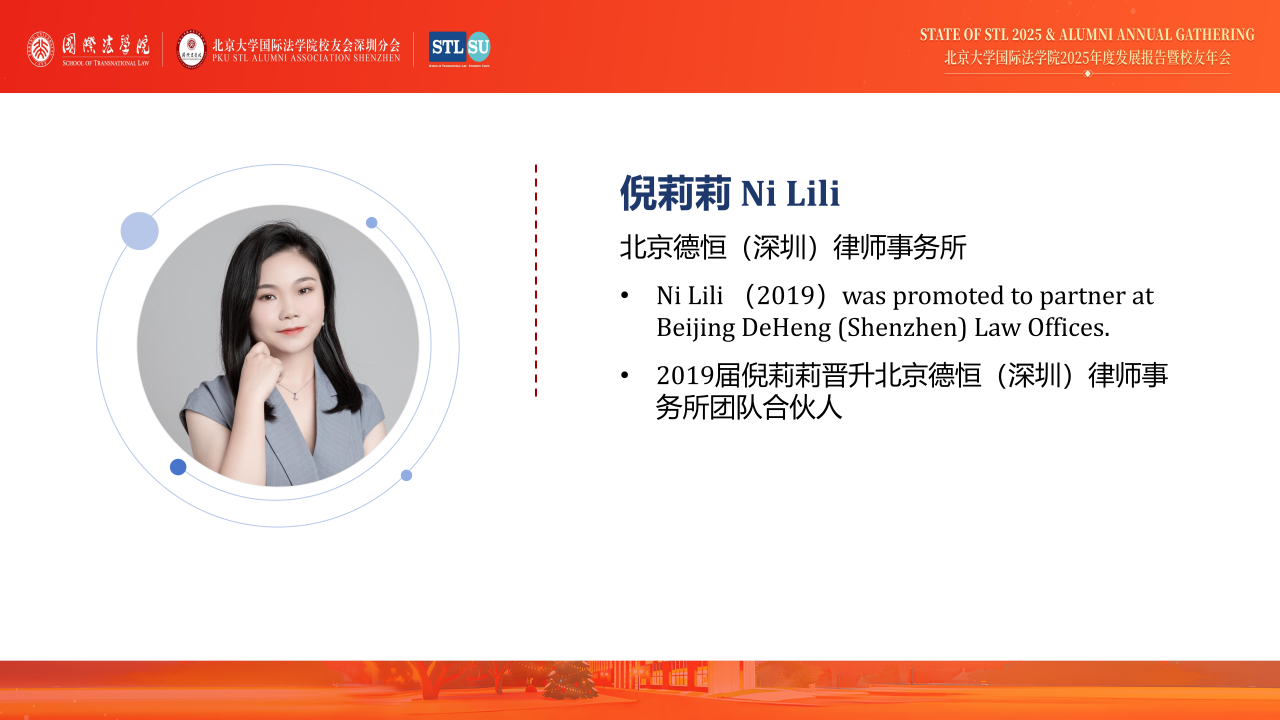
Ni Lili has been promoted to partner at Beijing DeHeng.
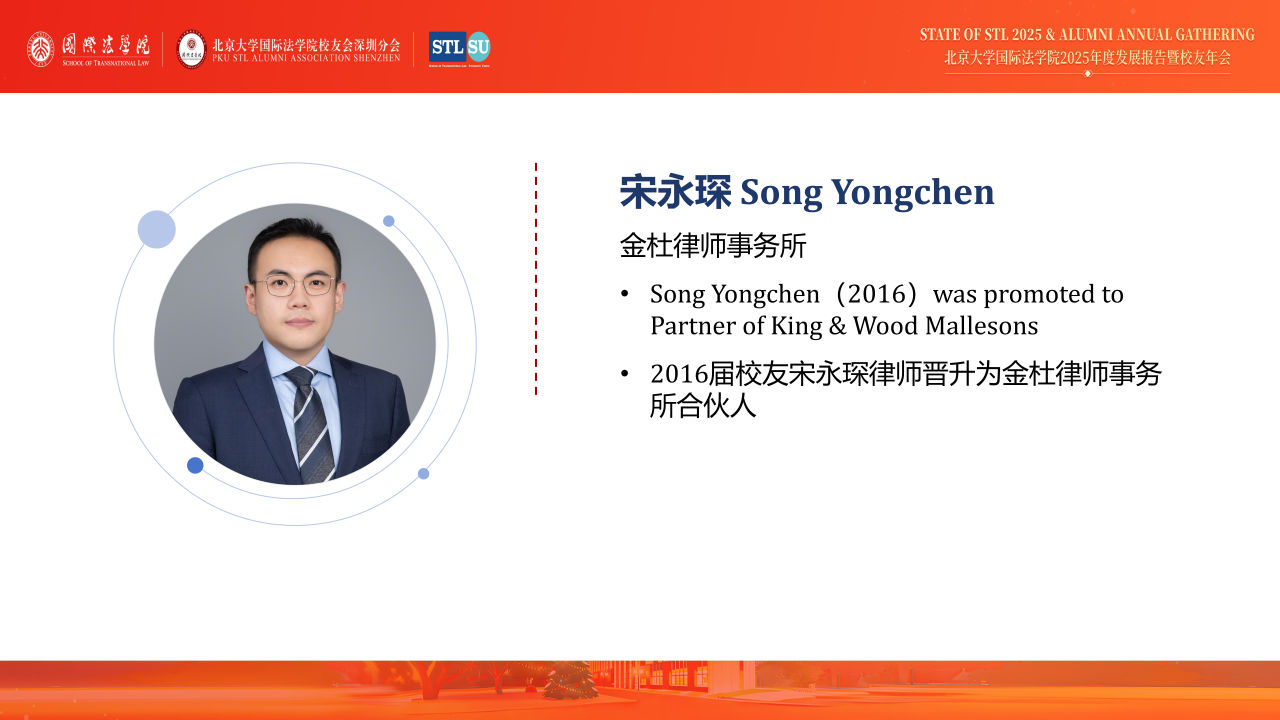
Song Yongchen has been promoted to partner at King & Wood Mallesons.
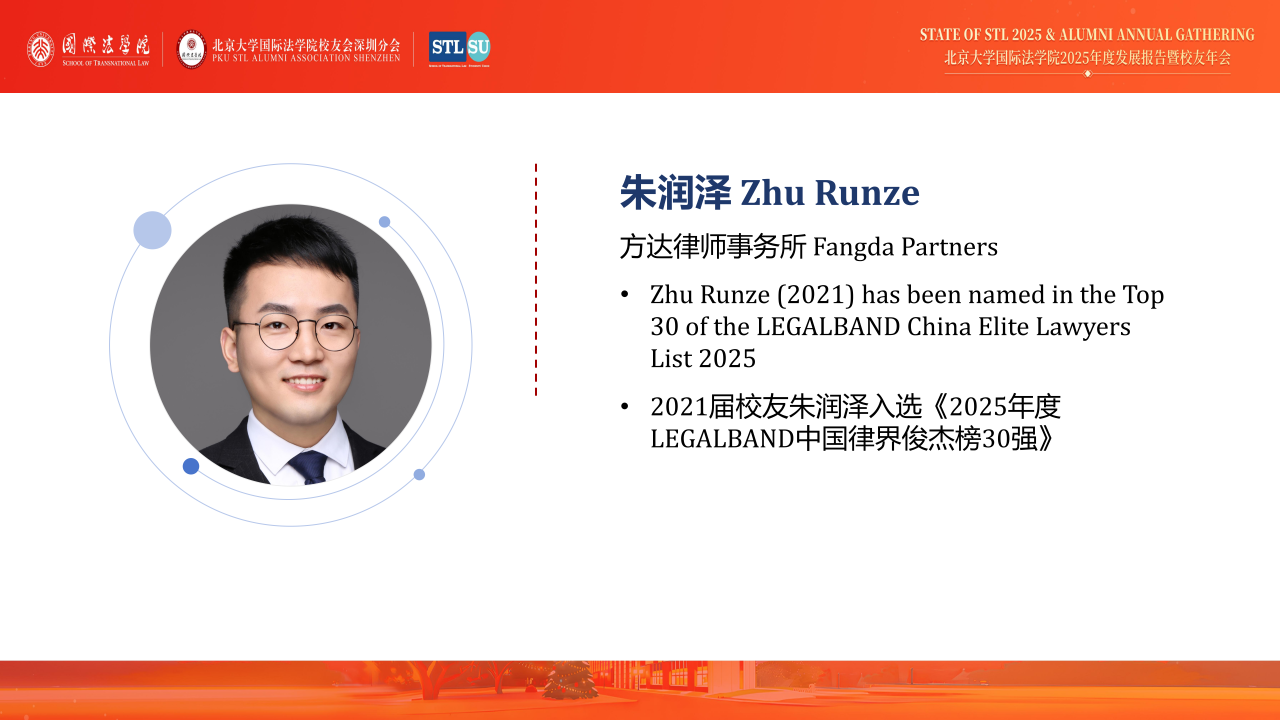
Zhu Runze has been listed on LEGALBAND’s Top 30 China Legal Experts List (2025).
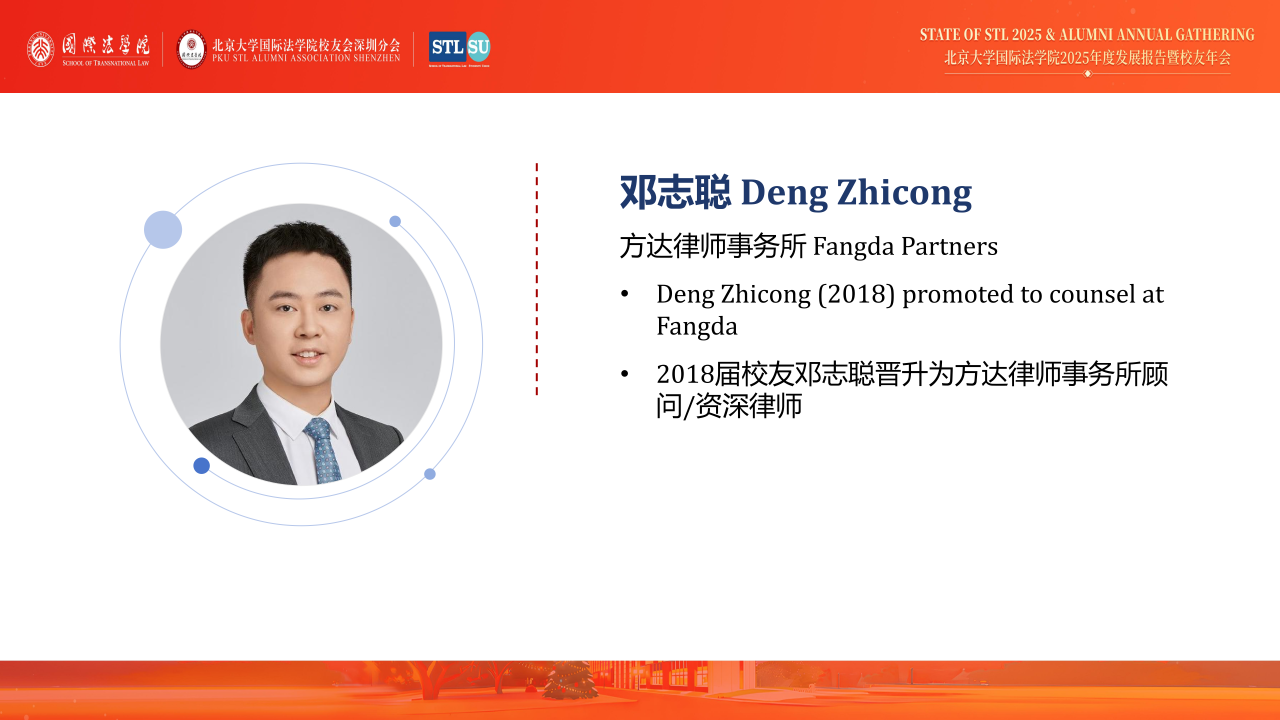
Deng Zhicong has been promoted to counsel at Fangda Partners.
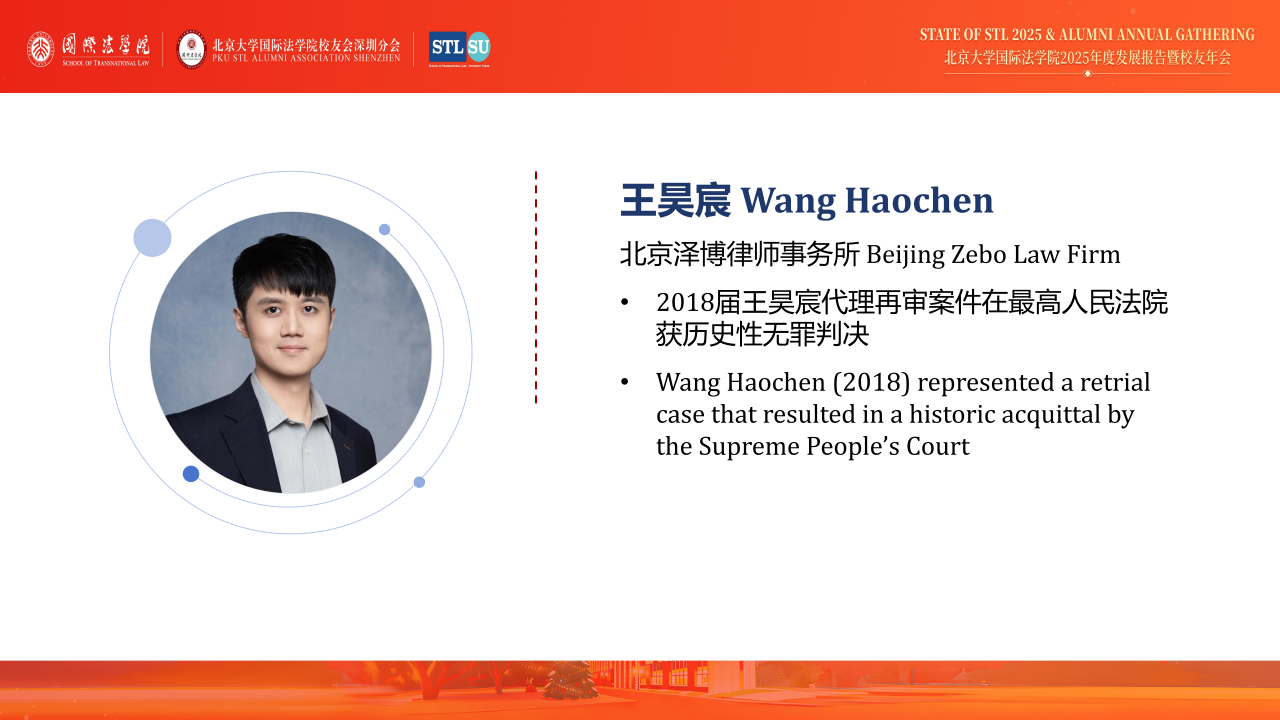
Wang Haochen has represented a retrial case that resulted in a historic acquittal by China’s Supreme People’s Court.
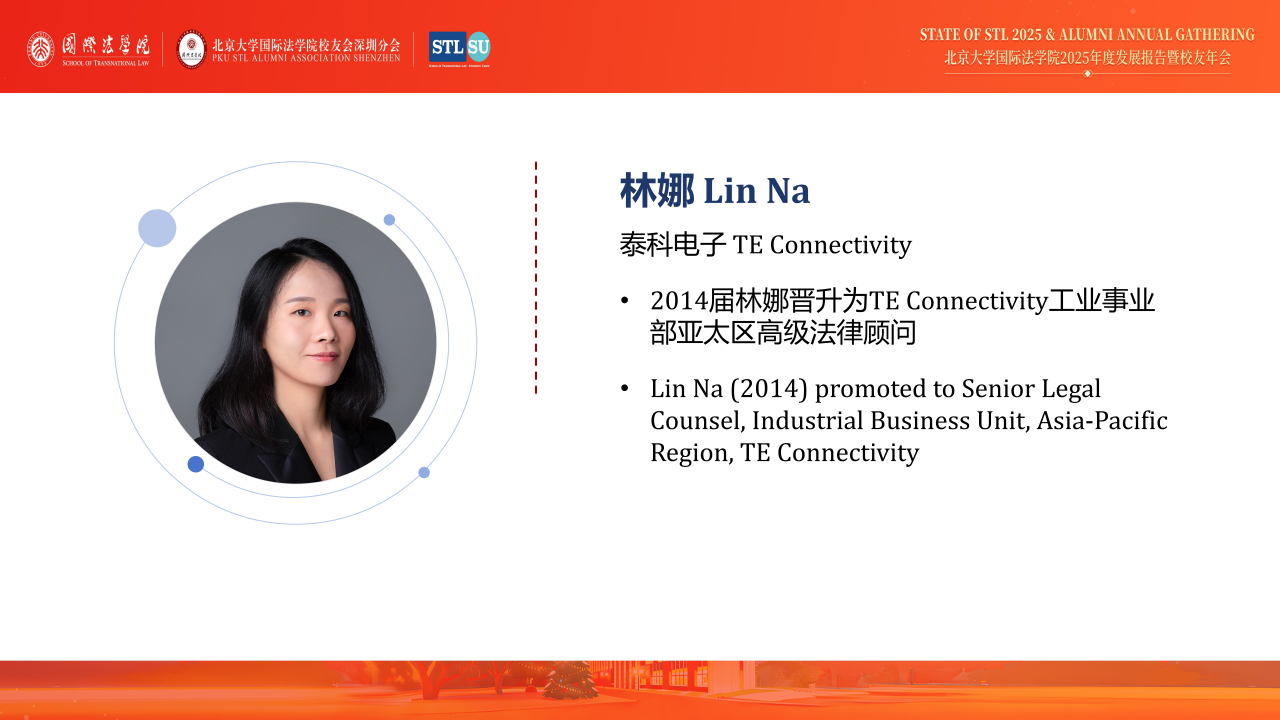
Lin Na has been promoted to Senior Legal Counsel, Industrial Business Unit, Asia-Pacific Region, at TE Connectivity.
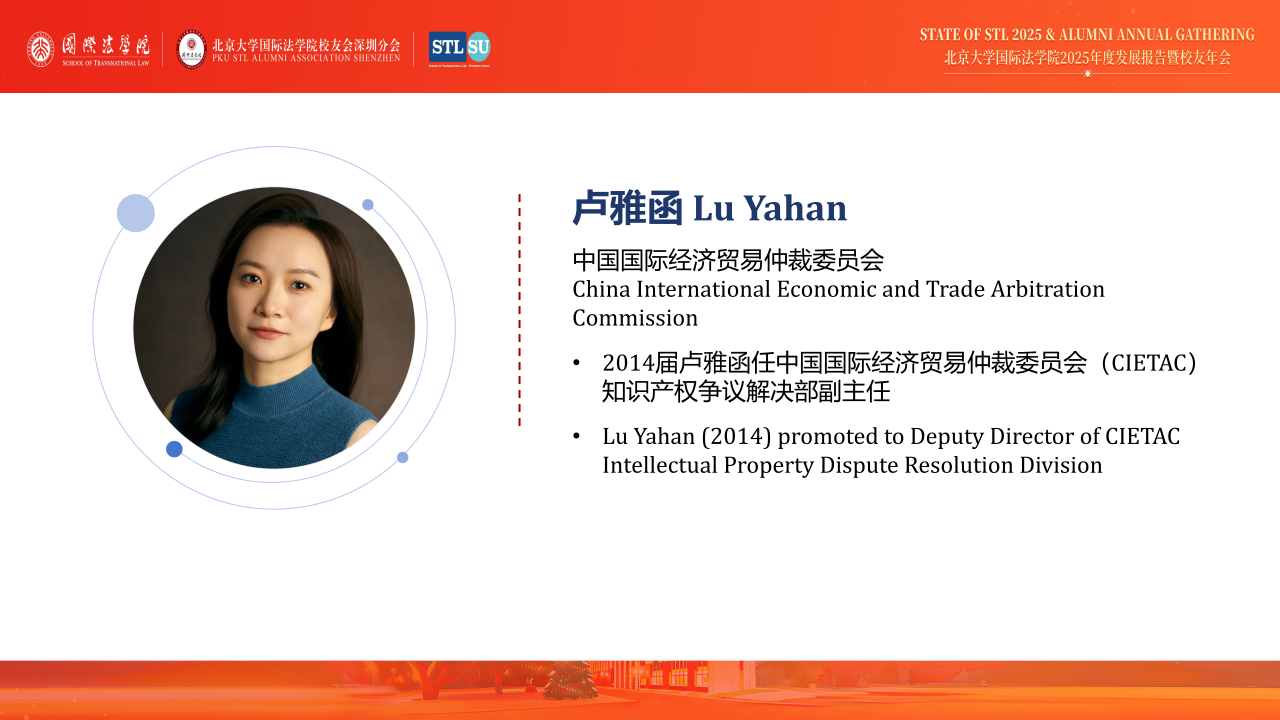
Lu Yahan has been promoted to Deputy Director of CIETAC’s Intellectual Property Dispute Resolution Division.
Zhang Haomiao was the winner of the 2025 ALB China South & Central China IP Lawyer Award.
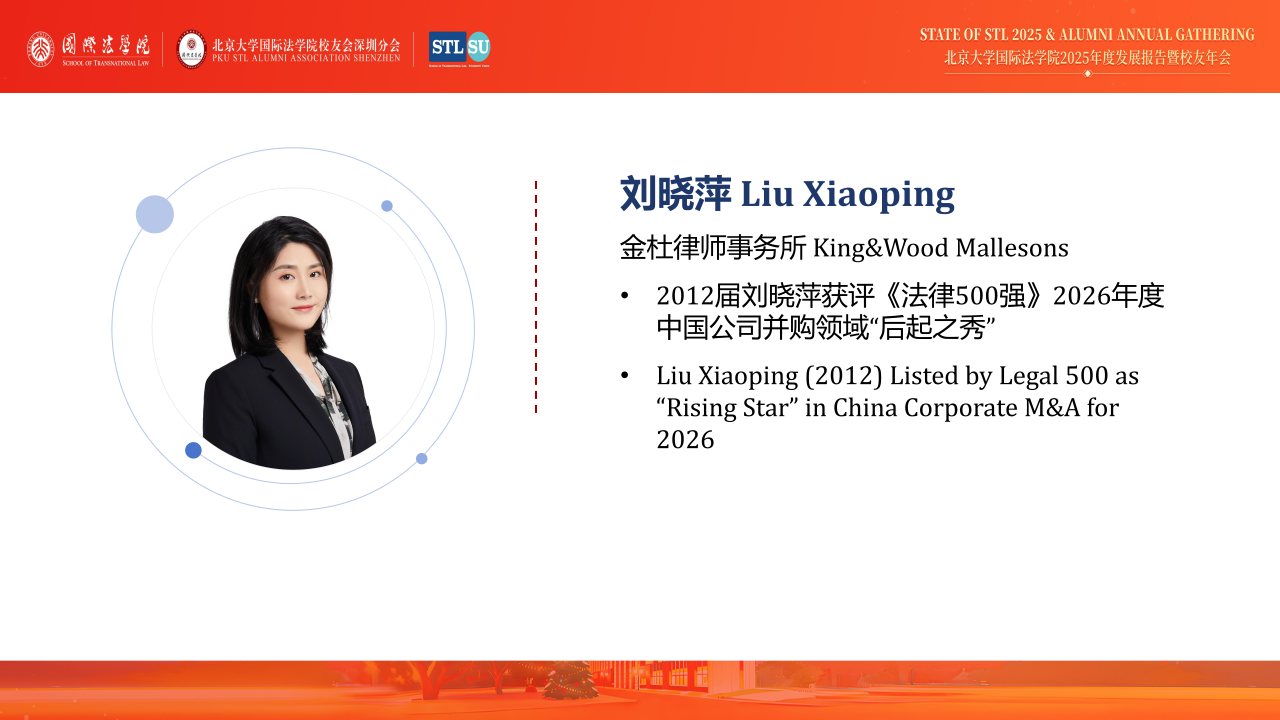
Liu Xiaoping has been listed by Legal 500 as “Rising Star” in China Corporate M&A for 2026.
Gu Dai has been Recognized in GRCD China Industry Lawyer of the Year Guide for work in the area of Private Equity.
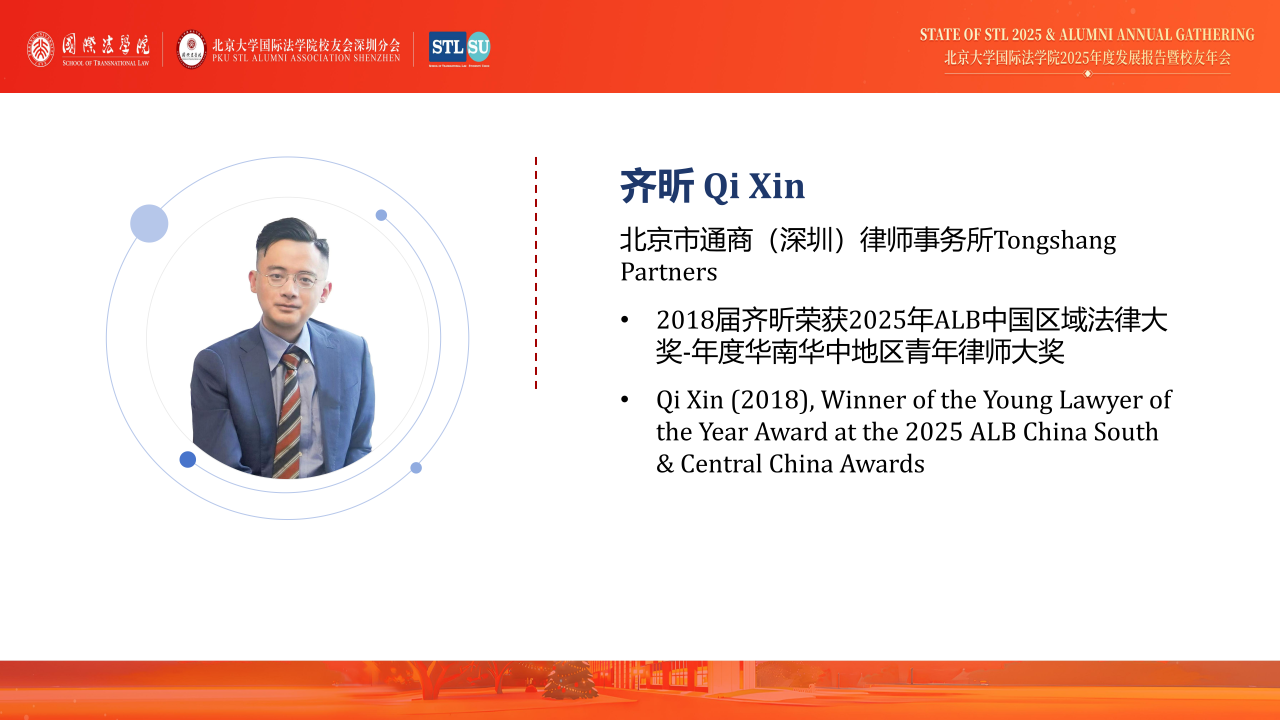
Qi Xin won the Young Lawyer of the Year Award at the 2025 ALB China South & Central China Awards.
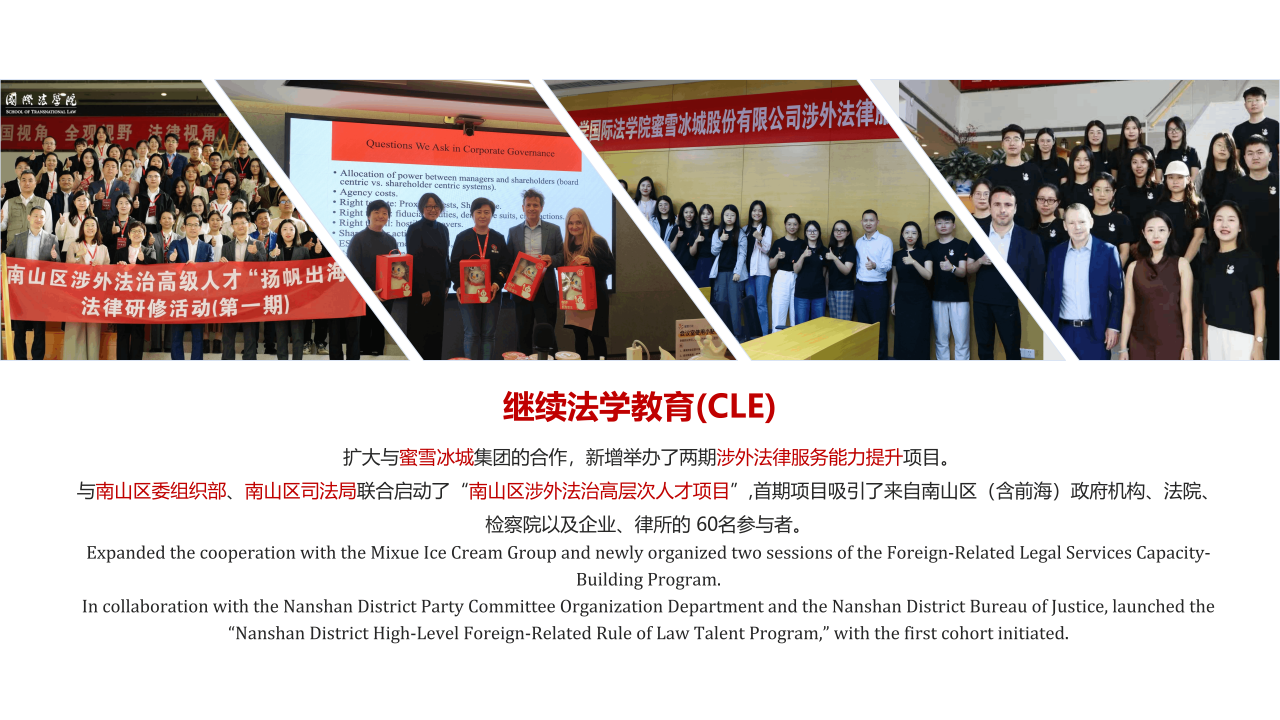
Some of our alumni have also participated in a significant new dimension of our program: Continuing Legal Education (CLE).
Led by STL’s Director of Experiential Legal Education – and STL alum – Guo Xin, STL developed successful CLE programs in 2025, working with Mixue Group as well as a set of Nanshan-based public and private sector professionals working in the area of foreign-related rule of law. The Nanshan District Foreign-related Rule of Law Advanced Talent Program was jointly organized with the Nanshan District Organization Department and the Nanshan District Justice Bureau.
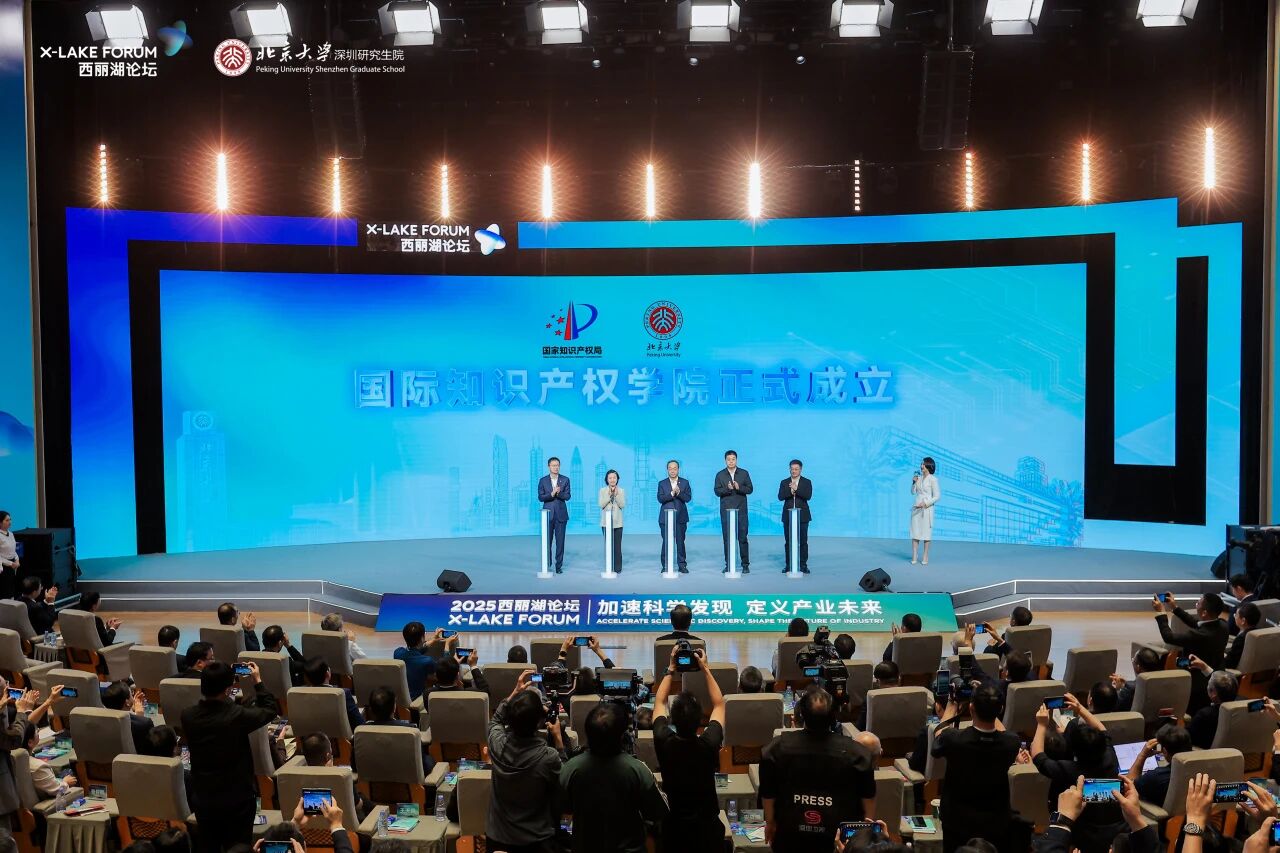
Another important new dimension of our program is the Peking University International IP Academy, which STL is leading. The signing ceremony for the launch of the IP Academy was held in Beijing in October. This is only the third such Academy established by China’s National Intellectual Property Administration (NIPA), and this will be the only such Academy in the Greater Bay Area.
The combination of Peking University, NIPA, and Shenzhen is formidable: we look forward to the rapid development of this International IP Academy.
With respect to our current students, in 2025 STL welcomed 150 JD/JM students from 71 universities, with 53 different undergraduate majors represented.
STL also welcomed 19 LLM students from 15 countries and regions. In addition, we welcomed a new Director of Graduate and International Programs, Qiu Xiaoya; following many years of success as STL’s Director of Moot Court Competitions, Xiaoya is now leading our LLM Program as well as overseeing our global Exchange Programs. Du Yating continues to serve as Assistant Director of International Programs and Academic Affairs.
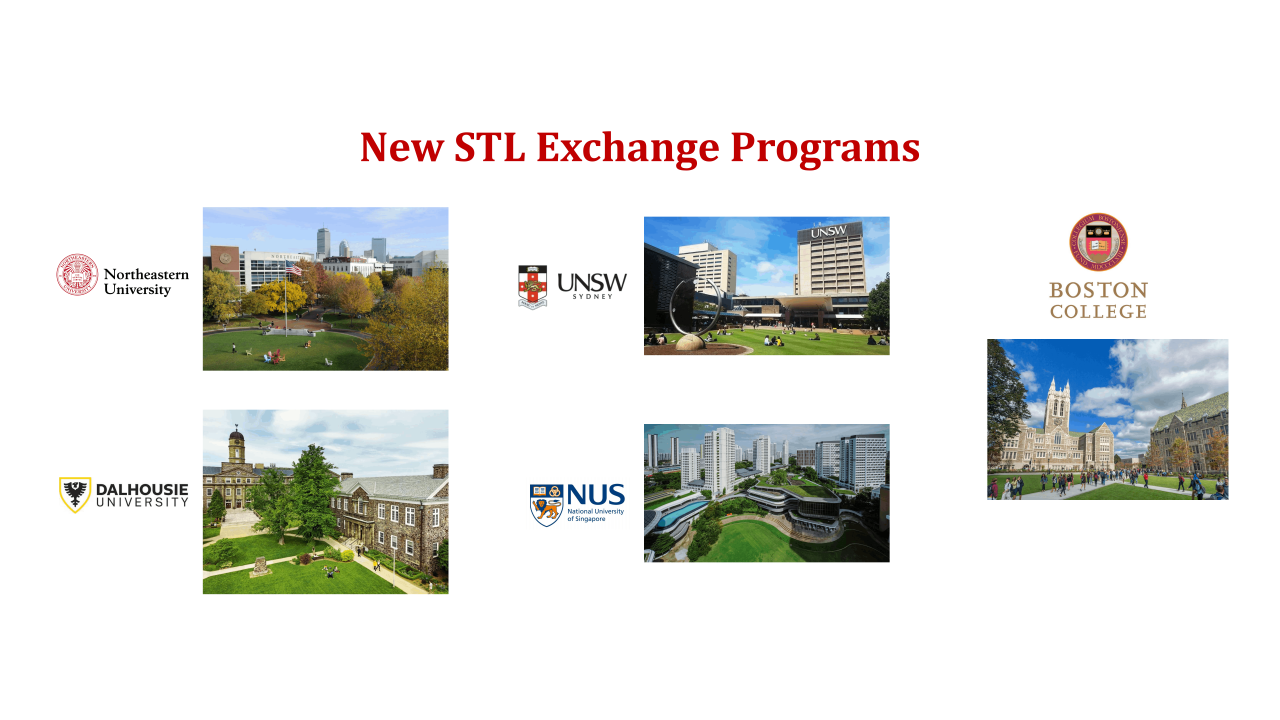
Regarding our LLM and Exchange Programs, I would extend special thanks to Cole Agar, who steadily developed both programs over many years, and who returned to the United States in 2025.
Indeed, thanks to Cole’s efforts, STL added several new exchange programs in 2025; STL now has 17 exchange partners throughout the world. Negotiations with prospective partner schools, led by Xiaoya, are ongoing; we expect to announce more new exchange programs soon.
STL’s moot court performances in 2025 were as successful as ever. There are, unfortunately, far too many honors and awards to mention. With my limited time, I could highlight a few.
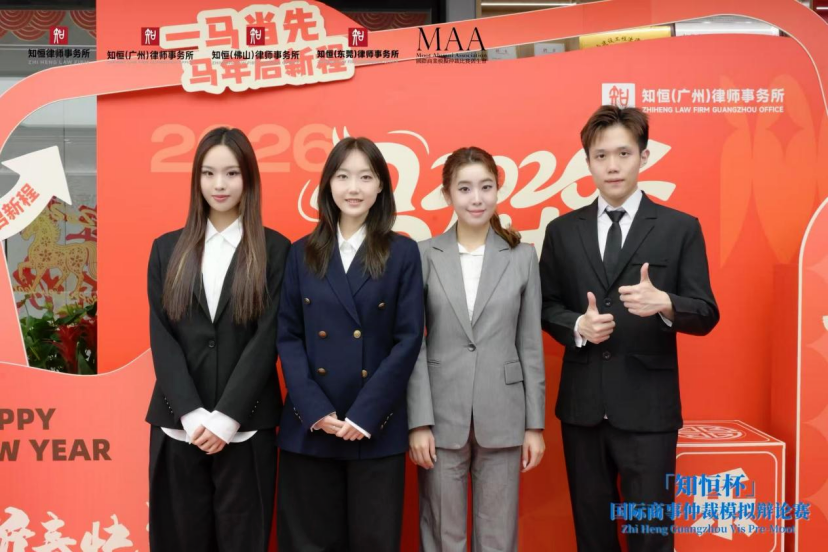
I would first like to recognize the many faculty members who provided support for our moot court teams, under the guidance of Qiu Xiaoya (as outgoing Director of Moot Court Competitions) and Guo Xin (as incoming Director of Experiential Legal Education): Christian Pangilinan, Kevin Gray, Wu Xiaoping, Ted Bin, Pu Jinke, Xu Ruixiang and Wang Ding.
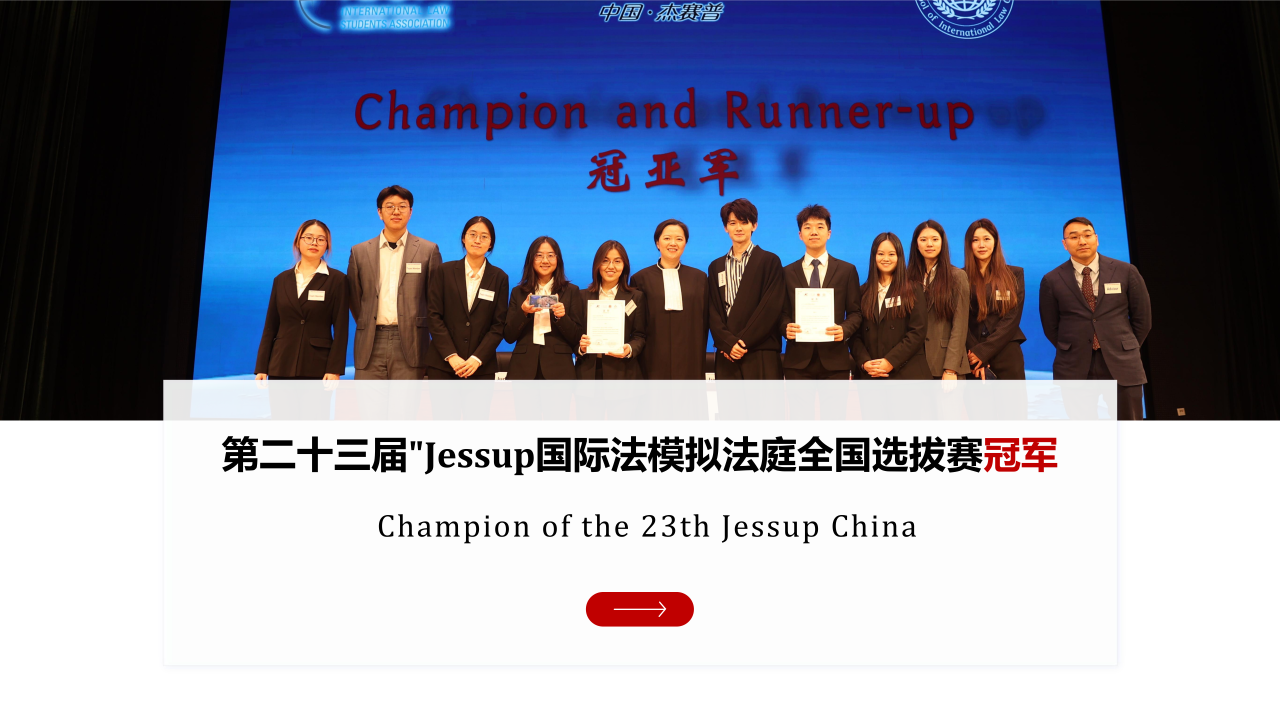
Champions: Li Zhiyao, Lin Hongwei, Lin Keyu, and Tang Luyang won the 2024–2025 Philip C. Jessup International Law Moot Court Competition China National Rounds, securing a place in the International Rounds in Washington, D.C. This was STL’s second national championship in the Jessup competition, twelve years after our first title in 2013. Tang Luyang, Lin Hongwei, and Lin Keyu received Best Oralist honors in the China Rounds, with Tang Luyang ultimately placing, in the International Rounds, in the Top 100 Oralists globally.
Champions: Luo Xiao, Peng Jiansu and Qiu Yiran won the East Asian Regional Rounds (“EARR”) of the 2025-2026 Stetson International Environmental Moot Court Competition (“IEMCC”). The team advanced to the International Finals. All three team members received individual recognition for their performances.
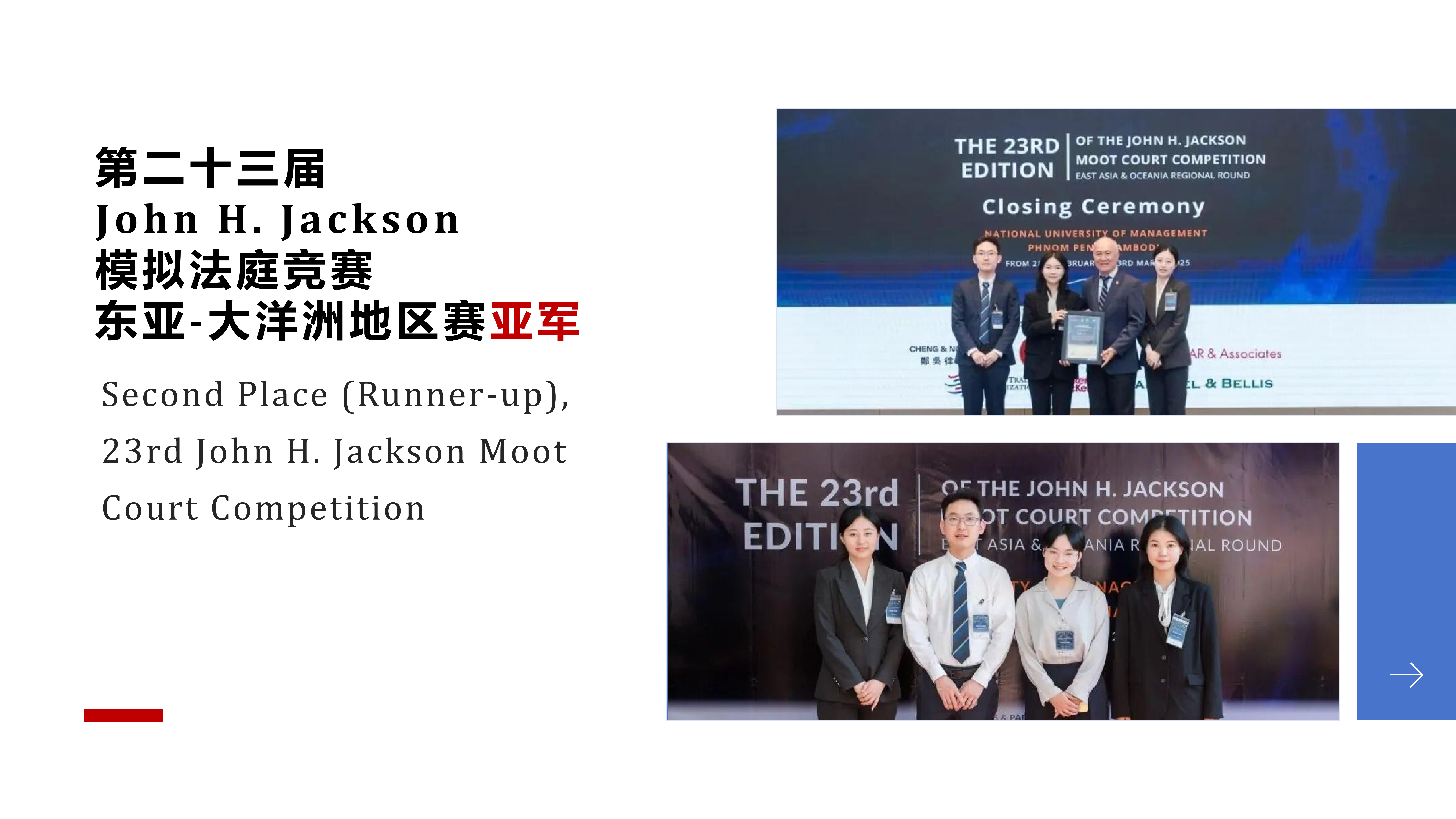
Runner-up Performance: Chen Zehao, Wang Shiyu and Yang Yudie won the Runner-Up Team, Best Overall Written Submission, and Best Respondent’s Written Submission at the 23rd John H. Jackson Moot Court Competition East Asia–Oceania Regional Rounds in 2025, and advanced to the Global Finals in Geneva.
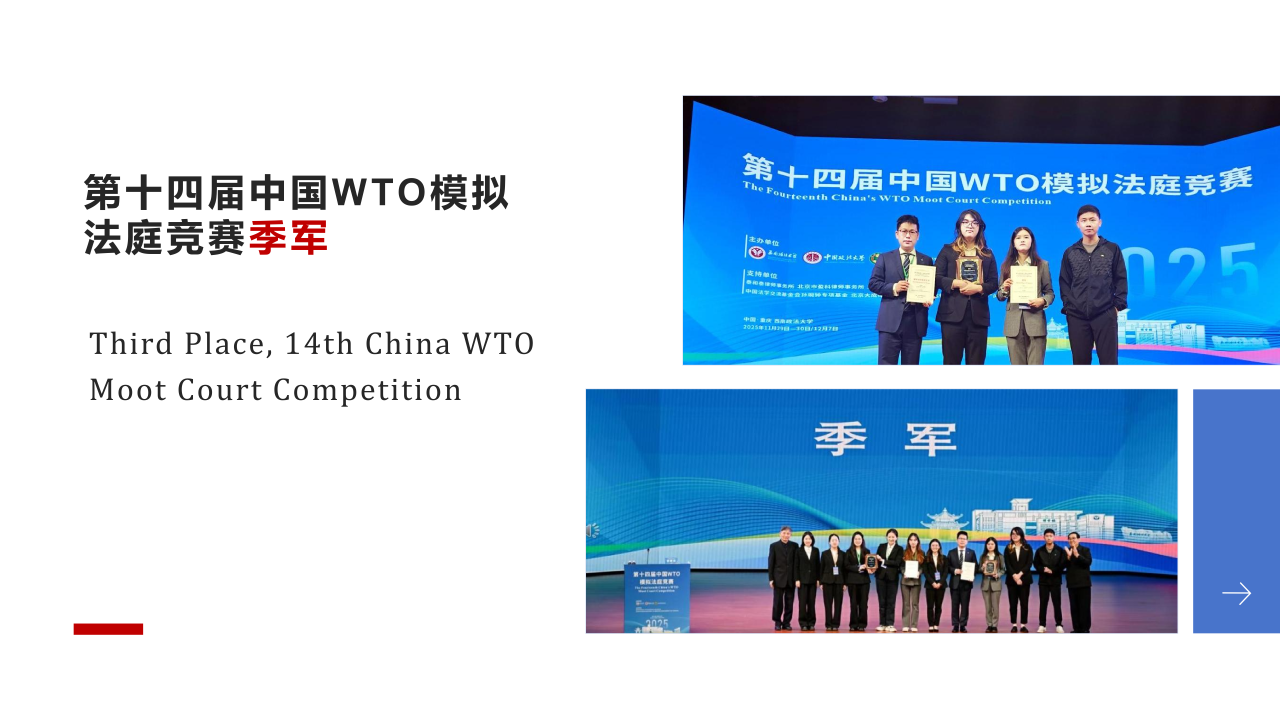
Third Place Performance: Zhang Ziyang, Wang Ziyang and Ma Yiyan participated in the 14th China WTO Moot Court Competition and won the Second Runner-up, First Prize overall, as well as the Best Written Submission of Respondent and the Third Prize of Written Submissions of Complainant. Ma Yiyan was awarded the Best Oralist for the Complainant in the Preliminary Rounds and the Best Overall Oralist in the Preliminary Rounds.
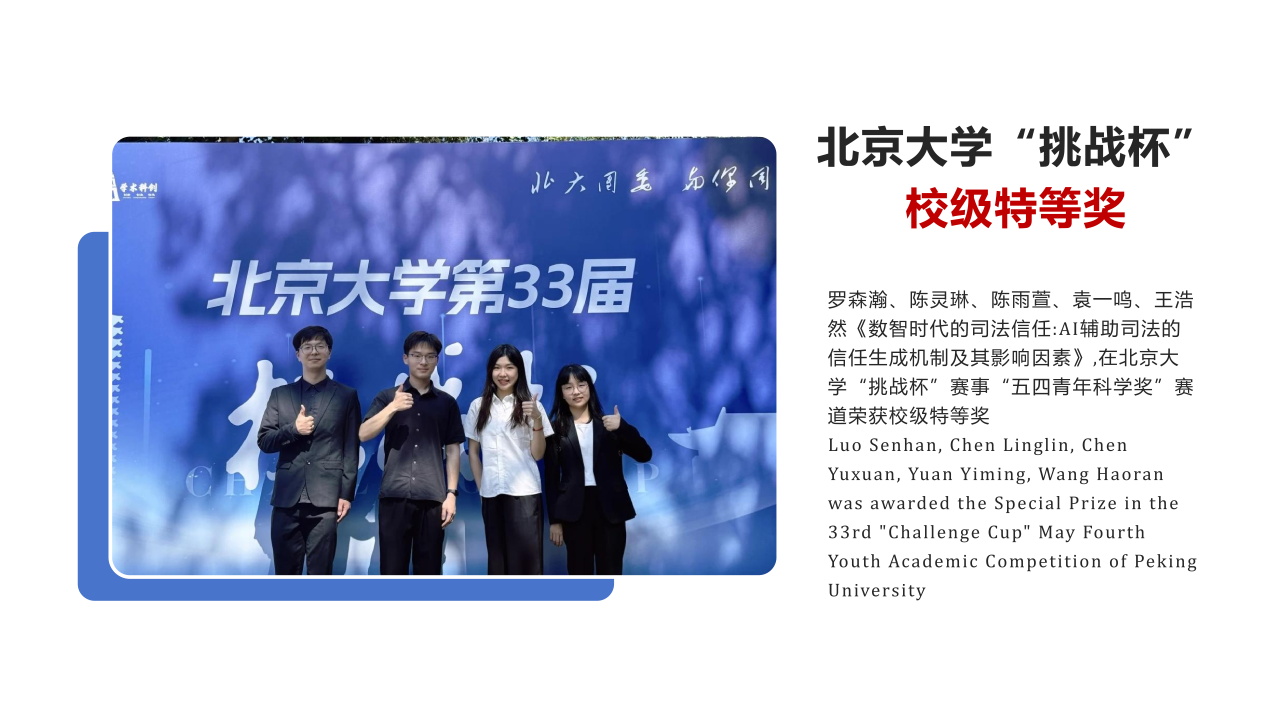
Special Prize Recipients: Luo Senhan, Chen Linglin, Chen Yuxuan, Yuan Yiming and Wang Haoran were awarded the Special Prize in the 33rd “Challenge Cup” May Fourth Youth Academic Competition of Peking University.
Our student performances have been extraordinary in many other settings as well, of course. I would have time to mention two:
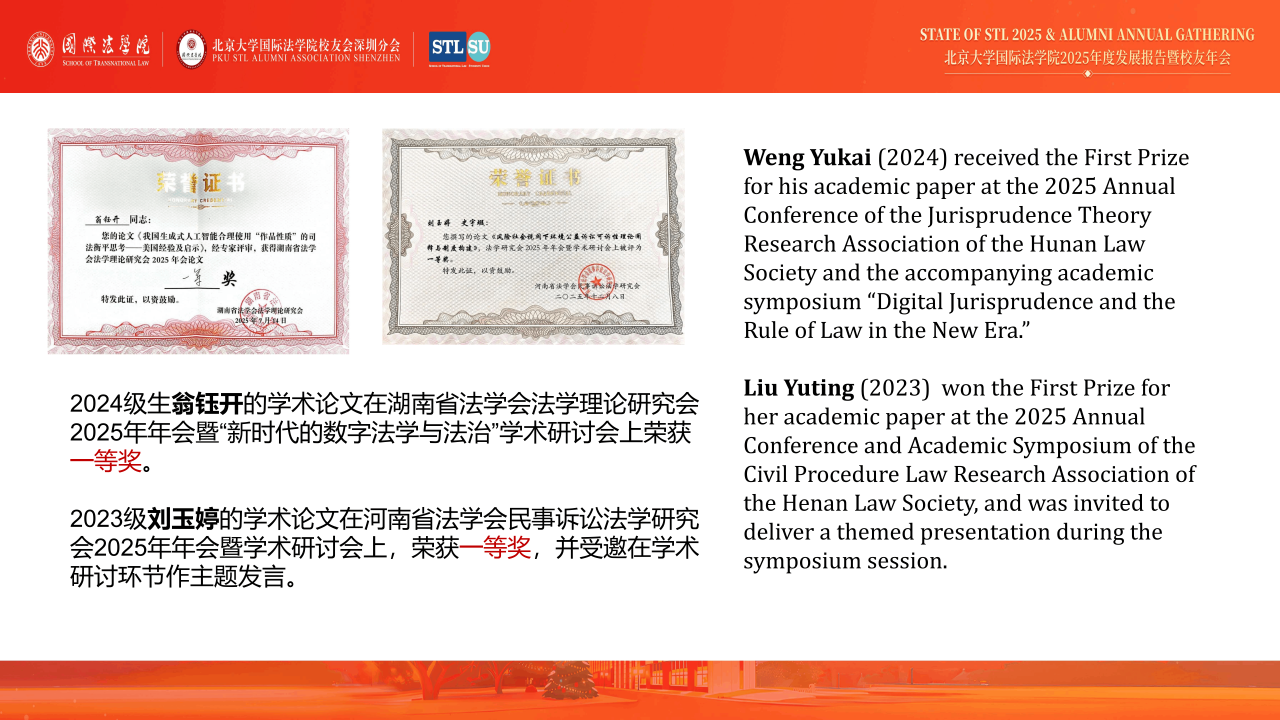
First, Weng Yukai’s paper won First Prize at the 2025 Annual Conference of Jurisprudence Theory Research Association of the Hunan Law Society. That event attracted 481 submissions in total.
Second, at the Annual Conference and Academic Symposium of the Henan Law Society’s Civil Procedure Law Research Association, Liu Yuting won First Prize for Outstanding Paper and was invited to deliver a presentation. That event attracted 359 submissions in total.
In addition to our students, STL’s research platforms and journals have made important contributions throughout 2025.
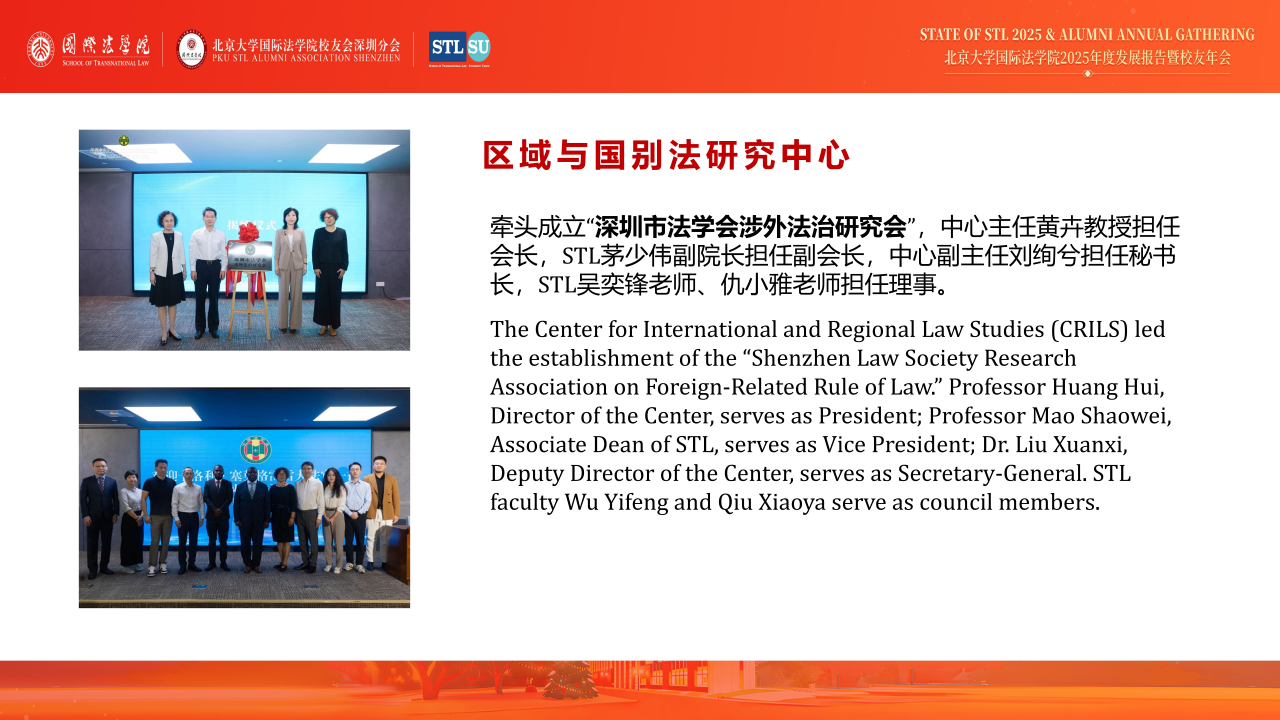
The Center for International and Regional Law Studies (CRILS) led the establishment of the Shenzhen Law Society Research Association on Foreign-Related Rule of Law. Professor Huang Hui, Director of the Center, serves as President; Professor Mao Shaowei, Associate Dean of STL, serves as Vice President; Dr. Liu Xuanxi, Deputy Director of the Center, serves as Secretary-General. STL faculty Wu Yifeng and Qiu Xiaoya serve as council members.
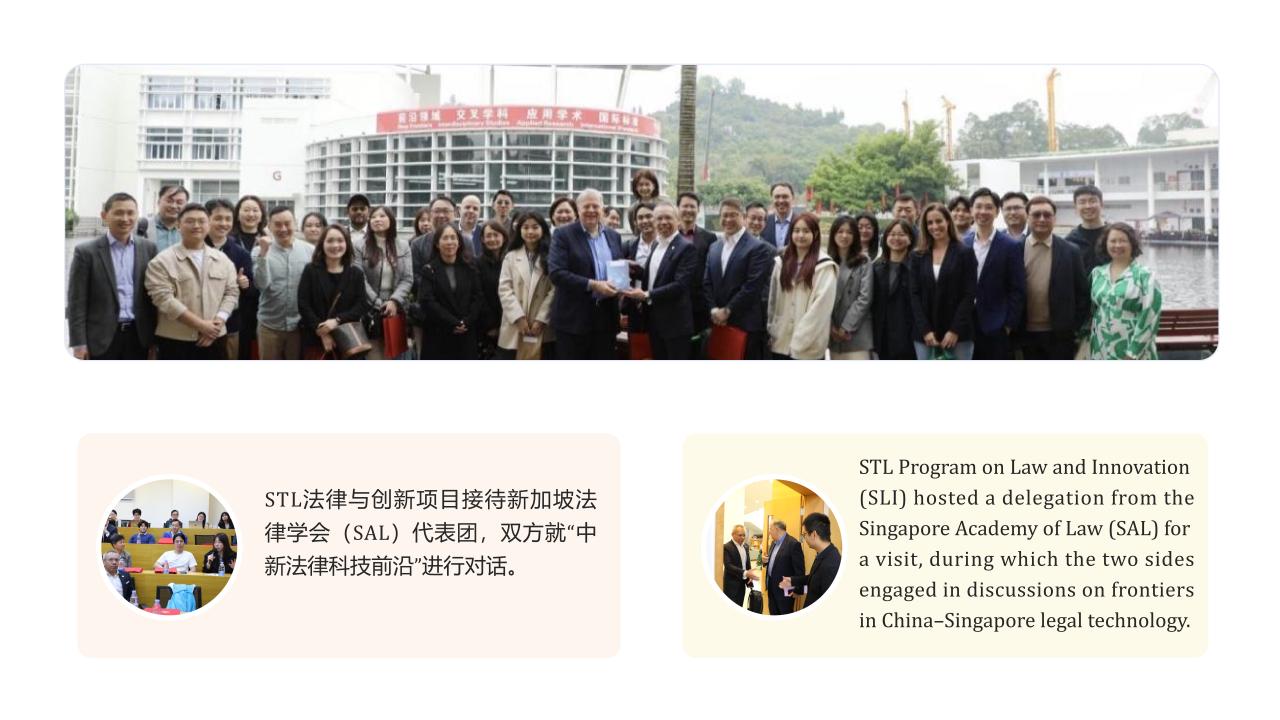
STL’s Law and Innovation research platform organized a visit by the Singapore Academy of Law, as part of that Academy’s technology tour of the Greater Bay Area. The Law and Innovation platform is led by Co-Directors Ray Campbell, Gilad Abiri and Liav Orgad. Having mentioned our second cohort of alumni mentors, I would add that our Law and Innovation platform would also like to invite alumni to serve as mentors for the program.
Also in the area of law and technology, STL hosted the Legal Sub-Forum of the Xili Lake Forum, focused on cutting-edge legal issues related to AI for Science. The Nanshan Lawyers’ Work Committee of the Shenzhen Bar Association co-hosted the event.
In August 2025, the second volume of Peking University Legal Education Review was published. Jointly initiated by Peking University Law School and STL, this series focuses on legal education and learning. The series is co-edited by Liu Zhewei, Associate Dean of PKU Law School, and Mao Shaowei, Associate Dean of STL. The third volume is expected to be published in April 2026.
Turning to STL’s faculty, our faculty continue to raise STL’s profile in China and throughout the world.
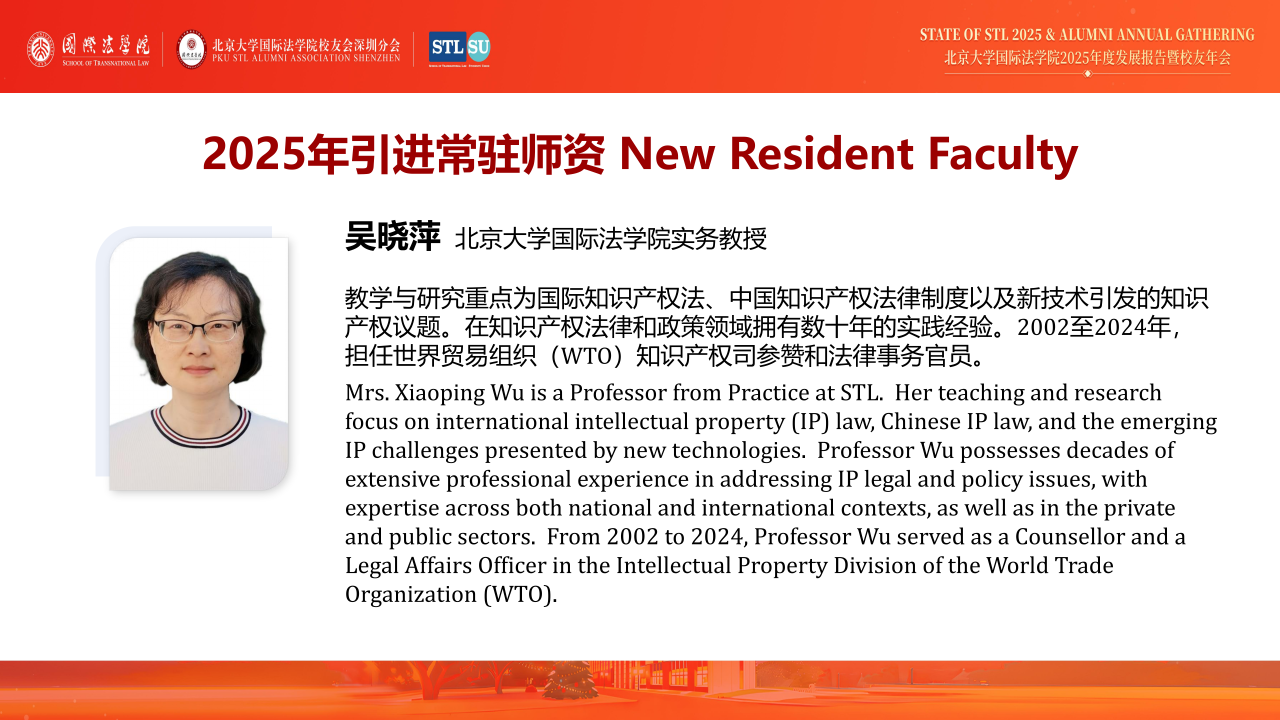
In 2025, STL welcomed Professor Wu Xiaoping as Professor from Practice; Professor Wu joins STL following decades of service at the Intellectual Property Division of the World Trade Organization in Geneva.
Professor Gilad Abiri’s article, “Mutually Assured Deregulation”, has been published in the Stanford Technology Law Review.
Professor Fernando Bracaccini’s article, “On Fair Opportunity and Responsibility”, has been published in The Journal of Moral Philosophy.
Professor Fernando Dias Simões’ article, “Commitments and Expectations: What Exactly has been Promised to Renewable Energy Investors?”, has been published by the Journal of World Investment & Trade.
Professor Ray Campbell was a Recipient of PKU Fourth Yanyuan Friendship Award (December 2024). Professor Campbell is the third STL faculty member to receive this Award, following Dean Philip McConnaghay and Professor Francis Snyder.
Professor Susan Finder delivered lectures at New York University and Yale Law School on China’s Supreme People’s Court (SPC) and its role in developing foreign-related rule of law.
Professor Danny Friedmann’s article, “Sweat and Subjectivity Copyright Impulses”, was published in the Fordham Intellectual Property Media & Entertainment Law Journal.
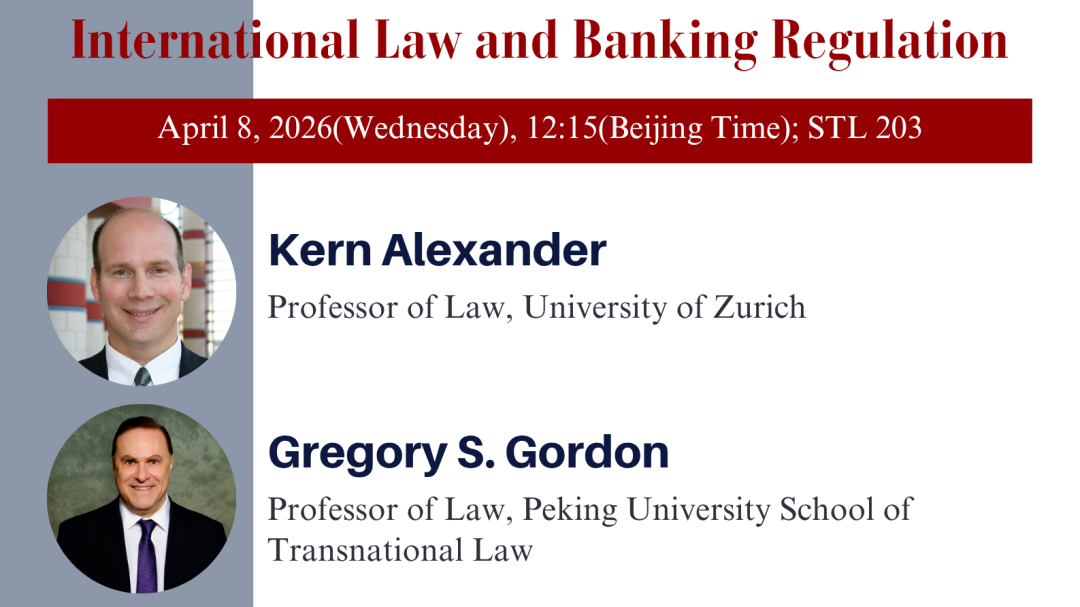
Professor Gregory Gordon’s book, Nuremberg’s Citizen Prosecutor: Benjamin Ferencz and the Birth of International Justice (biography of the last living Nuremberg prosecutor), was published by University of Virginia Press. Former Harvard Law School Dean Martha Minow describes the book as “part novel, part psychological study, part handbook on effective lawyering.”
Professor Kevin Gray’s article, “The ‘New’ Uses of International Law in Common Law Countries”, was published in Transnational Law & Contemporary Problems.
Professor Huang Hui’s translated work, General Principles of German Civil Law: Theory of Legal Acts, by Detlef Leenen, was published by Commercial Press.
Professor Norman Ho’s article, “Law, Music, Statutory Interpretation, and Schubert”, was published in Hofstra Law Review.
Professor Kuokseng Hong’s article, “Economic and Social Perspective on the Moral Damage Compensation System in the Civil Code,” was published in Law and Social Development.
Professor Sang Yop Kang’s article, “Unveiling Misconceptions of Tunneling: Market Capitalization-Based Analysis”, was published in Michigan Business & Entrepreneurial Law Review.
Professor Thomas Man’s article, “The Future of the Trump Tariff Case Through the Lens of Law,” was published by Caixin.
Professor Mao Shaowei’s article, “Hard Cases, Legal Sources and Legal Reasoning”, was published in Peking University Law Journal.
Professor Stephen Minas delivered a keynote speech at the “16th Systemic Innovation Workshop”, which was held in Shenzhen in October and organized by the United Nations Climate Change Global Innovation Hub with the support of Shenzhen Foundation for International Exchange and Cooperation and DeepRock.
Professor Liu Ning’s article, “On the Construction of Economic Duress”, was published in Peking University Law Journal.
Professor Asif Qureshi’s article, “International Legal Ordering to Achieve International Goals: A Discourse Through the U.S. and China’s Foreign Relations Laws”, which was co-authored by STL alumni Yuning Li and Manyun Li, was published in University of Pennsylvania Asian Law Review.
Professor Nitzan Shilon’s presentation, “Latest Trends in U.S. Corporate Governance and Corporate Law Policy”, was part of STL’s 2025 CLE offerings, specifically the Corporate Training Program held at Mixue Ice Cream and Tea in Zhengzhou.
Professor Francis Snyder’s book, The Food Industry and Regional Integration: Search for Healthy Food, has been accepted for publication by Springer.
Professor Emanuel Towfigh, together with STL Professor Gilad Abiri and Peking University Law School Professor Dai Xin, edited a Special Issue of the German Law Journal on “Comparative A.I. Law: A Transnational Perspective on Regulation”.
Professor Xia Zhiyi’s article, “Saying Goodbye to ‘Mandatory’ Journal Publication?”, was awarded Second Prize for Outstanding Teaching Achievements by the Guangdong Association for Academic Degrees and Graduate Education.
Professor Joy Xiang delivered a lecture, “Principles in International Intellectual Property”, at the WIPO-China (SYSU) Summer School.
Professor Wu Yifeng’s translated work, German Insurance Contract Law (6th edition) by Schmikoski (translated by Wu Yifeng and Xu Teng), was published by China Renmin University Press.
The accomplishments of our faculty would not be possible without our Office of Faculty Support: Thank you to Wang Wei, Constance Zhu, Zheng Jianan and Lin Yongqi for supporting our work.
2025 has been quite a year for STL. The particular set of contributions and achievements that I have covered over the past 30 minutes is – I think we can agree – quite particular to STL.
Welcome, again, to the State of STL 2025 and Alumni Annual Gathering.