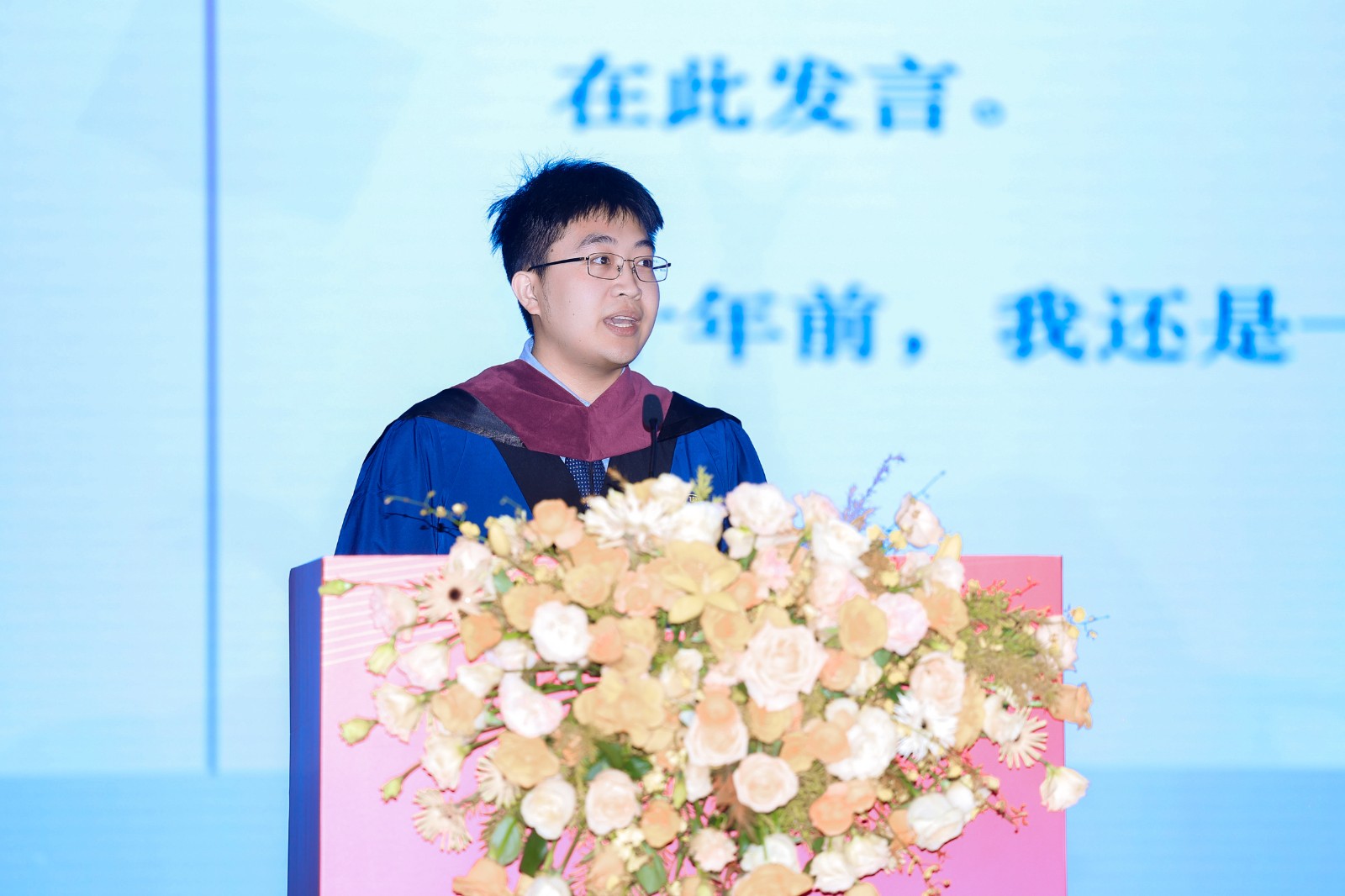
De Freitas Domingues, Theodora (Theo)
I did not grow up imagining I would study in China. The idea arrived gradually, almost quietly. What began as curiosity eventually became a plan, and Shenzhen became the place where that plan took shape.
I was around 20 when my curiosity first took root. At my university in Brazil, a partnership with the Confucius Institute opened a small window. I joined simply out of curiosity. Through those classes, I encountered more than the language. I heard stories about festivals, zodiac traditions, and the rhythms of everyday life in China. At the time, China still felt distant, but the experience lingered.
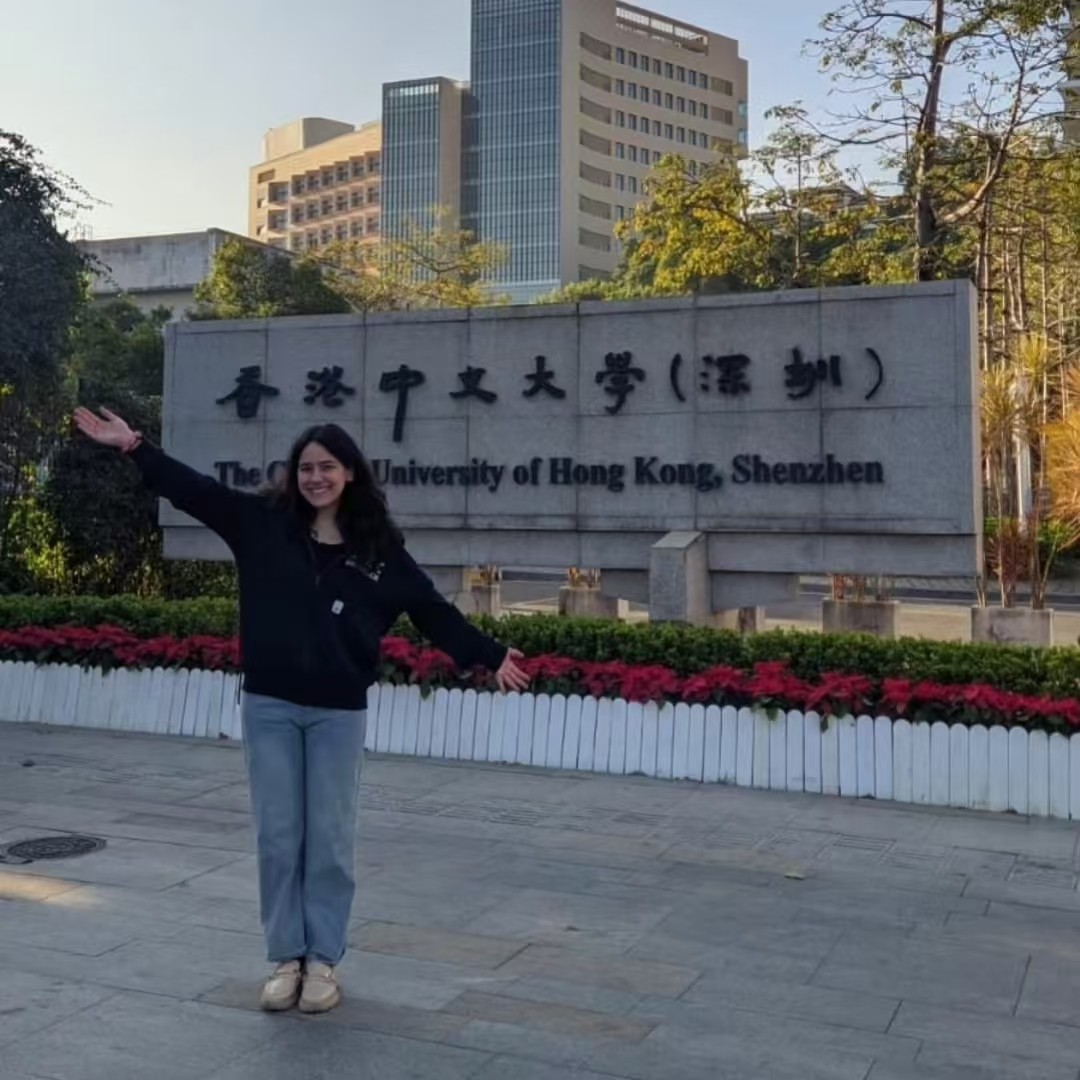
A real turning point came in 2023, when I chose Shenzhen for an exchange semester at The Chinese University of Hong Kong, Shenzhen. Many of my classmates chose Europe. I deliberately chose otherwise. I wanted to go somewhere unfamiliar, somewhere I felt I could learn something genuinely new.
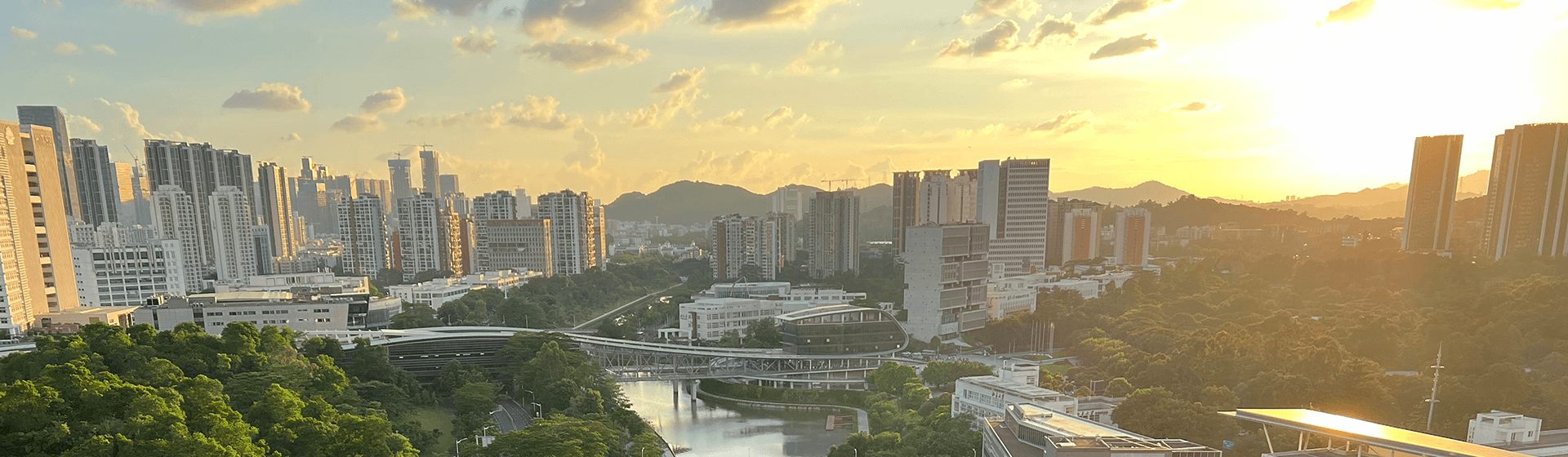
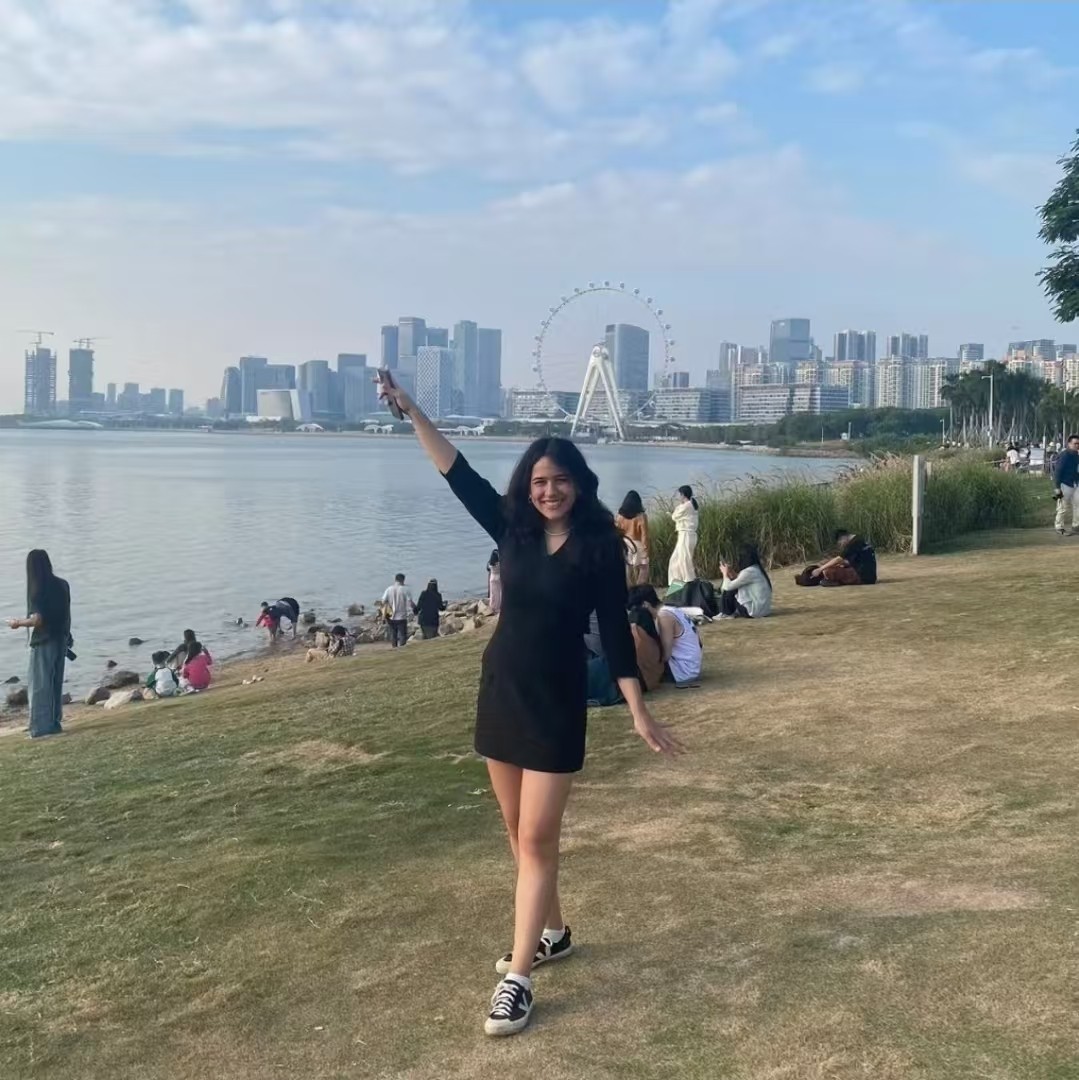
When I first arrived, the skyline immediately caught my attention. I remember looking up and realizing I had never seen buildings rise so high before. Entire clusters of skyscrapers stretched upward, and the scale of the city felt both unfamiliar and exciting.
What impressed me even more was the pace of change. During my exchange, I watched buildings under construction slowly take shape. By the end of the semester, some of them were already completed. When I returned to Shenzhen two years later, the changes were even more visible. New commercial areas had appeared, and the city felt more refined. Infrastructure was easier to navigate, and the urban design felt increasingly human-centered. The transformation was not abstract. I could see it block by block. Over time, I realized I was witnessing something people often talk about but rarely experience directly: what “Chinese speed” actually looks like in everyday life.
Cultural moments made the experience feel personal. During Mid-Autumn Festival, I joined friends in making and releasing water lanterns. People around us wrote wishes before setting them afloat. I had never seen a ritual like that before. It felt simple, but quietly moving, as if everyone had a small place to put their hope for the year. It was not a grand ceremony, just an evening by the water, but it made Chinese traditions feel close rather than distant.
Mid-Autumn Festival of 2023
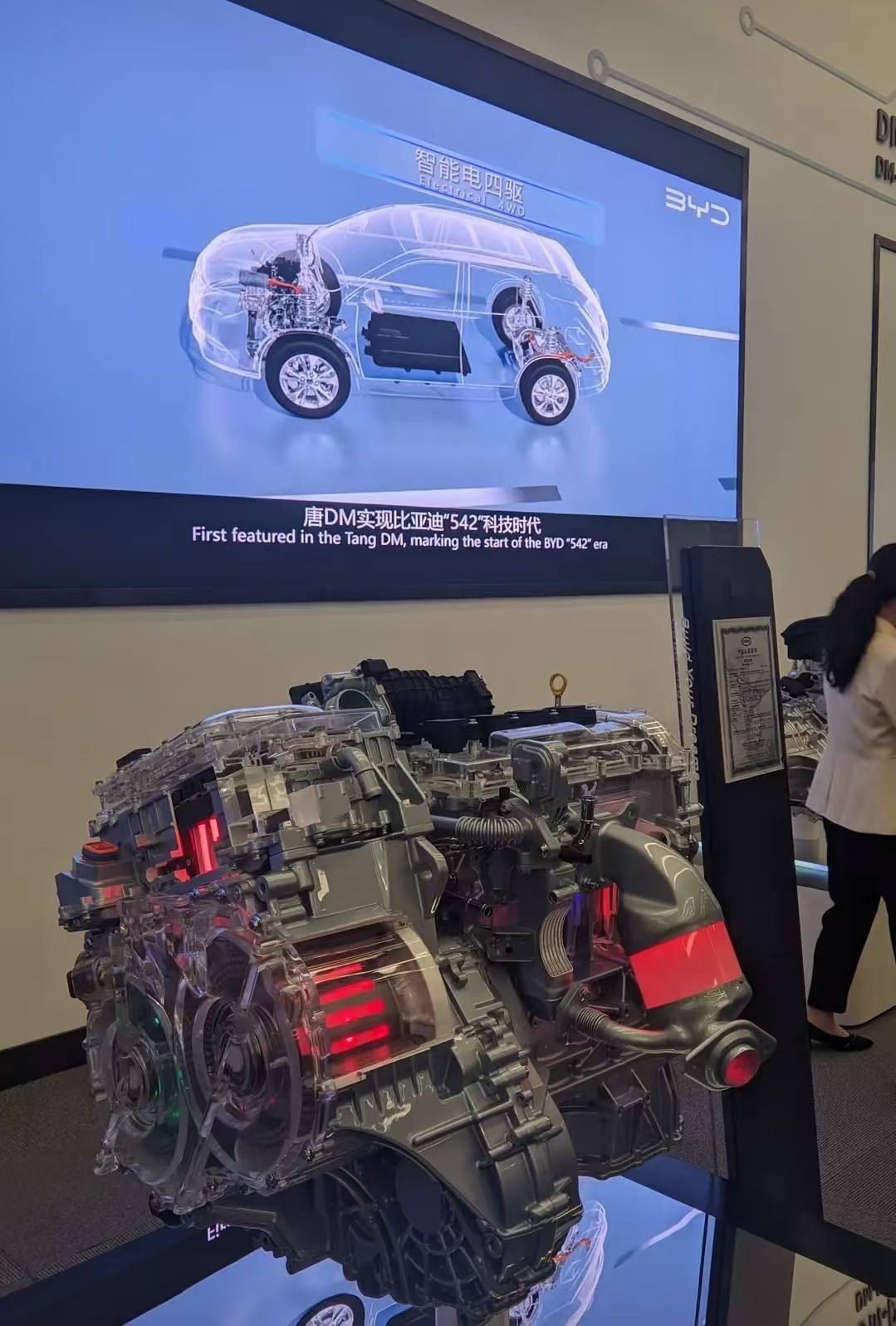
Back on campus, I also began noticing another side of Shenzhen. I remember our university organized a visit to BYD. During the tour, I saw vehicle prototypes, walls filled with patent certificates, and demonstrations of battery technology. I do not remember every technical detail now, but the overall impression stayed with me. Innovation there was not abstract. It was industrial, visible, and moving fast. For someone already interested in sustainability, that visit made China’s green ambitions feel real.
Most students end an exchange semester by asking themselves one simple question: did I enjoy it? For me, there was no hesitation. I found myself asking a different question instead: would I come back one day?
The exchange felt almost like a trial run. I experienced everyday life, demanding coursework, and the warmth of people around me. That combination made the answer surprisingly clear. I wanted to return.
When the exchange ended, the connection did not fade. Back in Brazil, I found myself thinking about China more often than I expected. It felt less like curiosity and more like an urge, so I began looking for reading groups, research communities, and student networks focused on China.
That was how I discovered Observa China, a Brazilian research network bringing together students and researchers interested in China. Participation was voluntary. There was no salary and no formal credit. People joined because they genuinely wanted to understand China more seriously. That was exactly why I joined.
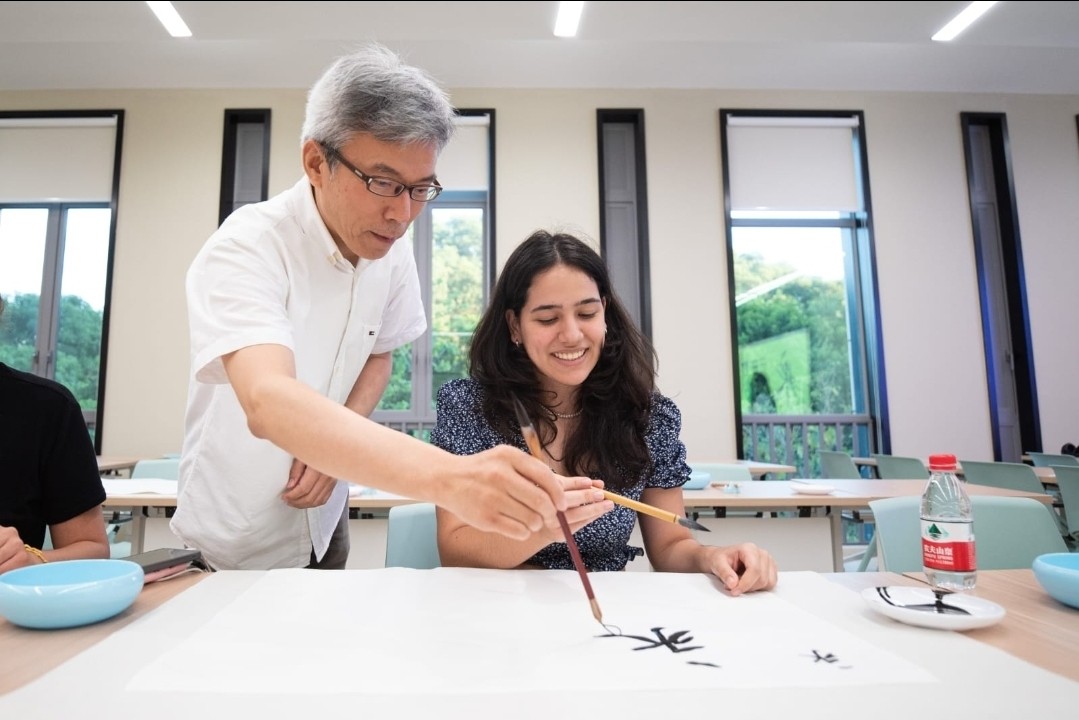
Calligraphy class in 2023, CUHK
In Observa China, our discussions moved far beyond general impressions. We focused on topics such as renewable energy, sustainability, and China’s role in the Global South. Much of the work I took part in involved translating and organizing research so that Portuguese-speaking audiences in Brazil could access more nuanced perspectives on China. I also helped compile research materials, prepare background documents, and support discussions related to sustainability and international cooperation. The work itself was not very visible, but it gave me a more structured way of seeing things. Shenzhen had shown me rapid development in practice. Observa China helped me understand the policy logic and global positioning behind it.
I first heard about Peking University School of Transnational Law during a conversation with colleagues at Observa China. An STL alum mentioned the program in passing and described a law school in Shenzhen built around cross-border legal training. I remembered it. Later, I looked up STL and read more about its teaching approach and curriculum. The more I read, the more it felt aligned with what I was looking for. For the first time, Shenzhen returned to my mind not as a past experience, but as a future possibility. Eventually, I came back to China and began pursuing my degree at STL.
Looking back, the progression feels less accidental than cumulative. Interest led to experience. Experience led to research. Research led to conversations. And those conversations eventually brought me back to Shenzhen, this time not as a temporary exchange student but as someone ready to stay.
Returning to Shenzhen was only the beginning. What mattered next was how I wanted to use my time here, and what questions I wanted to take seriously as a law student.
I was born and raised in Brazil. Early on, I spent time working directly with homeless communities there. Those experiences changed the way I understood law. It was not just something you read in textbooks. It was either followed or it was not. When I saw people whose rights were clearly being ignored, I kept returning to the same questions: how do we make law actually work, and how do we protect the people who need it most? Those down-to-earth moments sparked my interest in human rights and environmental justice, and they made me want to dig into the law in a serious way.
Later, I worked together with an NGO with ecosoc status which made possible to present a work/proposals for a human rights and business treatyI worked at a United Nations agency and also spent time with grassroots groups back in Brazil. Through those experiences, I became convinced that global climate policies cannot stay at the level of slogans. They have to be rooted in what is actually happening on the ground. Brazil has the Amazon. China, especially Shenzhen, has been pushing forward with green technology and experiments in policy and market mechanisms. I wanted to understand both worlds and to be able to translate between them.
When I was applying to law schools, I looked at many universities’ websites. I noticed that STL did not always advertise specific topics like “carbon markets” on the homepage, but when I dug deeper, I found faculty members with diverse professional backgrounds, including people who had worked in international institutions. I also realized that the program allows students to shape their own learning paths. That flexibility mattered to me.
Right now, I am taking courses such as Energy Law and Foreign Direct Investment in China. They connect directly to the questions I want to work on in the long run, especially how green investment moves across borders and what it means for communities on the receiving end. My research interests now revolve around three areas: the legal and regulatory challenges of carbon markets, how green investment affects local and indigenous rights, and how cross-border projects can better respect human rights.
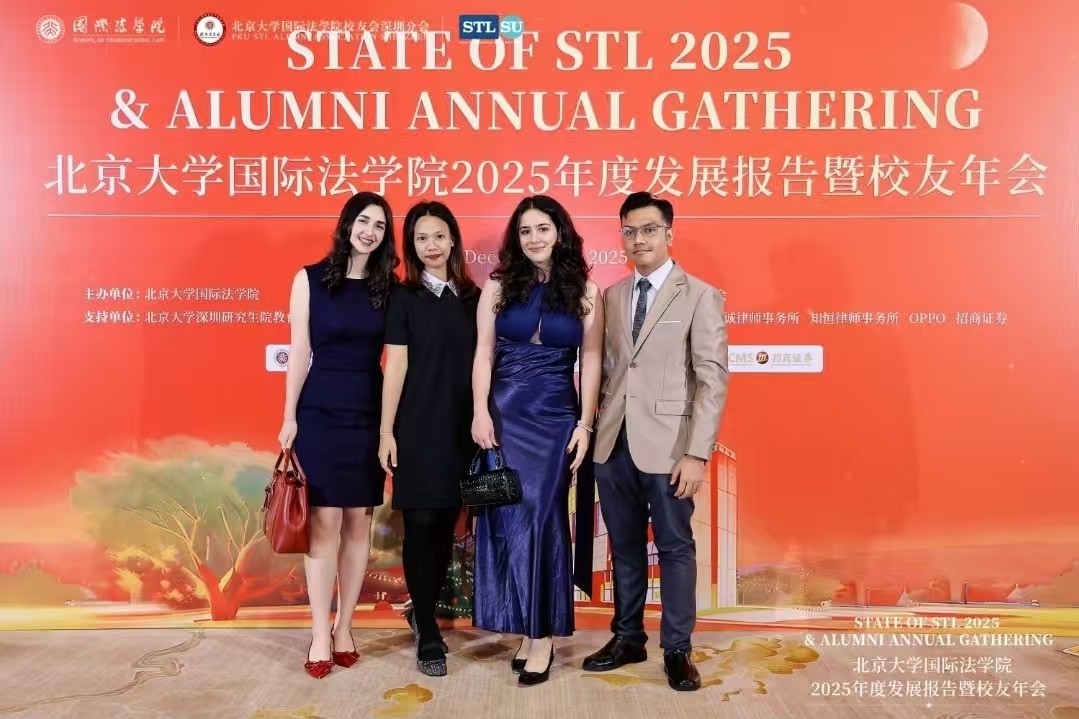
STL has also shaped me beyond academics. I have made friends from different cultures, especially from Asia and the Middle East. Even though we come from different places, we share the same mix of hope and uncertainty that comes with studying far from home. Once, when I was feeling down, a friend from the Middle East gave me a hug. Hugs are not really part of her culture, but she did it anyway to make me feel better. It was a small moment, but it reminded me that connection can travel across cultural lines.
In the future, I hope to work as an in-house legal consultant, supporting Chinese companies investing in Brazil, especially those working in energy and sustainability. I want to help these companies understand Brazil’s legal environment, and also help Brazilian communities better understand how Chinese investors operate. It is not about one side teaching the other. It should be a two-way conversation, culturally and legally.
Life in Shenzhen today feels full but also balanced. Between classes, I often spend time walking in the city‘s parks. One evening, I remember climbing up a hillside just to watch a light show spread across the skyline. What stayed with me was the scene itself, with trees in the foreground, towers rising beyond them, and light moving quietly between the two. The scene surprised me, much as my first visit once had, when the skyline alone had done the same.
If you ask what China is like, my answer is simple. China is easy to misunderstand from a distance. Living here changes that. People are friendlier than many expect. Cities are more layered than headlines suggest. And if you stay curious long enough, you start to see real possibilities.
My story is not one of sudden leaps across continents. It is a series of small steps: a language class, an exchange semester, a research network, and a conversation that opened the next door. Shenzhen was not the starting point. But somewhere along the way, it became the place where curiosity turned into commitment.