Setting Out on a Journey: Memories of Bygone Student Days
Q: Looking back on your time at STL a decade ago, could you share some of your memories and reflections from those days?
A: My academic journey at STL was not without its hurdles. From the very beginning, I was confronted with unprecedented pressure. My classmates were all extraordinarily talented: provincial or municipal top scorers in the National College Entrance Examination, or top graduates from Peking University and Tsinghua University. In such a competitive environment, I inevitably fell into a deep pit of self-doubt. I remember reading cases back then—I knew every single English word, but once they formed sentences and paragraphs, the meaning was utterly lost on me. I simply couldn't grasp the underlying legal logic or essence. I particularly struggled with my very first course, Torts. Faced with the sheer volume of reading, the unfamiliar case method, and the ease with which my classmates fielded Socratic questions in class, a tremendous sense of disorientation threw me off balance, making my studies especially arduous.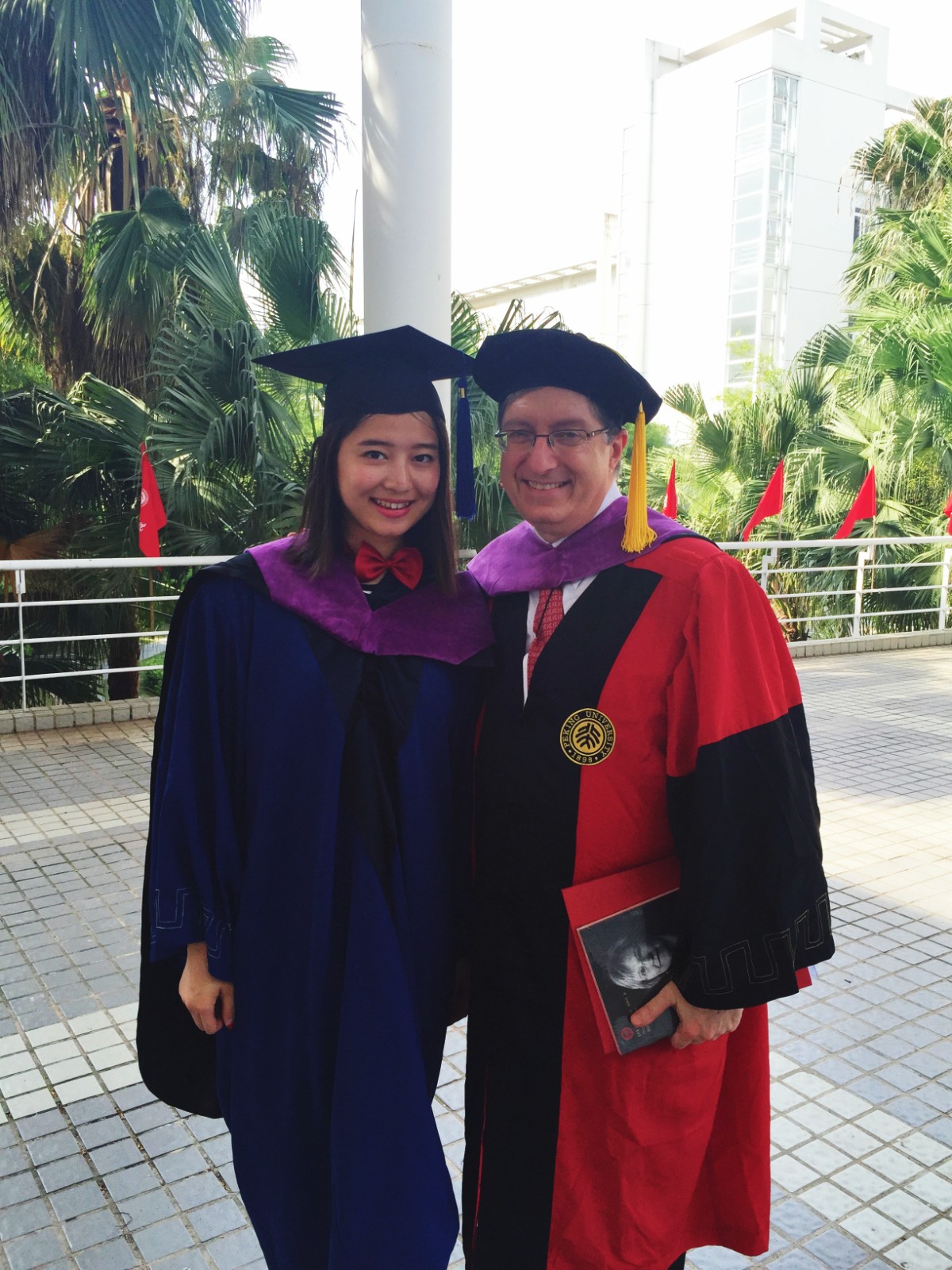
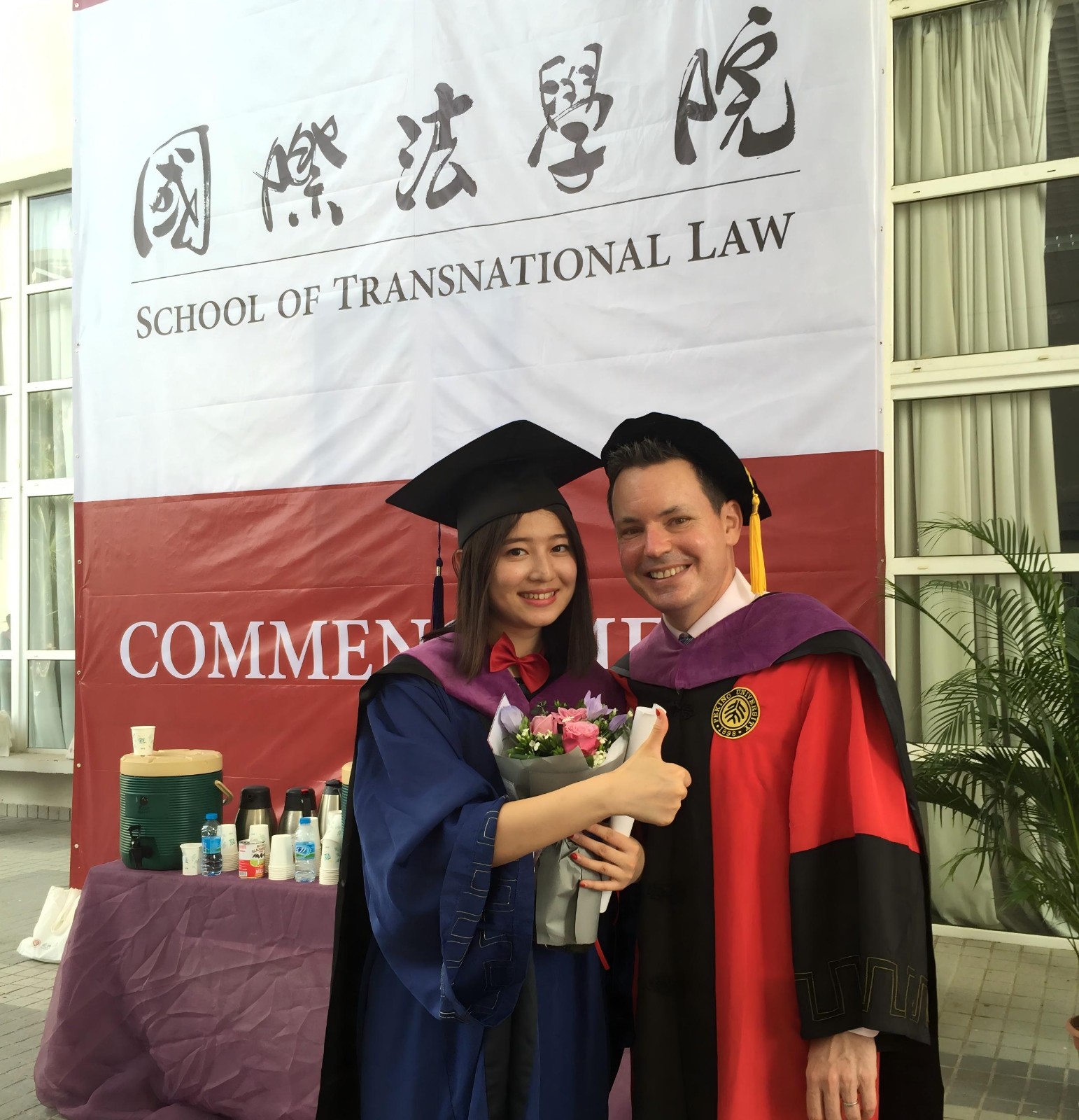
One memory stands out vividly. It was an evening during the first quarter of my 1L year. We were in the Building B, and the hallway lighting was dim. Frustrated with my studies, I was hiding in a stairwell corner, wallowing in despair and on the verge of tears. Just then, Founding Dean Jeffrey Lehman emerged from his office and saw me looking utterly dejected. He asked with concern, "What's the matter? Come in and talk." I stepped into his office, and he picked up a marker. On the whiteboard, he began drawing dots, one after another. He explained that these dots were like the individual cases we read and the scattered pieces of knowledge we acquired. At first, they seemed to be nothing more than random, isolated specks—without apparent shape or discernible pattern. Dean Lehman continued adding dots to the whiteboard until they reached a certain density. Then, gradually, those dots connected on their own to form the image of a complete, smiling face.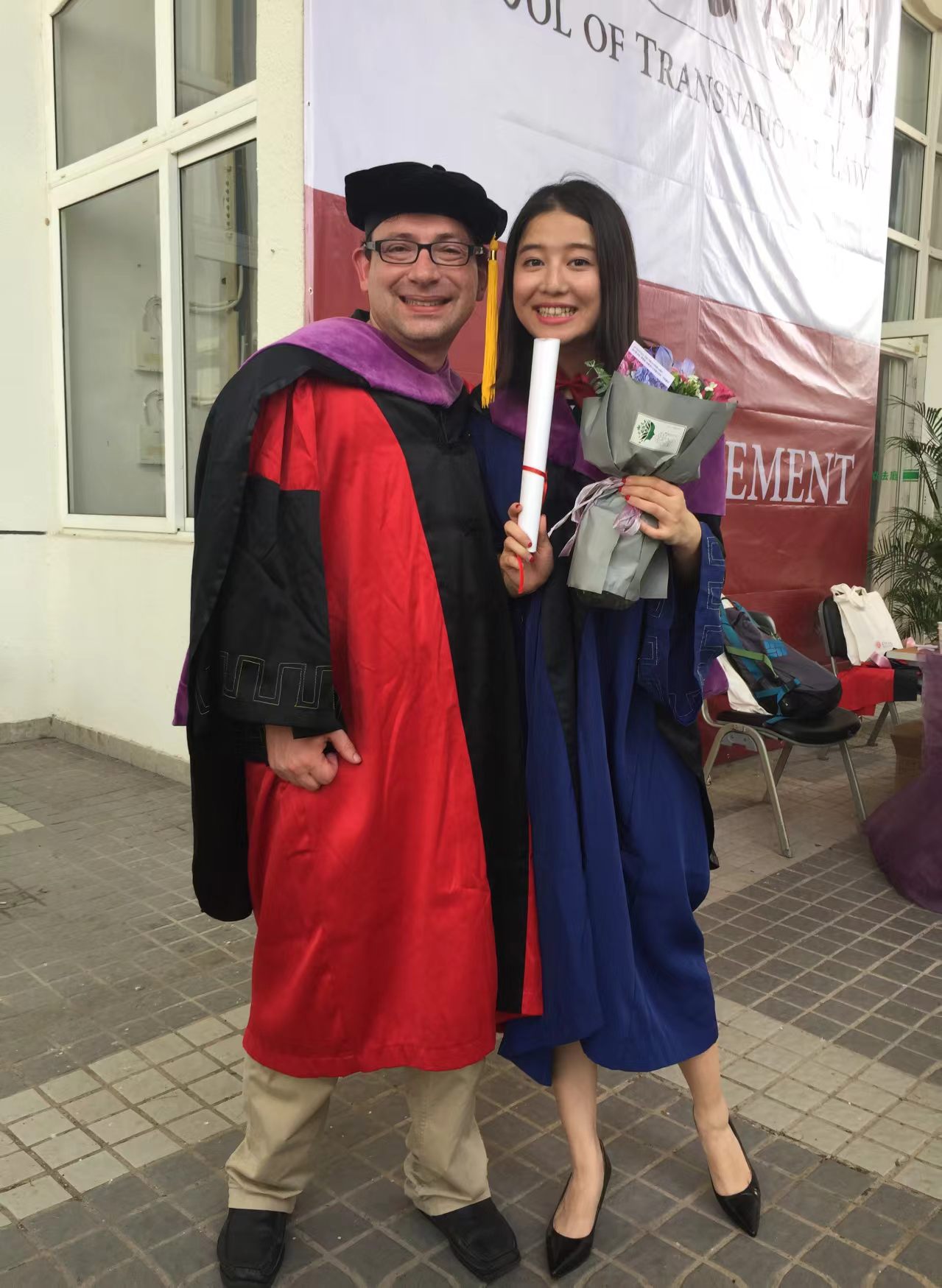
In that moment, I was profoundly moved. Throughout my four years of study and even into my professional career, whenever I find myself bogged down by mundane tasks, feeling lost, or running low on motivation, the image of that smiling face on the whiteboard inevitably surfaces in my mind. It has become my spiritual totem—a shining lighthouse amidst a dark, turbulent sea, reminding me of the value of perseverance and accumulation.
The academic pressure at STL was immense. Juggling both U.S. and Chinese law curricula meant our schedules were packed solid, even on evenings and weekends. On top of managing this intense coursework, I also had to balance moot court competitions, exchange programs, internships, and my editorial duties for the Peking University Transnational Law Review. At times, I felt utterly exhausted. Yet, after years in the workforce, I've come to a sudden realization: that period of my life—when I could fully dictate the rhythm of my studies, immerse myself wholeheartedly in learning, and constantly push my own limits—was incredibly precious. I often urge current students to cherish every single day at STL. Even the painful moments, when recalled someday in the future, will transform into sweet memories.
Q: During your intensive and high-quality studies at STL, could you share some memorable classroom experiences or the professional skills you honed that have served you throughout your career?
A: STL's curriculum did more than just impart legal knowledge to me; it profoundly reshaped the way I think. Several courses, in particular, stand out for their lasting impact, as the classroom insights and professional skills they provided directly translated into my subsequent work practice.
One such course was Professor Peter Malanczuk's International Law class. Professor Malanczuk is a highly seasoned scholar in the field, and his classroom transcended mere statutory interpretation. He taught us that law is not simply a cold collection of rules but rather a medium for dialogue and communication between different civilizations and cultures. By analyzing the cultural factors embedded in transnational legal conflicts, he made me realize for the first time that legal work is, in essence, a form of cross-cultural practice. This course laid a crucial intellectual foundation for my later work in policy coordination within multicultural environments at international organizations.
Another course that had a tremendous impact on my professional development was Professor Matthew Stephenson's Statutory Interpretation. While I was taking the course, I hadn't fully grasped its value. However, over the years, especially in my role at the Corporate Secretariat Department of NBD, I've found myself applying the interpretive principles taught in that class with remarkable frequency. Although I no longer engage directly in hands-on legal work, my daily routine is steeped in the act of "interpretation." I need to decipher the specific provisions of the Board's rules of procedure, understand the drafting intent behind certain clauses in the bank's charter and internal guidelines, and review policy documents to ensure their language is precise and unambiguous. The various principles Professor Stephenson taught us—examining the plain meaning of the text, considering the context, and tracing original intent—have become indispensable tools for tackling thorny issues in my work. The application of this knowledge and skill allows me to grasp the core of a document quickly and accurately, and when drafting new texts, it enables me to anticipate potential interpretive ambiguities, thereby reducing the risk of future disputes.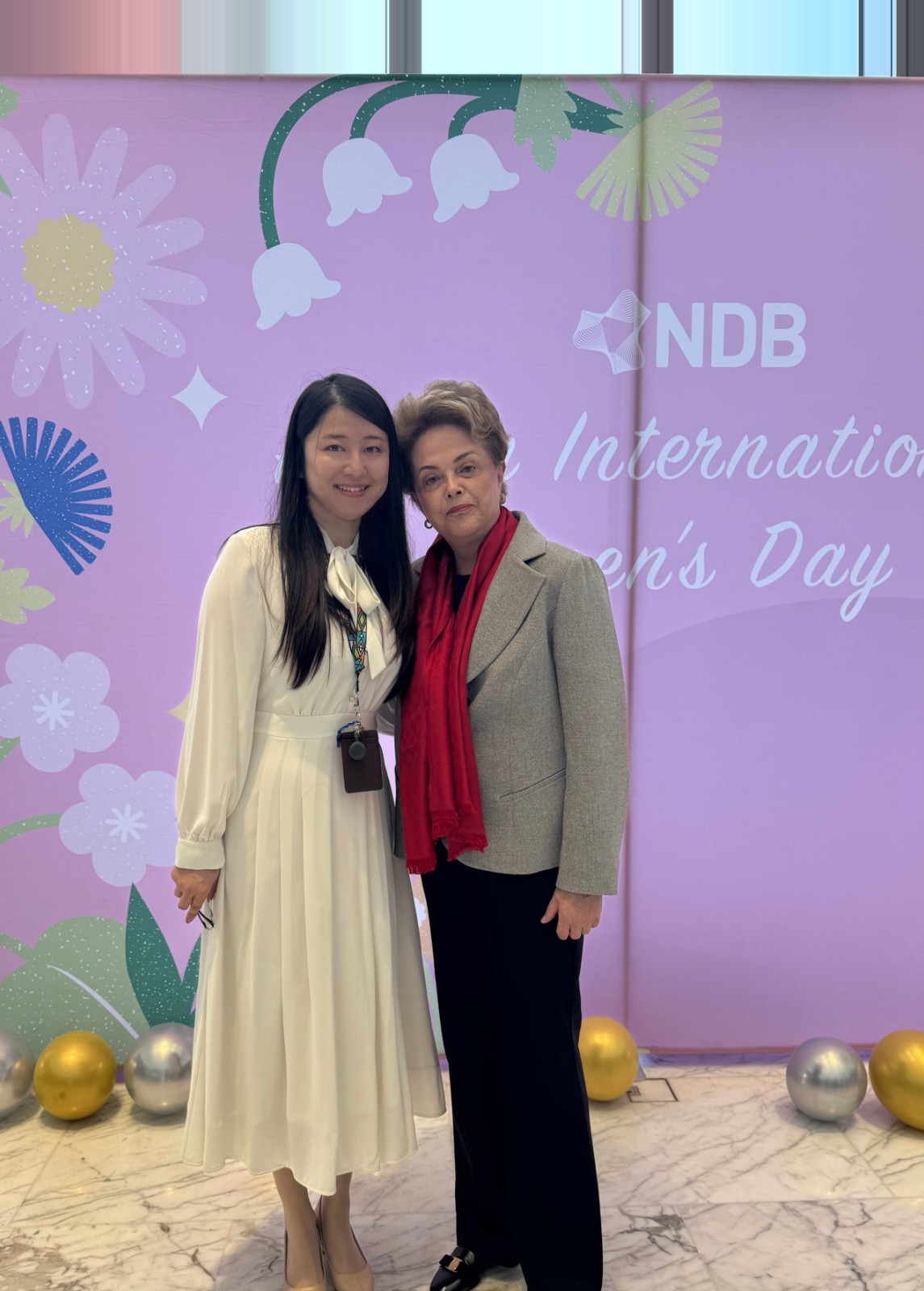
Beyond specific courses, STL's core Socratic method subtly yet thoroughly reshaped my intellectual habits. This pedagogical approach of relentless questioning significantly broadened both the depth and breadth of my perspective on issues. It cultivated in me an almost instinctive critical thinking, prompting me to engage in constructive reflection on established rules that are often taken for granted. This mindset has proven especially vital in my core departmental work on institutional governance. When optimizing processes or evaluating policies, I often find myself subconsciously asking: Is this truly the best approach? Why must it be done this way? How do other international institutions handle this? Can we adapt their practices? If so, do they fit our specific circumstances? This constant "rumination" and interrogation frequently helps me identify superior solutions and drive continuous institutional improvement. This heuristic, problem-oriented way of thinking continues to shape both my perspective and methodology when handling policy-related work.

Connecting the Dots: Embracing Uncertainty
Q: From studying law at STL to practicing on the international stage, how did you connect the dots throughout your career journey?
A: The seeds of my career in international legal practice were sown during my student days. In 2013, before I had even had the chance to take a course on investment arbitration, my fellow STL alumna Liu Shuang and I proactively prepared on our own—teaching ourselves the material and seeking guidance from professors and senior students. Through our efforts, we were fortunate to be selected as the only team representing mainland China that year at the Sixth Frankfurt Investment Arbitration Moot Court in Frankfurt, Germany. After intense competition, our team distinguished itself among more than thirty teams from twenty countries, ultimately securing the World Runner-Up title, along with the honors of "Best Asian Team" and "Best Non-OECD Team." That experience not only sharpened my professional skills but also forged the resilience I would come to rely on when facing future challenges.

Q: From STL to the New Development Bank, what do you consider the most precious gift STL has given you?
A: What STL has given me extends far beyond professional legal knowledge. At its core, it has cultivated in me critical thinking, the capacity for independent thought, the courage to face the unknown, and a bridging mindset. These qualities have proven especially invaluable in the diverse and complex environment of an international organization.
First is the pioneering spirit—the willingness to embrace uncertainty. STL itself is an "experimental field." From its inception, it has carried the mission of exploring new pathways for legal education in China, with successive cohorts of faculty and students participating in its growth. I hear that the student body is set to reach 160 next year, which fills me with a deep sense of satisfaction. I recall that when we enrolled, there were only a few dozen of us, and the earliest classes endured true hardships in blazing the trail. Having had the chance to witness and take part in STL's expansion has been a unique experience.
Coincidentally, my career trajectory has aligned remarkably with STL's own development. I joined the preparatory office of the NBD at its founding; the year 2025 marks both my tenth graduation anniversary and the Bank's tenth anniversary. I have simultaneously witnessed the growth of both STL and the NDB. This "from zero to one" experience has endowed me with a founder's perspective. The early stages are invariably fraught with uncertainty, and skepticism from the outside world is common. Yet the sense of pride and engagement that comes from growing alongside an institution, overcoming obstacles, and continuously pushing boundaries is exceptionally powerful and unparalleled. The NDB has grown from a dozen or so people at the start to over three hundred employees today, with an expanding membership and an ever-broadening scope and scale of operations. That feeling of "blazing trails and riding the waves" resonates deeply with the ethos of STL in its formative years.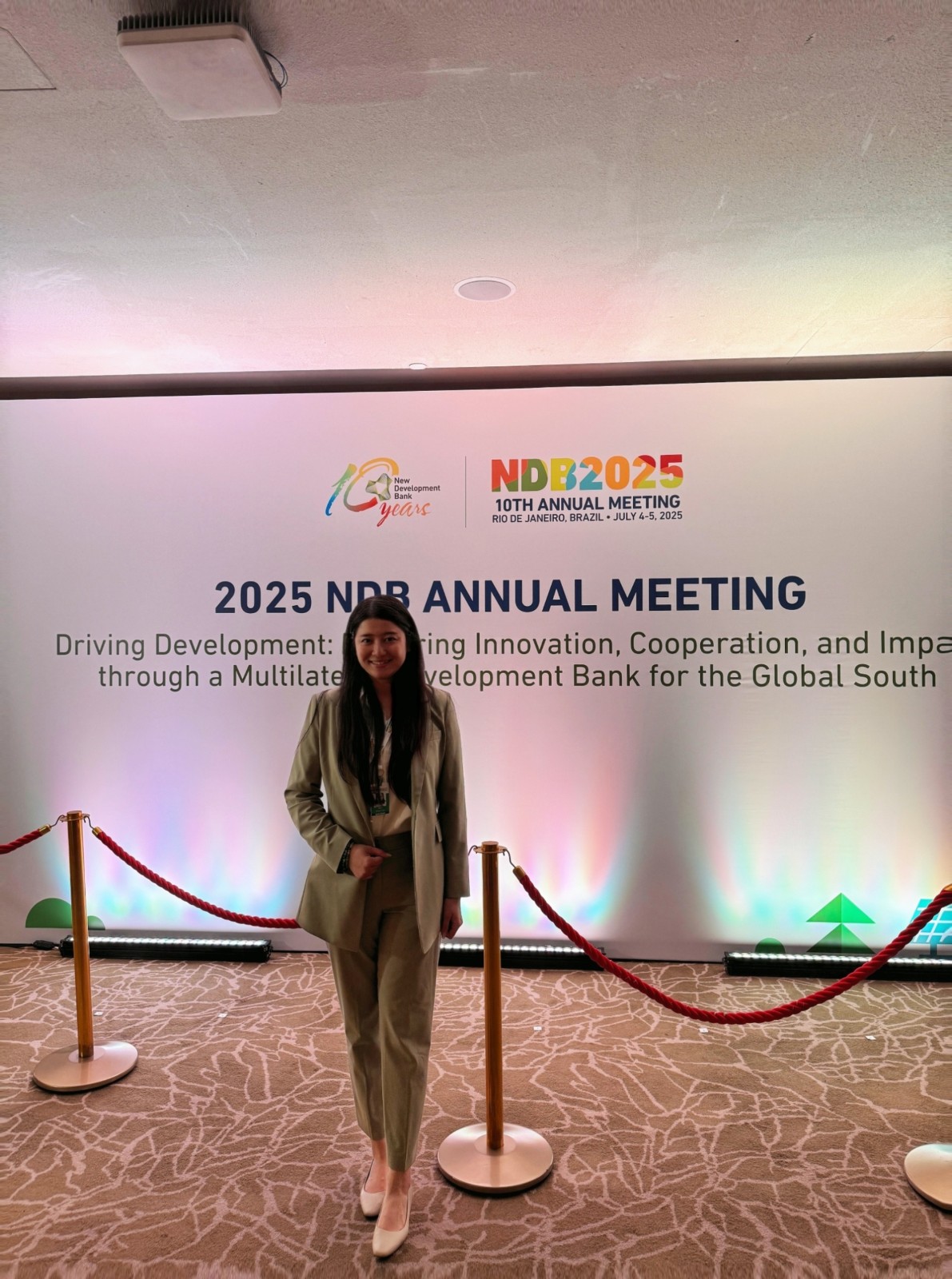
Second, STL has deeply instilled in me a sense of bridging thinking. The true battleground for legal professionals lies not between the lines of statutes but in the fissures where civilizations intersect. What is needed there is not the erection of high walls but the dismantling of barriers and the building of bridges. This conviction—a commitment to connection over division, to dialogue over confrontation—has consistently guided my work in international organizations.
Third, and most importantly, is the gift of legal thinking. Although my current role does not involve the direct application of specific laws, I employ "legal thinking" at every turn. This is a more fundamental mode of thought concerning rules, logic, and justice. I vividly recall during my STL admission interview, then-Associate Dean Stephen Yandle said to me: "You don't have to become a lawyer or in-house counsel after graduation; you can pursue work entirely unrelated to law. But trust me, once you leave STL, the legal thinking you've acquired will stay with you for a lifetime." Those words have remained etched in my memory, and they have been borne out throughout my career. This mindset is truly the most precious treasure I have taken away from STL.
Blazing the Trail: Growing Together with the New Development Bank
Q: From legal practice to institutional governance, could you elaborate on your career development path?
A: Looking back on my career journey, I would describe it as a process of continuous transformation and expanding horizons. I currently view my role at the Corporate Secretariat Department of the New Development Bank (NDB) as that of a "translator of rules" and a "facilitator of consensus." I am responsible for coordinating macro-level matters such as board governance, strategic information disclosure, and cross-border policy alignment, which affords me a panoramic vantage point from which to observe and understand the Bank's entire operational mechanism. After a decade of deep engagement, I have not only gained a comprehensive horizontal understanding of the functions of each department within the Bank, but also developed a profound vertical appreciation of the historical trajectory of the Bank's development. This has allowed me to construct a complete body of knowledge regarding the operations of a multilateral development bank.
My career transition has broadly unfolded in three stages:
1. Project Department Period: When the Bank was established in 2015, it had not yet commenced formal operations, and I joined the NDB's preparatory office at that time. As the Legal Department and Corporate Secretariat Department had yet to be set up, my work involved extensive foundational legal research and policy framework analysis. I was thus fortunate to participate in the foundational work of shaping the Bank's initial governance and policy frameworks, as well as early institutional and project legal work, including participation in the formal negotiations for the NDB's first project.
2. Legal Department Period: As the Bank commenced formal operations and grew, the focus of my work shifted toward the drafting, negotiation, and review of various types of contracts, involving more granular work on transaction structures and risk mitigation. Concurrently, due to staffing constraints, I also undertook a portion of the work for the Corporate Secretariat Department.
3. Corporate Secretariat Department Period: This marked a significant leap in my career. In 2017, I formally joined the NDB's Corporate Secretariat Department as a Young Professional. From that point onward, my focus transitioned from project and institutional legal affairs to matters of broader institutional governance and meeting preparation. This role required me to approach issues from the strategic height of the Bank as a whole, synthesize the needs of various business units, and facilitate the implementation of Board and Board of Governors decisions by Management.
Looking back on the past decade of my career, I have come to deeply appreciate that the "cross-system holistic thinking" cultivated at STL has played a pivotal role in each of these transitions. In the Project Department, I needed to understand the commercial essence and development impact of projects. In the Legal Department, I had to strike a balance between controlling legal risk and enabling the Bank's business operations. In the Corporate Secretariat Department, I required an even higher level of integrative capacity to coordinate diverse stakeholders and build consensus.
My STL education has also provided direct, tangible support in my work. For instance, a distinctive feature of the NDB is that, unlike established multilateral development institutions such as the World Bank—which require borrowers to comply with their own policies—the NDB adopts the principle of the "Country System" in project design. This approach respects the existing institutions of member countries and requires only that borrowers comply with the principles of NDB policy requirements. This flexibility demands stronger comparative law knowledge and cross-cultural understanding when handling relevant matters, and my experience studying both the U.S. and Chinese legal systems at STL has made me considerably more adept in navigating such issues.
Furthermore, my experiences in moot court and on the law review provided invaluable training in legal research and rigorous argumentation. These skills have been directly transferable to my current work drafting Board documents, meeting resolutions, and summary reports, ensuring the professionalism and logical coherence of the documents I handle. It is no exaggeration to say that the foundation in legal research and English legal writing I built at STL has underpinned my ability to adapt swiftly to the demands of each new role. It is for this reason that I was especially delighted to hear the news of the relaunch of STL's Peking University Transnational Law Review.
Q: As a Senior Professional at the Corporate Secretariat Department of the New Development Bank, what are your specific responsibilities?
A: As a Senior Professional in the Corporate Secretariat Department, my responsibilities encompass both breadth and depth. At the management level, I am responsible for coordinating matters related to the Investment and Credit Committee. At the Board level, I assist in the preparation of meetings for the Board of Directors (and its committees) as well as the Annual Meetings of the Board of Governors. Over the past decade, I have successfully supported the organization of dozens of milestone meetings—including ministerial-level Board of Governors and Board of Directors meetings—in key cities around the world, such as New Delhi (India), Shanghai (China), Cape Town (South Africa), Dubai (United Arab Emirates), São Paulo (Brazil), and Rio de Janeiro (Brazil).
Furthermore, I have been deeply involved in the review and formulation of core policy documents within the Corporate Secretariat Department, including the Bank's governance framework and the working guidelines of the Corporate Secretariat Department. From a preparatory office of just over a dozen people to a multilateral development institution that now employs approximately three hundred staff and continues to expand its membership, I consider it a profound honor to have been both a witness to and a participant in the steady, step-by-step growth and development of the New Development Bank.
Q: You mentioned some unique personal experiences in your work. What kind of perspective have these experiences given you?
A: This work has afforded me a number of truly one-of-a-kind experiences and has continually reinforced my sense of agency and mission. For instance, I have had the privilege of meeting Brazilian President Lula on two separate occasions, and in May 2025, I was also involved in receiving President Xi. Each year, during the Annual Meetings of the Board of Governors, I have the opportunity to participate alongside finance ministers from member countries, witnessing and documenting numerous significant historical moments. Additionally, I have traveled to cities such as Manila in the Philippines and London in the United Kingdom to engage with counterparts from other major international financial institutions. In these settings, we discuss the latest developments in institutional governance, share innovative practices within the board secretariat profession, and I then apply the insights gained to the ongoing enhancement of the NDB's corporate secretariat work. These experiences have cultivated an exceptionally strong sense of mission and professional identity in my approach to this role.
Counter-cyclical Resilience: Poly crisis and Opportunity
Q: How do you perceive the current macro-environment and challenges facing international organizations?
A: We are living in an era of "poly crisis"—a term coined by historian Adam Tooze. He posits that multiple layers of crisis—climate change, the COVID-19 pandemic, geopolitical tensions, trade disputes, energy crises, and economic fragmentation—are intertwining and mutually reinforcing one another, creating a complex entanglement of crises.
I operate within precisely this kind of real-world environment, which has undeniably presented numerous challenges to the development of multilateral institutions. Yet, on the other hand, it has also underscored the critical importance of institutions like the New Development Bank. Our borrowing member countries are all developing nations, and in the face of shared challenges, they have, in fact, drawn closer together. A key function of multilateral development banks is to play a counter-cyclical and catalytic role, particularly in the wake of heightened geopolitical conflict—stepping forward to mobilize resources in support of member countries precisely when private capital retreats during economic downturns. This function has become ever more critical amid intensifying geopolitical frictions.
At the Tenth NDB Annual Meeting held in June 2025 on the sidelines of the BRICS Summit in Rio de Janeiro, Brazil, finance ministers from member countries emphasized that the NDB must embrace innovative cooperation models to usher in the next "golden decade" and to strengthen resilience-building across the Global South. This, in itself, represents the most direct response to the "poly crisis" we face.
Q: In such a complex environment, how does your department contribute and make an impact?
A: The Corporate Secretariat Department reports directly to the Board of Directors, but at the working level, we report to the President Dilma Rousseff, former President of Brazil. President Rousseff has underscored that the core mission of the NDB is to avoid the misuse of financial instruments for geopolitical purposes.
A key function of the Corporate Secretariat Department, where I work, is to assist the Board in navigating this complex crisis environment, maintaining its strategic direction, and identifying appropriate development pathways for member countries.
In terms of our specific approach, we not only organize formal Board meetings but also arrange other formats for informal discussion, such as retreats. In this comparatively relaxed atmosphere, participants can engage in more open, forward-looking discussions on policy issues—for instance, how the NDB can better fulfill its counter-cyclical and catalytic roles amid the current geopolitical landscape, and how to promote systemic collaboration while moving away from a mindset of isolated responses. Through these discussions, we help the NDB chart a steady course through the myriad challenges it faces.

A Message from a Senior: Play Every Hand Well Amidst Uncertainty
Q: Could you offer some advice to current students on their studies and career development?
A: Drawing from my own experiences and observations, I would like to share a few suggestions that may prove valuable to current students at STL.
1. Academics: Explore Widely, Build a Solid Foundation, and Avoid Excessive Anxiety
There is no need to agonize excessively over any single grade or class ranking. STL offers an exceptionally rich curriculum, and I encourage you to sample courses across a wide range of fields as much as possible, rather than confining yourself prematurely to a narrowly defined "career track." During my time at STL, I took many courses that seemed entirely unrelated to my future career path—EU Law, WTO Law, and the like. Some classmates chose to focus exclusively on subjects like Corporate Finance or Mergers and Acquisitions—courses they deemed directly useful for becoming a finance lawyer—and steered clear of everything else. That is certainly one valid strategy, but personally, I would advocate for broad exploration. I recall a classmate who, unsure of precisely what he wanted to do, simply followed his curiosity and enrolled in a course on Cyber Law. At that time, cyber law was a rather niche and cutting-edge field, and China's personal information protection framework was still in its infancy. Yet it was precisely that course that ignited a deep passion in him. His entire subsequent career trajectory came to revolve around that very domain, and he has since become a leading expert in the field. Therefore, when it comes to course selection, my advice is to maintain an open mind. Do not place artificial limits on yourself; a pivotal turn of fate may well lie hidden within a course you choose on a whim.
Regardless of which courses you ultimately select, there is one category that I believe warrants the utmost attention: Legal Research and Writing. The skills cultivated in such courses—legal research proficiency, legal writing ability, and a critical thinking mindset—constitute the "operating system" that will serve you throughout your entire professional life. Be sure to lay this foundation solidly. Moreover, English writing skills, in particular, may well become a core competency that sets you apart in the future. Cherish every writing assignment and opportunity for training during your time in school, and take full advantage of these years to fortify your English writing capabilities.
2. Career Planning: Embrace Uncertainty and Seek Differentiated Advantages
When it comes to internships and career planning, I encourage everyone to remain open to a wider range of possibilities and to actively seek out their own differentiated advantages. If you find yourself unsure of exactly what you want to do, that is nothing to fear—my own journey is a case in point. In our graduating class, as many as forty-six percent of graduates entered international law firms, largely because that was widely perceived as the most "prestigious" path. I, too, followed the crowd and interned at an international law firm, spending an entire year in its Capital Markets IPO department. Yet I found the work—spent largely in the company of computer screens and documents, with minimal interpersonal interaction and prolonged, high-intensity, repetitive tasks—to be profoundly unfulfilling. I ultimately realized that my personality simply could not find a sense of identity or satisfaction in that environment. While that experience was trying, it helped me clearly identify what I did not enjoy, and it also strengthened my resilience under pressure—itself a valuable form of trial-and-error and work experience. So, if you discover through an internship that a particular field is not for you, this is not a failure but rather the elimination of an unsuitable option. In the summer of 2015, after graduation, I received an internship offer from the NDB's preparatory office, and that marked the beginning of my career in international organizations.
Through this experience, what I wish to share is this: do not confine yourself to a single path. Life holds many possibilities, all of which deserve to be explored and attempted.
3.Pursuing Employment in International Organizations: Realistic Perspectives and Practical Pathways
I must be candid: securing employment in an international organization, particularly a formal position, is considerably difficult. For internships, nationality balance is a very significant consideration. As a result, opportunities for Chinese candidates tend to be more limited when there is already a Chinese national on the team. However, if you perform exceptionally well during your internship and leave a strong impression on management, you will naturally be prioritized when vacancies arise.
That said, I must emphasize the importance of "walking on multiple legs." My advice is not to pin all your hopes on entering an international organization directly upon graduation. You might first seek a position in a related field—for example, as in-house counsel at a corporation or at a national development financial institution. This allows you to accumulate experience while simultaneously keeping an eye out for relevant positions of interest within international organizations as they open. Career planning is not a linear trajectory but rather a continuous process of exploration, adjustment, and trade-offs; you can approach your ultimate goal through a variety of circuitous routes.
Furthermore, on the subject of internships, I would also offer one note of caution: internship experience is generally not counted by HR toward formal years of work experience. If one sacrifices core academic coursework merely to pad one's list of internships, that would be putting the cart before the horse.

Q: Could you share some reflections and insights on cultivating mental resilience and psychological strength?
A: Looking back over the past decade, I often feel that a career is rather like a game of cards. Not everyone is dealt a "royal flush" right after graduation—a perfect job that aligns seamlessly with both their qualifications and personal passions. What truly matters is that, whatever hand you are dealt, you play it to the very best of your ability.
I was not among the earliest or the most seamless in my class to secure a job. By the first semester of our fourth year, most of my classmates had already locked in their positions, but I, having been focused on securing a return offer from my law firm internship, found myself still without a confirmed job offer upon graduation. In the end, I only received the opportunity with the New Development Bank after graduating, and there was admittedly an element of "taking a gamble." Yet I was not excessively anxious at the time, because deep down I held a firm conviction: no matter what initial hand I was dealt, I possessed the ability and the diligence to play it well over the medium and long term.
Of course, we all have preferences when it comes to types of employers—international organizations, for instance. But when ideal positions are scarce, I would still advise maintaining an open and flexible mindset. Seek out alternative roles that are similarly international in scope, innovative in nature, and align with your general interests. Use such opportunities as stepping stones to accumulate essential expertise and capabilities, preparing yourself for a breakthrough when the time is ripe.
I am not a natural-born optimist. On the contrary, during my time in private practice, I was highly susceptible to internal friction—easily thrown off balance by a casual remark or a piece of criticism from a superior. My mindset, however, has since grown considerably stronger, largely because I came to understand that there are many things in this world beyond your control, particularly external circumstances and the actions of others. Rather than endlessly flogging and depleting yourself, it is far wiser to accept reality and focus single-mindedly on doing the very best you can with what lies before you. There is no need to panic over moments of temporary confusion or perceived inadequacy.
Finally, from the bottom of my heart, I wish all my fellow STL students, wherever your paths may lead, that you will cherish each and every day at STL. Build a strong foundation, dare to explore boldly, and remain true to yourselves. I firmly believe that a bright future awaits you just around the corner, ready to be embraced!












.jpg)