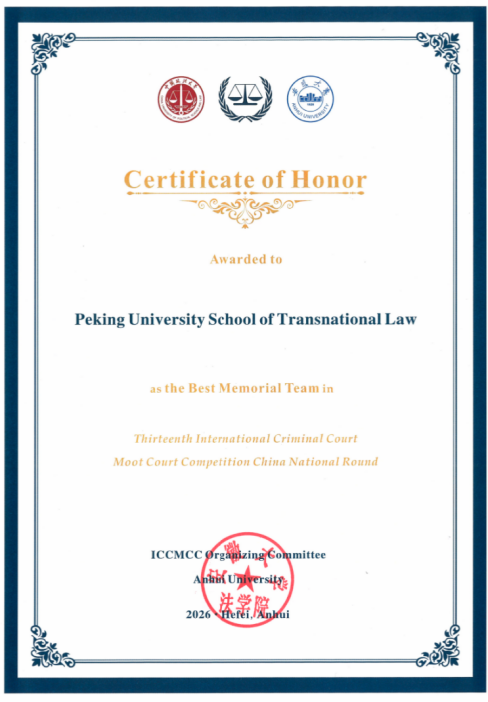
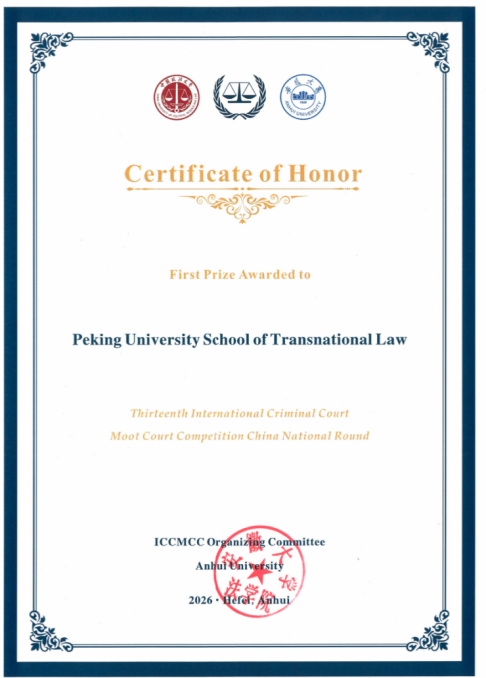
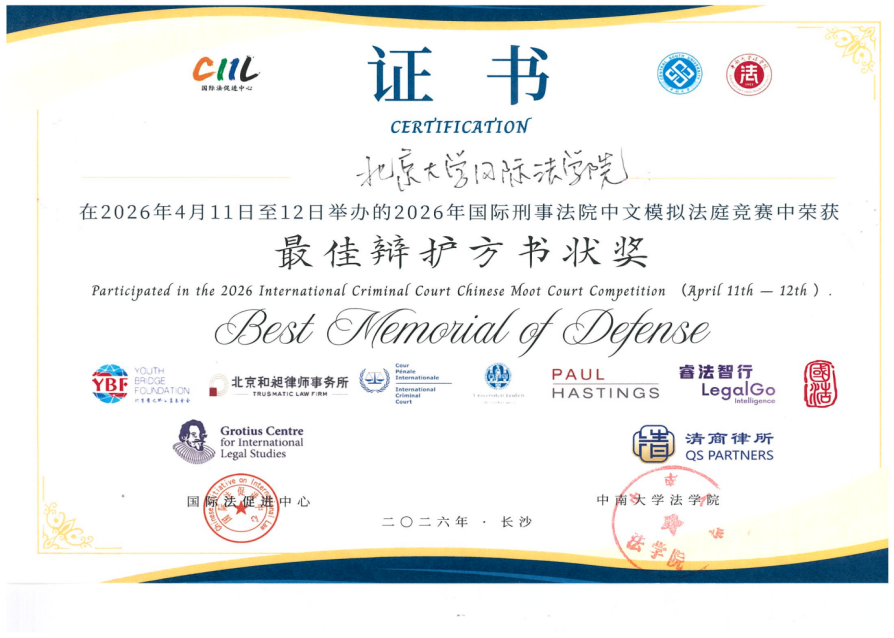
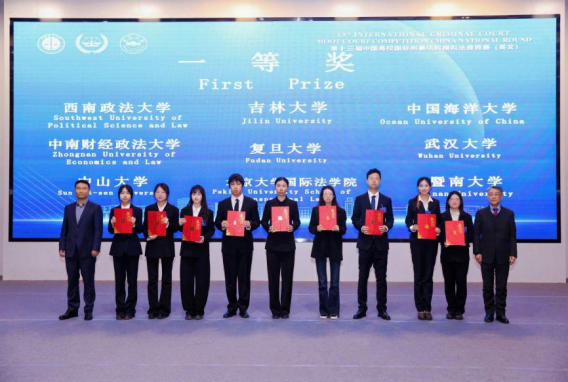
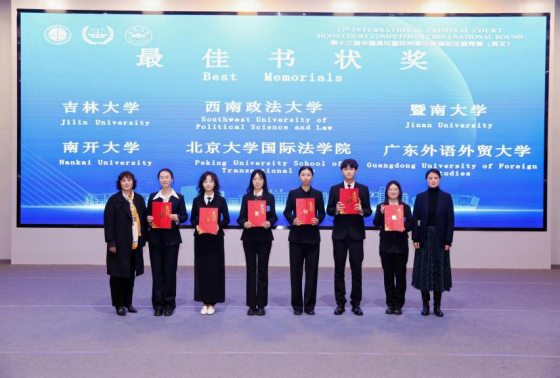
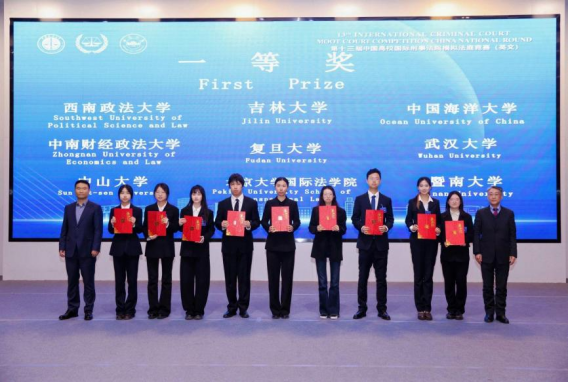
In the recently concluded 2026 International Criminal Court Moot Court Competition ("ICC Moot Court Competition"), the team from the Peking University School of Transnational Law ("STL") achieved a historic breakthrough through outstanding professionalism and tenacious fighting spirit. Not only did they continue their strong record in the English moot, earning the First Prize and the Best Memorial Team, but they also achieved a historic breakthrough in the Chinese moot, winning the First Prize for the first time and securing the Best Memorial of Defense (First Place). The team in both courts has qualified for the International Rounds in The Hague. It is particularly noteworthy that STL is one of only a very small number of teams nationwide (merely three) this year to advance to the International Rounds in The Hague in both the English and Chinese tracks simultaneously, marking the school’s best-ever result in this competition.
The ICC Moot Court Competition is a premier global academic event supported by the International Criminal Court. It aims to deepen participants' understanding and application of international criminal law by highly simulating real international criminal trial procedures, serving as a vital platform for cultivating and selecting foreign-related legal talent worldwide.
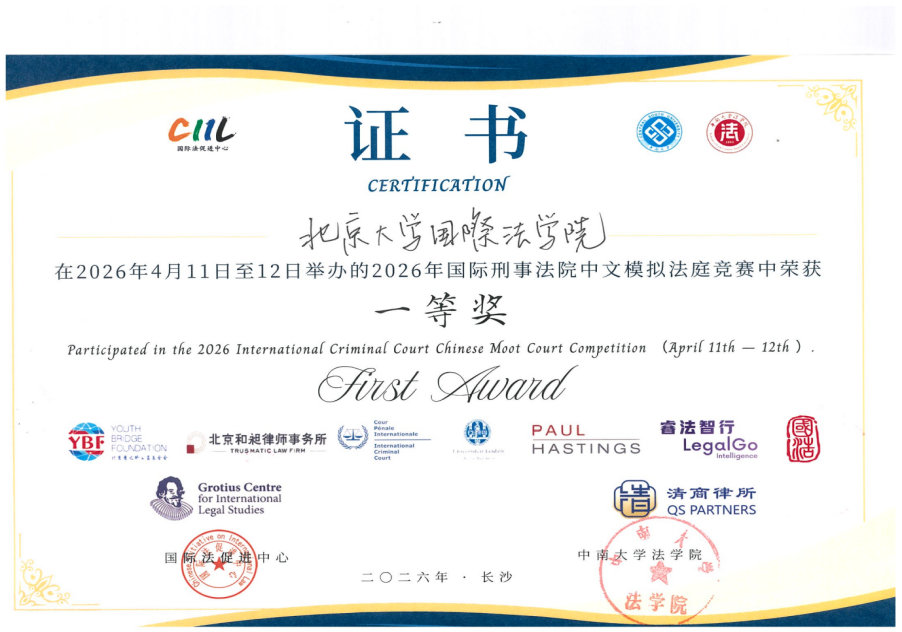
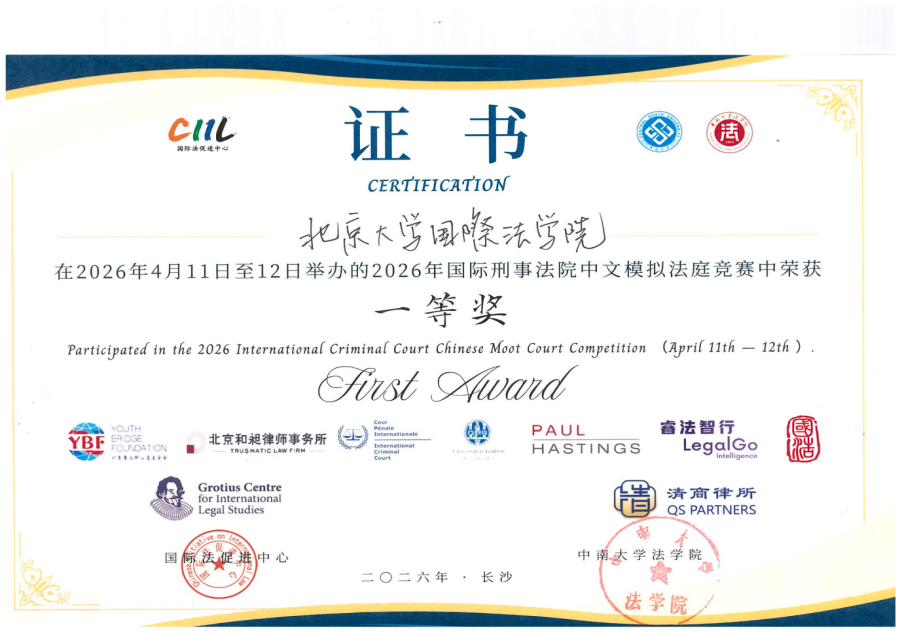
The English moot took place from March 6 to 8 at Anhui University in Hefei, co-hosted by China University of Political Science and Law and the Anhui University Organizing Committee. It attracted over sixty top law school teams from across the country. After intense competition in the memorial round, only 27 teams advanced to the in-person oral rounds.
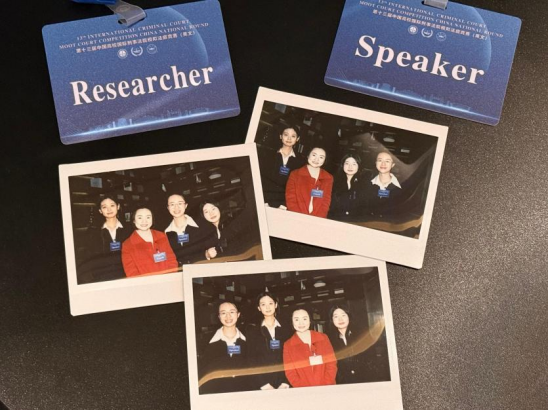
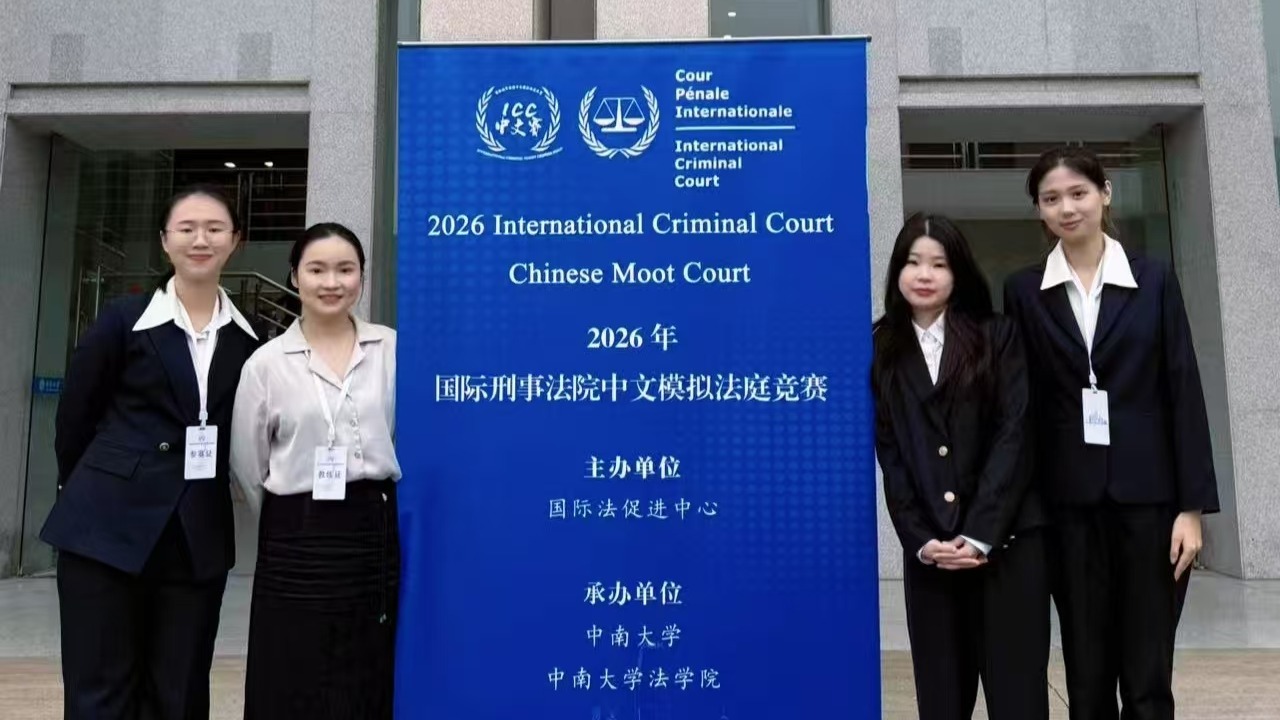
The Chinese moot was held from April 10 to 12 at Central South University in Changsha. Hosted by the Chinese Initiative on International Law (CIIL) and organized by Central South University, it brought together 130 university teams from across the China, including Tsinghua University, China University of Political Science and Law, the University of Hong Kong, and the University of Macau, making the competition exceptionally fierce. Following the memorial evaluation, 60 teams advanced to the in-person oral rounds.
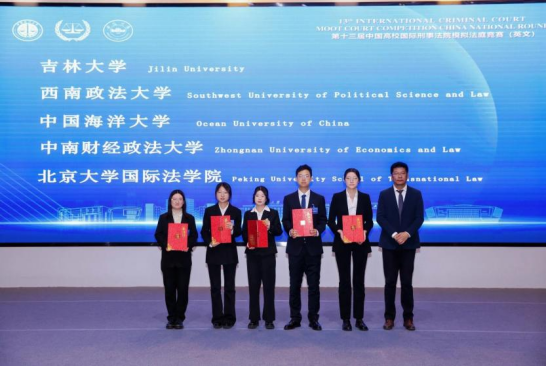
STL team consisted of Fang Xinrui, Ge Yunxiang, and Xie Yongyi (Class of 2024), under the guidance of Qiu Xiaoya, Director of Graduate and International Programs, with Liu Yuting, Chen Yawen, and Hu Kaining (Class of 2023) serving as student coaches. The team also received valuable assistance with moot oral practices and substantive legal issues from Peng Jiansu (Class of 2024) of the Jessup team and Liu Shanshan (Class of 2024) of the Space Law team.
Facing a complex case covering cutting-edge issues of international criminal justice, such as armed blockades, obstruction of humanitarian aid, head of state immunity, and defects in arrest procedures, the team established a comprehensive and multi-layered preparation system. Starting from the release of the case in late August last year, the three team members met with their coach at least once a week to refine the memorial outlines for their respective sides, ensuring theoretical analysis and strategy progressed in sync.
Oral training began during the winter break, conducted intensively once every three days. Even during the Chinese New Year holiday, the team members did not interrupt their preparation, synchronizing training for both the English and Chinese moots via online sessions. After the new semester began, in addition to regular training with their coach and student coaches, the team continuously honed their oral advocacy skills and refined their response strategies, fully preparing for the formal competition. This sustained and rigorous training process not only greatly enhanced the team members’ legal research, professional writing, and courtroom advocacy abilities but also forged their composure and mental resilience under high pressure.
During the memorial drafting stage, the three members each completed Chinese and English memorials exceeding ten thousand words. Grounding their work in the foundational texts of international criminal law, they extensively searched for and studied a vast collection of Chinese and English primary sources and case law, meticulously refining every detail. They actively engaged in case analysis and discussion, striving for the utmost depth and breadth in legal analysis, fully demonstrating the solid academic foundation and rigorous scholarship of STL students.
01
English Moot: Steady Progress and Defended Glory
In the English moot, STL team engaged in intense rounds against strong teams from universities including Zhongnan University of Economics and Law, Tsinghua University, Ocean University of China, Jinan University, Jilin University, and Fudan University. It is particularly worth mentioning that the submission deadline for the Chinese memorial fell just one day before the start of the English oral rounds. Under the immense pressure of fighting on two fronts, while preparing for the English oral rounds, the team still raced against time to perfect their Chinese memorial. Even on the eve of the English oral rounds, the three oralists were in their hotel in Hefei, double-checking the formatting of their Chinese memorial. Ultimately, relying on thorough preparation, clear logical reasoning, skilled legal application, and fluent English expression, STL team won the First Prize and the Best Memorial Team in the English moot, successfully securing their place in the International Rounds in The Hague.
02
Chinese Moot: Bold Breakthrough and Reaching the Summit for the First Time
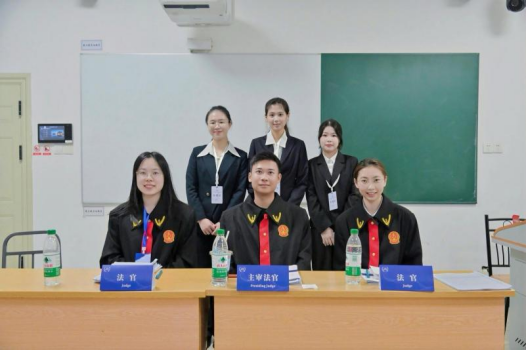
In the Chinese moot, STL team successfully advanced to the domestic oral rounds based on their rigorous and solid memorials, competing against teams from universities such as China University of Political Science and Law, University of Chinese Academy of Social Sciences, Shandong University, and Shenzhen University. In the first preliminary round, the team narrowly advanced to the second round in 29th place overall. Facing the pressure to break through, the team members remained calm and promptly adjusted their strategy. In the second preliminary round, with precise legal interpretation, rigorous logical reasoning, and poised oral advocacy, they earned unanimous recognition from the judges. Ultimately, they overcame the deficit from the first round, staged a comeback, won the Chinese moot First Prize, and successfully advanced to the International Rounds in The Hague. Notably, our prosecution speaker delivered an outstanding performance on the spot, achieving the second-highest individual oral score among all participants in the second round. Meanwhile, the defence memorial was recognized as the Best Memorial of Defense (First Place) in the Chinese moot for its exceptional drafting quality.
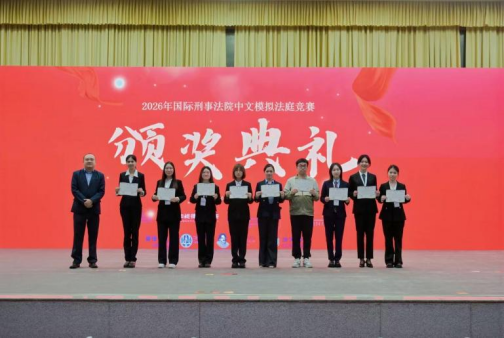
This award marks the first time since STL began participating in the ICC competition that our team has won First Prize in the ICC Chinese Moot and advanced to the International Rounds in The Hague, achieving a ground-breaking milestone in the competition’s history.
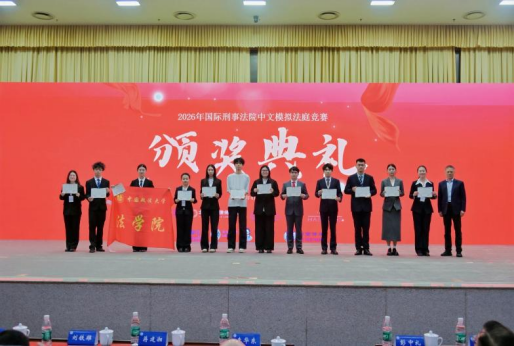
We extend our gratitude to coach Ms. Qiu Xiaoya, the student coach team, and all the fellow students who provided support. The domestic rounds of the ICC Moot Court Competition have now successfully concluded. Carrying honor and expectations, STL team will represent Chinese law students at the International Rounds in The Hague, continuing to showcase the excellence of Chinese legal talent on the highest global stage.
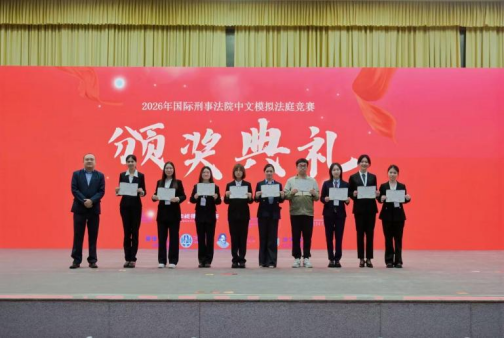
Congratulations once again to STL team!
We look forward to seeing them ride the waves and achieve even greater success at the International Rounds in The Hague!













.jpg)