Copyright © 2024 Peking University School of Transnational Law.
2026-05-21 Views: 15










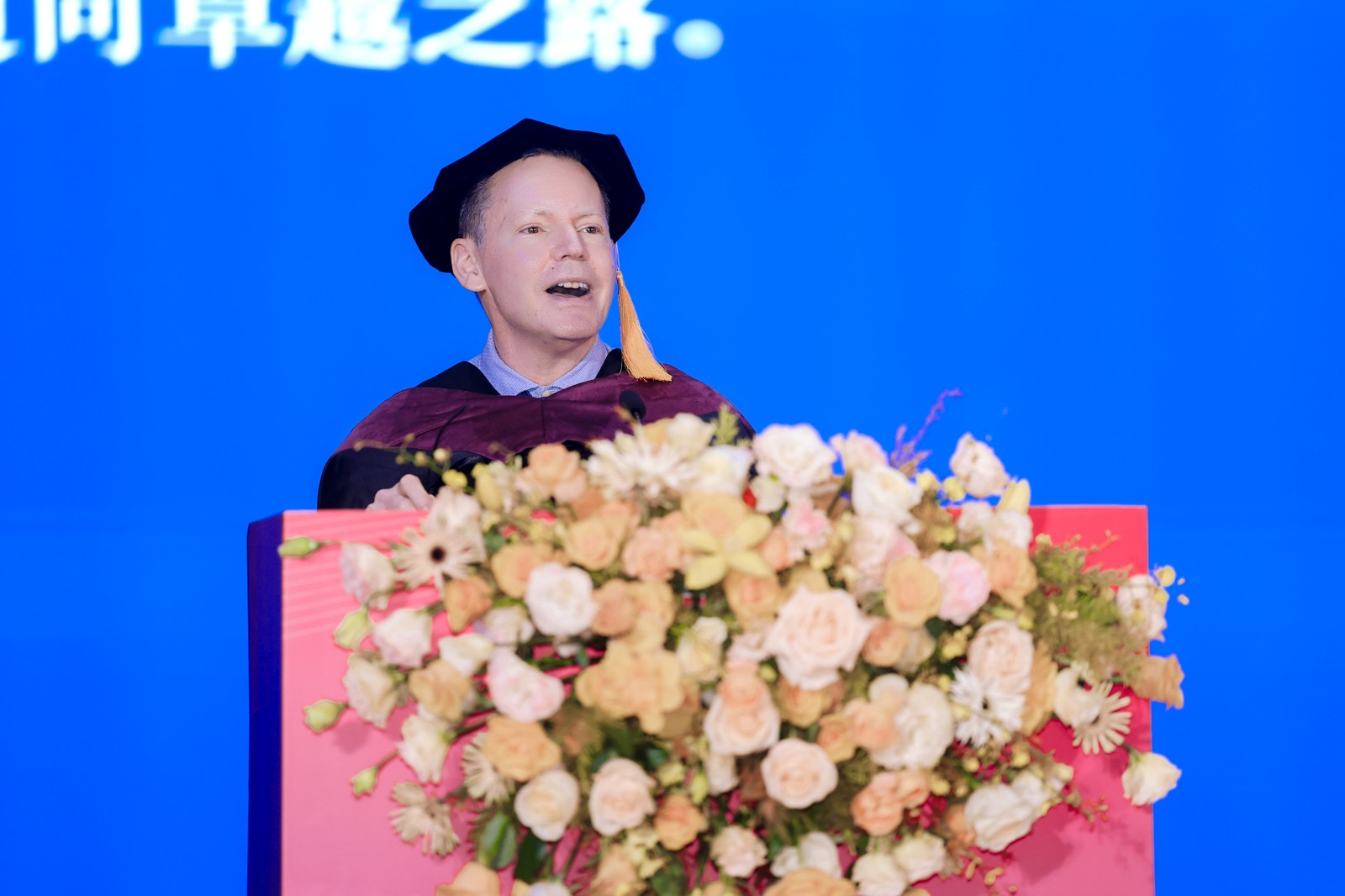
Ms. Zhao Jie, STL faculty, staff and senior administrator colleagues, members of the STL Class of 2026 and guests, it is an honor to open the 2026 STL Commencement ceremony. Welcome.
尊敬的赵杰女士、国际法学院的各位教授、教职员工和行政同仁们,亲爱的2026届毕业生们以及各位来宾:能够为2026年国际法学院毕业典礼致开场辞,我深感荣幸。欢迎大家
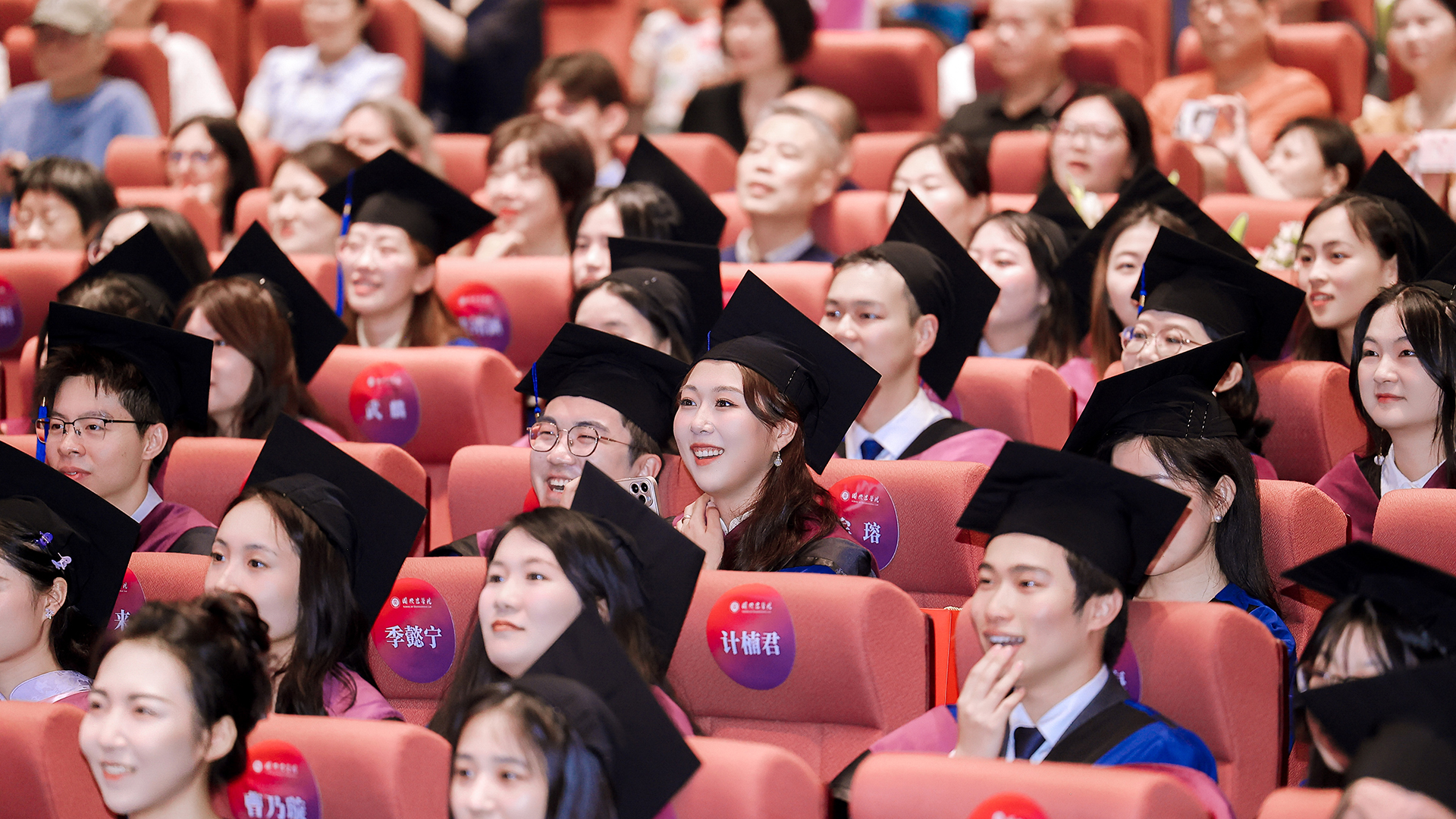
Congratulations to the PKU STL Class of 2026, composed of 147 JD/JM graduates and 11 LLM graduates from 11 different countries and jurisdictions.
祝贺北京大学国际法学院2026届的全体毕业生——其中包括147名JD/JM毕业生,以及来自11个不同国家和地区的11名LLM毕业生。
This is a memorable day, and a memorable event. Thank you to the family members, friends, faculty members and staff who have shown their commitment to the graduates and the school by joining us today.
今天是一个值得铭记的日子,也是一场意义非凡的盛典。感谢各位家人、朋友、教授和教职员工今天拨冗莅临。你们的到来,表达了对毕业生以及学院的深切关爱与支持。
Yesterday, I was in Hong Kong to speak on a topic that is probably of interest to most or all of you in this room: AI and legal education.
昨天,我在香港参加了一场讲座,主题大概是在座绝大多数人都感兴趣的话题:人工智能与法学教育。
My remarks yesterday were fairly long. My remarks today will not be.
相比我昨天篇幅颇长的发言,今日的致辞会十分简短。
For my brief remarks today, I would like to highlight one element from my talk yesterday – the concept of greatness as legal professionals – and briefly add to that element one new dimension.
在今天这简短的发言中,我想聚焦昨日演讲中的一点——即作为法律人如何成就“卓越”——并就此略作延伸,引入一个新的维度。
That additional dimension is process, as demonstrated by the world-class performances of two Olympians who recently competed at the 2026 Winter Games in Italy: Eileen Gu and Alysa Liu.
这个新的维度,便是“过程”——正如近期在意大利2026年冬奥会上展现世界级水准的两位选手——谷爱凌与刘美贤——所诠释的那样。
On greatness as legal professionals, my talk yesterday focused on how institutions providing legal education in the age of AI should aim to develop legal professionals who will achieve greatness.
关于法律人的卓越,我昨日的发言着重探讨了人工智能时代下,法学教育机构应如何培养能够最终走向卓越的法律人才。
Familiarity with AI tools is now essential for the marketplace, including the marketplace for legal services. But passive reliance on AI outputs is a pathway to mediocrity, at best.
如今,熟悉人工智能工具已成为职场——包括法律服务市场——的必备条件。但被动依赖人工智能的输出,最多只能带你走向平庸。
Legal education today, and going forward, should provide a pathway beyond mediocrity, indeed should provide a pathway to greatness.
当代及未来的法学教育,应当提供一条超越平庸,通向卓越之路。
And to be great, as a legal professional, requires, in my view, at least two elements: creativity and mastery.
在我看来,作为法律人,要成就卓越,至少需要具备两种素质:创造力与精通。
Law schools, in the age of AI, should aim to develop legal professionals who embrace creativity and who have the capacity to master relevant facts and law; such mastery of facts and law is demonstrated when legal professionals are able to communicate complicated sets of facts and law in clear, succinct, accessible ways.
在人工智能时代,法学院应当致力于培养拥抱创造力、并能够精通相关事实与法律的法律人。而 精通意味着法律人能够熟练运用法律知识以清晰、简洁、易懂的方式,传达复杂的事实与法律问题。
But with my limited time today, I would prefer not to focus on the substance of what it means to be a great legal professional. I would instead like to focus a bit on process, and process in a context that is not limited to the legal profession. Indeed, I would like to consider process in the larger context of simply achieving greatness, in any setting. And as I mentioned, on this point, I would like to briefly discuss two Olympians, Eileen Gu and Alysa Liu.
但鉴于今日时间有限,我不打算继续探讨“何为卓越法律人”的实质内容。我更想略微聚焦于“过程”,从谷爱凌和刘美贤这两位奥运选手出发,谈一谈在任何领域中成就卓越的过程。
Eileen Gu has won three gold medals and three silver medals across two Olympics, held in 2022 and 2026, in the freestyle skiing disciplines of halfpipe, slopestyle and big air.
谷爱凌在2022年与2026年两届冬奥会的自由式滑雪U型场地、坡面障碍技巧和大跳台项目中,共斩获三枚金牌与三枚银牌。
In an interview at the 2026 Winter Olympics, Eileen Gu said that she has "neuroplasticity on my side" because her ability to control what she thinks and how she thinks allows her to control who she is.
在2026年冬奥会的一次采访中,谷爱凌提到:“我有神经可塑性为我助力。”因为她能够掌控自己思考的内容与方式,从而定义自己是谁。
Neuroplasticity "refers to the brain's ability to change and adapt throughout life by modifying its structure, functions, or neural pathways."
神经可塑性,指的是“大脑在一生中通过改变自身结构、功能或神经通路来学习和适应的能力”。
I would not say that achieving greatness as a legal professional requires you to actively attempt to modify the neural pathways of your brain.
我当然不是说,要成为卓越的法律人,你需要主动去改变自己大脑的神经通路。
But I think there is a simpler lesson for us as legal professionals. Our experiences matter, our thoughts matter, who we spend time with matters.
但我认为,这其中蕴含着一个更朴素、却值得法律人深思的道理:我们的经历很重要,我们的思想很重要,我们与谁共度时光很重要。
In your career as a legal professional, there will be people who believe in you, and people who don't believe in you.
在你的法律职业生涯中,总会有人相信你,也总会有人不相信你。
Guard how you spend your time and who you spend your time with. Always, always believe in yourself.
请守护好你的时间,守护好与你同行的人。永远、永远相信自己。
Please allow me to turn briefly to Alysa Liu.
请允许我再简要谈谈刘美贤。
Alysa Liu won two gold medals in figure skating at the 2026 Winter Olympics, in both the women's singles and team events.
刘美贤在2026年冬奥会花样滑冰女子单人滑与团体项目中,夺得两枚金牌。
Following her gold medal performance in the women's singles event, Alysa Liu said that she didn't need the medal; rather, "what I needed was the stage and I got that, so I was all good. No matter what happened."
在夺得女子单人滑金牌后,刘美贤说道,她并不需要这枚奖牌;她真正需要的“是舞台,而我得到了舞台,这样就很好——无论结果如何”。
Alysa Liu just wanted to be in the arena.
刘美贤想要的,仅仅是站在赛场之上。
Alysa Liu's approach to Olympic competition has been described as reflecting an atelic – as opposed to telic – mindset.
刘美贤对待奥运竞技的态度,被认为体现了一种与“目的性”思维相对的“无目的性”思维。
As captured in a recent review in the California Review of Books, "The telic, which is the root of teleology, leads to a definite completion, like walking home. Once you arrive, it's done. The atelic is ongoing and does not lead to a final state because it does not have a singular goal, for example, taking a walk with no specific destination."
正如《加州书评》近期的一篇评论所言:“目的性思维是目的论的根源,它导向一个确定的终点,比如步行回家——一旦抵达,便已完成。而无目的性思维是持续的,不会导向一个终极状态,因为它没有单一的目标,例如,一场没有明确目的地的散步。”
As legal professionals, there will certainly be instances where you find yourself, unavoidably, attempting to reach a final state.
作为法律人,你们以后肯定会在一些时刻发现自己一直在努力想要获得预期的成就。
But when it is possible to experience professional opportunities from a different perspective – when the attraction can simply be to gain access to the arena – embrace those opportunities.
但是,当你有可能用另一种视角去体验职业机遇时——当吸引你的仅仅是“踏上舞台”的机会——请拥抱这样的机会。
STL Class of 2026, you are in the arena.
国际法学院2026届毕业生们,你们已然站在了舞台之上。
To STL's 147 JD/JM graduates, we have so many different connections, but one that I would highlight is our time together in the Contracts classroom in late 2022. Late 2022 was a challenging time for all of us. IYKYK. But we were resilient.
对于STL的147名JD/JM毕业生:我们之间有着众多联结,但我想特别提到的是2022年末,我们一同在合同法课堂上渡过的时光。2022年末对我们每个人而言都是一段充满挑战的时期。但我们用坚韧克服了挑战。
And over the past three and half years, we have made up for lost time, experiencing life on campus and around the world in incredibly vibrant ways.
而在过去三年半里,我们弥补了那些逝去的时光,以无比鲜活的方式,经历了校园里和世界各地的生活。
To STL's 11 LLM graduates, you are trailblazers. STL's LLM Class of 2026 is not very large, but that will change quite soon. Our value proposition is simply too compelling: studying alongside top students from China and around the world, with a multinational faculty of leading scholars, in China's technology center of Shenzhen, and supported by the global reputation and network of Peking University.
STL的11名LLM毕业生:你们是开拓者。STL 2026届的LLM班级规模尚不算大,但这一点不久之后就会改变。我们提供的价值令人心驰神往:与来自中国和世界各地的优秀学子并肩求学,与多国顶尖学者组成的师资队伍砥砺前行,身处中国的科技中心深圳,更有北京大学全球声誉与校友网络的有力支撑。
To our Class of 2026 LLM graduates, please share your STL and China experiences with your global networks. We look forward to supporting many more such experiences in the years ahead.
亲爱的2026届LLM毕业生们,请将你们的STL经历、你们的中国故事,分享给你们遍布全球的伙伴。我们期待在未来岁月中,收获更多这样精彩的故事。
Congratulations, STL Class of 2026!
北京大学国际法学院2026届全体毕业生,祝贺你们毕业快乐!